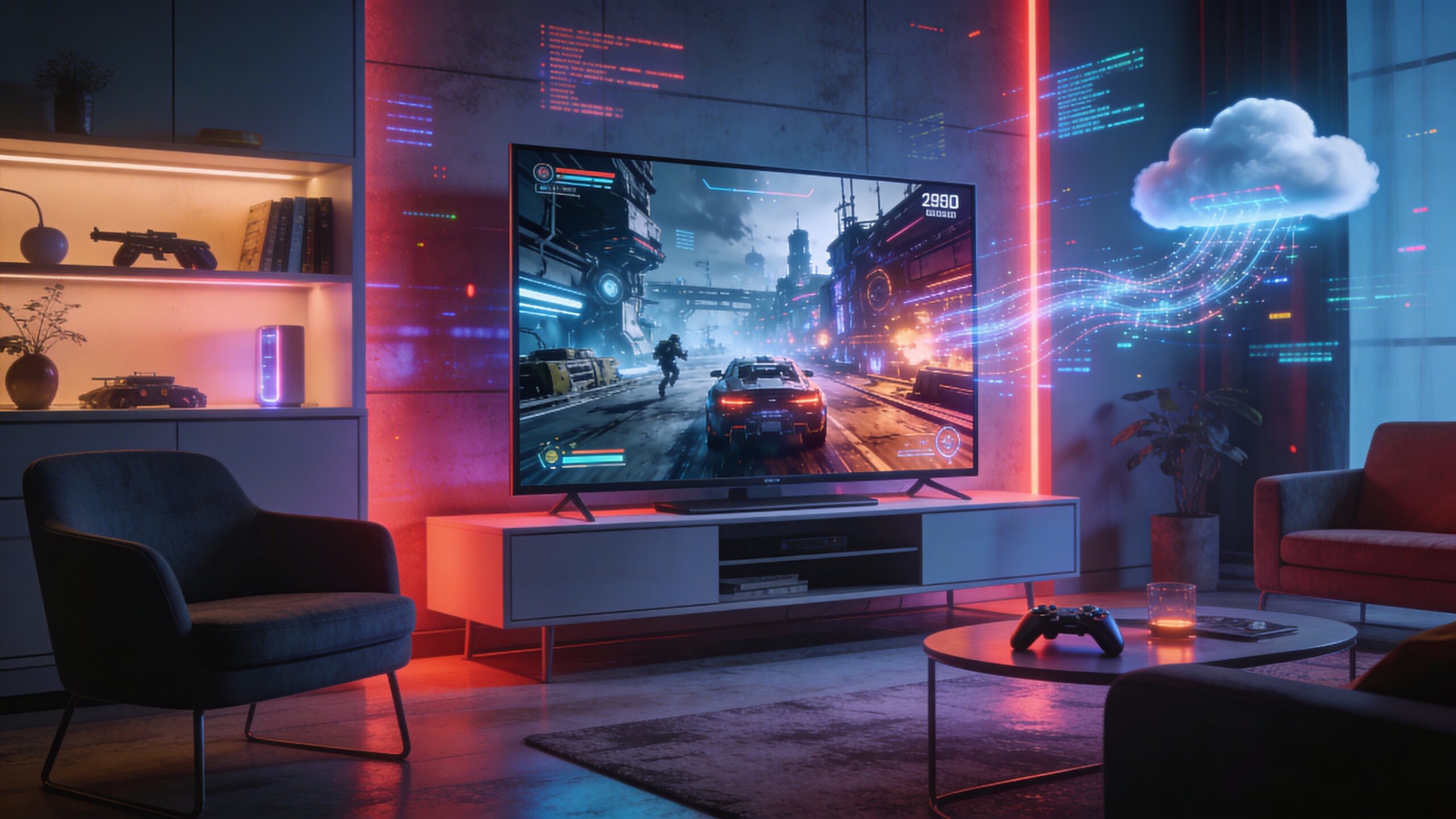
Gaming has always been tied to hardware. From cartridges and consoles to high-end PCs with cutting-edge graphics cards, the way games are played has historically depended on what sits in front of the player. Cloud-powered games are breaking that link. Instead of running on a local device, the game runs on remote servers, streams to your screen like a video, and responds to your inputs in real time. When artificial intelligence is layered into this model, the result is a fundamental shift in how games are built, distributed, and experienced. Cloud-powered gaming is not just a convenience upgrade. It represents a structural change in the gaming ecosystem, one that affects players, developers, publishers, and even the future of game design itself. Streaming AI is the invisible engine behind this change, optimizing performance, personalizing experiences, and enabling new forms of interaction that were previously impossible.
A: No, performance depends mostly on internet quality.
A: Modern AI prediction minimizes noticeable delay.
A: Yes, progress syncs automatically.
A: Yes, scaling is one of their biggest strengths.
A: Yes, updates happen server-side.
A: Significantly, since code runs remotely.
A: Stable broadband with low latency is key.
A: Often yes, sometimes better.
A: Access is typically account-based.
A: Cloud gaming is becoming a major pillar.
The Core Idea Behind Cloud-Powered Games
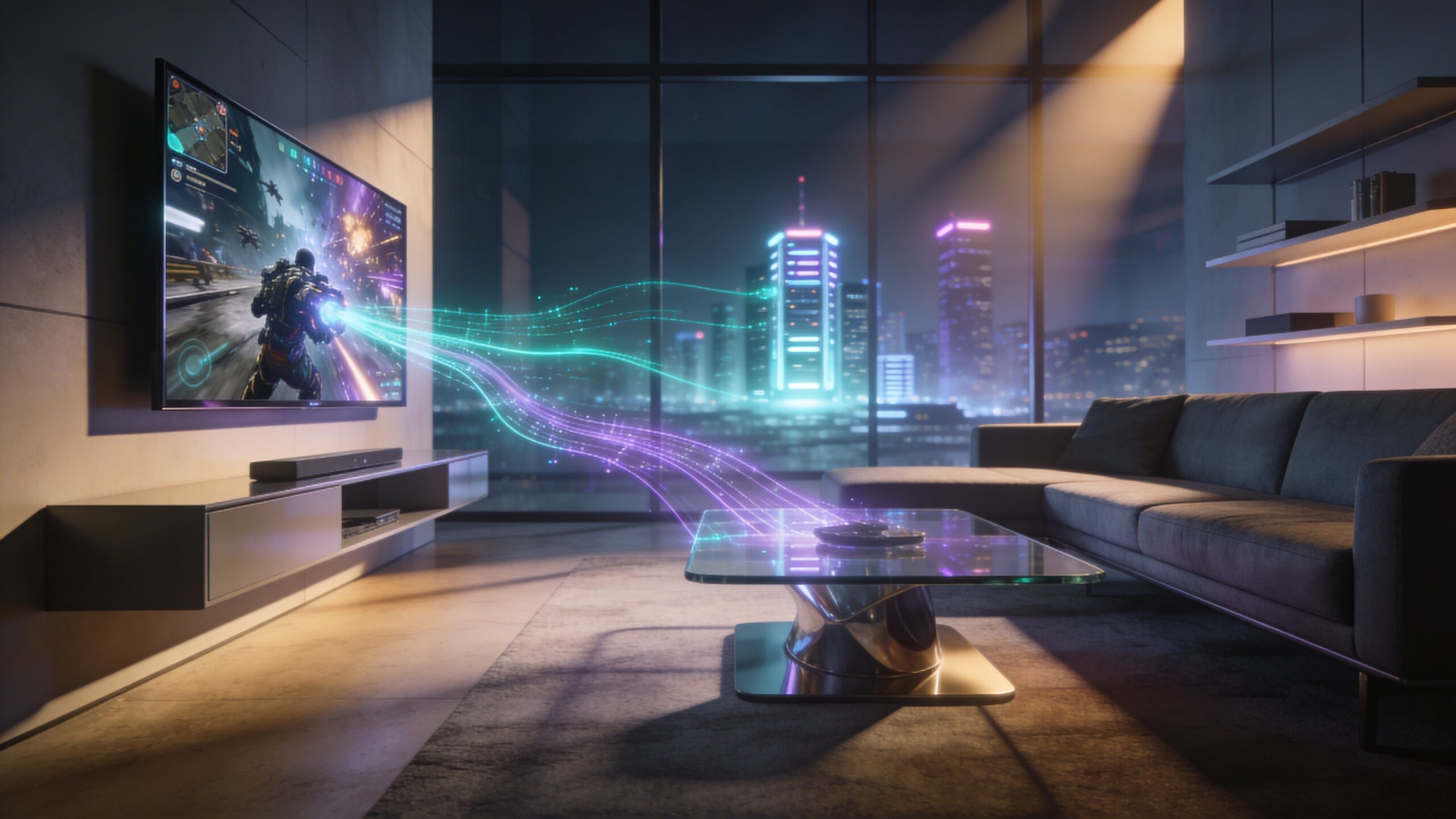
At its simplest, a cloud-powered game runs entirely on powerful remote servers. Your device, whether it is a phone, tablet, laptop, smart TV, or low-end PC, becomes a window rather than a workstation. Inputs are sent to the cloud, the game processes those inputs on high-performance hardware, and the resulting video and audio are streamed back to you almost instantly.
This approach eliminates the need for expensive consoles or frequent hardware upgrades. It also removes many traditional barriers to entry, such as storage limits, compatibility issues, and long installation times. A game can be launched in seconds, updated automatically, and accessed from nearly anywhere with a stable internet connection. What makes this model viable today, when earlier attempts struggled, is a combination of faster networks, more efficient video compression, distributed data centers, and AI-driven optimization.
How Streaming AI Powers the Experience
Artificial intelligence is deeply embedded in modern cloud gaming platforms. AI manages server allocation, predicts player inputs to reduce perceived latency, optimizes video streams in real time, and dynamically adjusts resolution and frame rates based on network conditions.
Latency, long considered the Achilles’ heel of cloud gaming, is now being tackled through predictive AI models. These systems analyze player behavior patterns, such as movement tendencies and reaction timing, to anticipate likely inputs milliseconds before they occur. Even small gains at this level can make the difference between a sluggish experience and one that feels locally rendered.
AI also plays a crucial role in scaling. Millions of players logging in at once would overwhelm traditional infrastructure. Machine learning models forecast demand, spin up or down server resources, and route players to the nearest data centers to minimize delays.
From Local Machines to Global Game Servers
Traditional games rely on the player’s hardware to handle physics, graphics, and AI logic. Cloud-powered games reverse this relationship. The most demanding calculations now occur on industrial-scale servers equipped with specialized GPUs and AI accelerators. Companies like NVIDIA and Microsoft have invested heavily in cloud infrastructure capable of rendering high-end games at scale. This shift allows developers to target a single powerful baseline rather than optimizing for dozens of hardware configurations. As a result, game worlds can become larger, more detailed, and more reactive. Developers are no longer constrained by the weakest device in their audience. Instead, they design for the capabilities of the cloud.
Always-On Worlds and Persistent Intelligence
One of the most profound changes enabled by cloud-powered gaming is persistence. In traditional games, the world often pauses or resets when the player logs off. In the cloud, game worlds can continue evolving even when no individual player is present.
AI-driven characters can live continuous lives, economies can shift in real time, and narratives can branch based on collective player behavior across the globe. These systems are not limited by local memory or processing constraints, allowing simulations to run indefinitely.
This opens the door to living worlds that feel more like shared realities than scripted experiences. Games become services not just in distribution, but in narrative and world evolution.
Device Freedom and the End of Hardware Lock-In
Cloud-powered games redefine what it means to be a “gaming device.” A smartphone becomes a console. A smart TV becomes a gaming hub. Even modest laptops can run visually intensive games without breaking a sweat.
This device independence has major implications for accessibility. Players who could not afford high-end hardware can now access premium gaming experiences. Developers gain access to broader audiences, including regions where gaming PCs and consoles are prohibitively expensive. For players, this freedom also means continuity. Progress follows the account, not the device. You can start a game on a TV, continue on a tablet, and finish on a phone without losing context or performance.
AI-Driven Personalization in Cloud Games
Streaming AI does more than optimize performance. It personalizes the gaming experience itself. Difficulty curves can adapt dynamically based on player skill. Narratives can branch according to emotional responses inferred from play patterns. In-game economies can rebalance themselves to match player behavior.
Because cloud platforms collect large-scale, real-time data, AI models can learn quickly and continuously. This allows games to evolve alongside their communities rather than remaining static after launch. Personalization at this scale was nearly impossible in offline or locally hosted games. The cloud transforms personalization from a design feature into an ongoing process.
Multiplayer Without Traditional Limits
Multiplayer gaming has always faced technical constraints. Server caps, region locks, and performance inconsistencies often limit how many players can interact meaningfully.
Cloud-powered games remove many of these barriers. Massive player counts can coexist in the same world, supported by elastic server resources. AI systems help manage matchmaking, balance teams, and even moderate player behavior in real time. Cheating becomes more difficult as well. Since the game logic runs on secure servers rather than local machines, exploits that rely on memory manipulation or client-side hacks are far less effective.
The Role of Edge Computing and 5G
The rise of cloud gaming is closely tied to edge computing and next-generation networks. By placing servers closer to players geographically, platforms reduce latency and improve responsiveness.
5G networks further enhance this model by offering lower latency and higher bandwidth, especially for mobile players. AI systems dynamically choose the optimal streaming parameters based on current network conditions, ensuring smoother gameplay even on fluctuating connections. This convergence of AI, cloud infrastructure, and advanced networking forms the technical backbone of modern cloud-powered games.
Economic Shifts for Developers and Publishers
Cloud gaming changes not only how games are played, but how they are monetized and maintained. Subscription models become more viable when access is platform-agnostic. Free-to-play experiences can scale globally without requiring local installs. Developers can deploy updates instantly, experiment with new features, and roll back changes without forcing players to download patches. Analytics powered by AI provide immediate feedback on player engagement, allowing rapid iteration. For publishers, this model reduces piracy and increases control over distribution. Games are no longer files that can be copied, but services that require authentication and cloud access.
Challenges and Misconceptions
Despite its promise, cloud-powered gaming is not without challenges. Reliable high-speed internet is still unevenly distributed across the world. Latency, while improved, remains a concern for competitive genres that demand split-second precision.
There is also skepticism among players who value ownership. Streaming a game is different from owning a physical copy or a downloadable file. This cultural shift mirrors earlier transitions in music and film but remains a point of debate within gaming communities. Energy consumption and data center sustainability are additional considerations. As cloud gaming grows, efficiency and renewable energy adoption will become increasingly important.
Lessons From Early Cloud Gaming Platforms
Early cloud gaming efforts struggled due to technical limitations and market readiness. Services such as Google’s Stadia demonstrated both the potential and the pitfalls of the model. What has changed since then is not just technology, but ecosystem maturity. Better AI, more widespread broadband, improved compression algorithms, and clearer business models have transformed cloud gaming from a novelty into a serious platform. Current services are learning from these early experiments, refining user experience, and aligning more closely with player expectations.
Cloud-Powered Games and the Future of Game Design
When hardware constraints fade into the background, creativity takes center stage. Designers can think in terms of systems rather than limits. AI-driven NPCs can learn from players over time. Worlds can react to global events. Storylines can evolve based on millions of collective decisions.
This shift may also blur the line between games and simulations. Educational, social, and creative experiences can adopt game-like structures, powered by the same cloud infrastructure. In this sense, cloud-powered games are not just changing gaming. They are influencing how interactive digital experiences are conceived and delivered.
Competitive Gaming and Esports in the Cloud Era
Esports traditionally rely on standardized hardware to ensure fairness. Cloud gaming introduces a new kind of standardization: identical server-side performance for all players.
AI systems can monitor matches in real time, detect anomalies, and provide advanced analytics for players, coaches, and audiences. Spectators can view matches from dynamic perspectives rendered in the cloud, creating richer broadcast experiences. As latency continues to decrease, cloud-based competitive gaming may become not just viable, but preferable.
Cultural Impact and Global Reach
By lowering hardware barriers, cloud-powered games democratize access to gaming culture. Players from emerging markets gain entry to global communities. Developers from smaller studios can reach worldwide audiences without massive infrastructure investments.
This increased diversity has the potential to broaden the themes, stories, and perspectives represented in games. AI-assisted localization and real-time translation further enhance global participation. Gaming becomes less about who owns the best machine and more about shared experiences across borders.
What the Next Decade May Hold
Looking ahead, cloud-powered games are likely to become increasingly integrated with other technologies. Virtual reality and augmented reality can benefit from cloud rendering. AI companions may persist across multiple games and platforms. Entire franchises could exist as continuously evolving cloud worlds rather than discrete titles. As streaming AI grows more sophisticated, the distinction between playing a game and participating in a living digital ecosystem may continue to blur.
Conclusion: Gaming Without Boundaries
Cloud-powered games represent a shift from hardware-bound entertainment to service-driven, AI-enhanced experiences. By offloading computation to the cloud and leveraging streaming AI, gaming becomes more accessible, more dynamic, and more interconnected. This transformation is not about replacing traditional gaming overnight, but about expanding what is possible. As technology continues to mature, cloud-powered games are poised to redefine how games are created, shared, and experienced, shaping the future of gaming in ways that extend far beyond the screen.