The Moment Games Learned to Listen
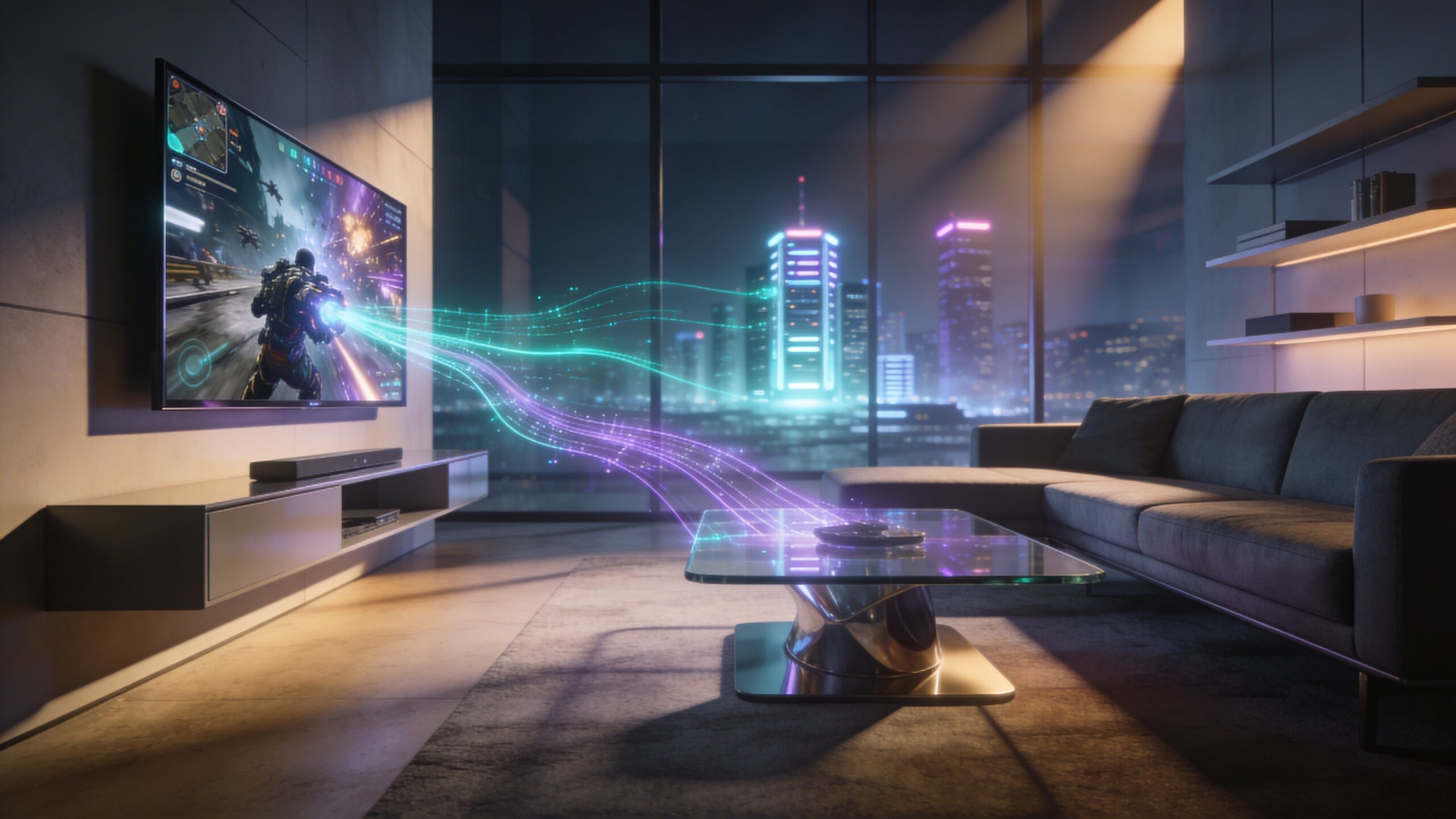
There was a time when every player walked into the exact same digital world and got the exact same experience. Same enemy accuracy. Same loot odds. Same tutorial pacing. Same difficulty curve. If you struggled, the game shrugged. If you dominated, it shrugged again—maybe it got boring, maybe it got sweaty, but it didn’t truly respond to you as a person. Now imagine the opposite: a game that pays attention the way a great coach does, noticing when you hesitate, when you thrive, when your reaction time dips after midnight, and when your aim sharpens after three warm-up rounds. That’s the promise of streaming AI—systems that observe gameplay signals in real time, infer what you need next, and adjust performance, presentation, and pacing as the action unfolds. “Streaming” matters because the intelligence doesn’t have to live entirely on your device. Parts of the model can run on servers, update constantly, and pull from huge datasets across millions of play sessions—while your local client focuses on responsiveness. The result is a loop: you play, the game measures, AI interprets, and the game adapts—again and again, sometimes multiple times per minute. When it works well, it doesn’t feel like you’re being manipulated. It feels like the game is finally tuned to your hands, your instincts, your learning curve, and even your mood.
A: Usually hybrid—some logic runs locally for speed, some runs on servers for stronger modeling.
A: Ideally it improves fairness and learning, not outcomes; you should still earn wins.
A: It can, but the best systems do it subtly (behavior/cues) rather than obvious stat swings.
A: Often in matchmaking and onboarding; direct in-match tweaks are limited to protect integrity.
A: Mostly gameplay telemetry—inputs, outcomes, and behavior patterns—ideally with privacy controls.
A: Many games provide toggles for adaptive difficulty or coaching; good designs also offer “reset.”
A: Rubber-banding forces closeness; personalization aims for flow and clarity without faking results.
A: AI can improve prediction/smoothing, but it can’t replace good network conditions.
A: Systems need guardrails to detect sandbagging and avoid rewarding it.
A: Matches feel fairer, practice feels targeted, and you improve without the game feeling “rigged.”
What “Personalized Performance” Actually Means
Personalized performance isn’t just “easy mode” or “hard mode.” It’s a set of invisible dials the game can adjust to keep you in a sweet spot: engaged, challenged, and rewarded without being overwhelmed or bored. In real time, streaming AI can influence everything from difficulty scaling to network prediction strategies, from matchmaking to input latency compensation, from dynamic tutorials to camera smoothing. The goal isn’t to make you win—it’s to make the game feel fair, readable, and consistently satisfying. Think of performance as the entire relationship between you and the game’s demands. Are you landing shots but losing fights because you misread audio cues? Are you failing platforming sections because your timing is fine but your camera sensitivity is too twitchy? Are you quitting at the same friction points every time? Streaming AI can detect patterns like these and adapt the experience to reduce unnecessary frustration while preserving the identity of the game. When personalization is done right, it feels like the game “meets you where you are,” then nudges you forward.
The Real-Time Feedback Loop
Under the hood, streaming AI personalization often works like a three-part cycle. First comes capture: the game collects signals—movement inputs, aim drift, time-to-kill, damage taken, missed parries, route choices, menu hovering, retry frequency, and even micro-pauses where players hesitate. Second comes interpretation: models estimate what those signals mean. Are you confused? Overconfident? Improving quickly? Fatigued? Third comes intervention: the game changes something—enemy aggression, hint timing, loot distribution, tutorial triggers, encounter composition, or matchmaking placement.
The trick is subtlety. If the intervention is too obvious, it feels like rubber-banding or pity. If it’s too timid, nothing improves. Streaming AI helps because it can be updated and tuned continuously: developers can refine the model’s interpretations, test new interventions, and adjust thresholds without shipping a full patch every time. Over time, the personalization becomes smoother, less intrusive, and more aligned with what players actually enjoy.
The Signals Games Pay Attention To
To personalize in real time, AI needs a language—and that language is player telemetry. Some signals are performance-based: accuracy, headshot ratio, reaction time, damage dealt versus received, objective contribution, and consistency across matches. Others are behavior-based: how often you peek corners, whether you flank or hold angles, how you use abilities, how quickly you adapt after dying, and whether you chase goals or wander.
Then there are engagement signals: session length, frequency of restarts, time spent in settings menus, how long you hover over crafting recipes, where you quit, and whether you return the next day. These signals are powerful because they reveal friction. A player might be “winning,” but still not having fun if the pacing feels stressful or confusing. Personalization isn’t only about skill—it’s about flow.
Dynamic Difficulty That Feels Like Magic
Dynamic difficulty adjustment has been around for a while, but streaming AI makes it smarter and less clunky. Instead of simply giving enemies more health, AI-driven systems can shift how enemies challenge you. If you’re great at aiming but bad at positioning, the game might introduce encounters that reward cover usage and movement rather than raw accuracy. If you struggle with timing-based mechanics, the game might subtly widen parry windows early, then tighten them as your rhythm improves. If you’re learning fast, it can accelerate the ramp to keep you engaged. Crucially, personalization can be granular. You might be elite with a sniper but average with a shotgun. You might dominate in open areas but panic in tight corridors. Streaming AI can tailor difficulty by weapon class, encounter type, biome, or even mission stage—so the whole game doesn’t swing wildly just because one segment went poorly.
Smarter Matchmaking That Understands “Style,” Not Just Rank
In competitive games, personalization often lives in matchmaking. Traditional systems use rank, win/loss, and maybe a hidden rating. Streaming AI adds nuance by modeling play style: aggression level, risk tolerance, team orientation, objective focus, and consistency under pressure. Two players might have the same rating but wildly different experiences—one is a calm anchor, one is a chaotic duelist. Pairing them with compatible teammates and opponents can make matches feel more “fair” even when the numbers look identical.
Real-time personalization can also reduce lopsided streaks by adjusting the types of lobbies you enter. If the model detects you’re tilted—rushing, over-peeking, abandoning objectives—it might place you into a slightly less punishing match to reset your rhythm. Or if you’re on fire, it might give you more strategically challenging opponents rather than simply harder aim gods. That kind of tuning keeps competition intense without turning it into a grind.
Latency, Prediction, and the “Invisible Advantage” Problem
Streaming AI personalization also shows up in places players rarely talk about directly: netcode smoothing, hit registration prediction, and latency compensation. Online games constantly guess what happens between server updates. AI can improve those guesses by learning your input patterns and movement tendencies, which can help reduce the “I was behind the wall!” moments.
There’s a line, though. If personalization starts to change outcomes in ways that feel like secret help or secret punishment, trust collapses. The best systems use AI to improve consistency rather than to hand out wins. The goal is that your inputs feel clean, the game state feels stable, and you can build skill without fighting the network.
AI Coaching Inside the Game
One of the most exciting directions is real-time coaching that feels like a friendly, non-judgmental guide. Not a wall of tips—timed, contextual nudges. If you keep dying to the same boss attack, the game might replay a short clip of the wind-up, highlight the audio cue, or offer a practice micro-challenge that isolates the mechanic. If you miss shots because you over-flick, it might suggest lowering sensitivity or enabling a specific aim response curve.
Streaming AI can personalize these coaching cues to your learning style. Some players want direct instruction. Others want discovery. The model can learn what you respond to: do you click through tutorials or slow down and read? Do you improve more from a hint or from a failure? Personalization makes coaching feel less like an interruption and more like momentum.
Real-Time Content Shaping: Loot, Quests, and “Just One More Run”
Personalization isn’t only about moment-to-moment difficulty. It’s also about what the game chooses to show you next. Streaming AI can tune loot drops to encourage experimentation (without breaking economy balance), recommend builds that match your habits, or nudge you toward questlines that fit your play style. If you keep crafting defensive gear and playing cautiously, the game might surface content that rewards planning and endurance. If you love movement tech and speed, it might highlight time trials and traversal-based challenges.
When done ethically, this can help players discover fun they would otherwise miss. When done poorly, it can become a dopamine machine that prioritizes retention over enjoyment. The difference is intention and transparency: personalization should serve the player’s experience, not exploit it.
The Tech Stack: Edge, Cloud, and Hybrid Brains
Real-time personalization usually relies on a hybrid approach. Some decisions must happen locally to avoid lag—camera adjustments, aim smoothing, immediate tutorial triggers. Other decisions can happen on the server—matchmaking, long-horizon difficulty modeling, cross-session personalization, and model updates. Streaming AI excels at the server side: it can run larger models, learn from massive datasets, and ship improvements continuously. This hybrid model is also practical: it reduces the hardware burden on the player’s device, enabling smarter personalization even on modest systems. And it allows developers to test and refine interventions safely, rolling out changes gradually rather than flipping a switch for everyone at once.
Personalization Without Creepiness
The word “AI” can make players wary, especially when personalization sounds like surveillance. The best implementations minimize sensitive data, focus on gameplay telemetry, and keep the adaptation explainable. Players should feel like the game is responding to what they do in the game, not profiling them as a person outside it.
A good rule is: personalization should be legible in outcomes, even if the exact math stays hidden. If the game suggests a settings tweak, it should tell you why. If it adjusts difficulty, it should do so in a way that preserves fairness. If it learns your preferences, it should give you control—toggles, sliders, “reset personalization,” and clear privacy options. Trust is a feature.
Fairness, Competitive Integrity, and the Fear of “Rigged” Games
As personalization becomes more advanced, designers have to wrestle with a hard question: how do you keep games fair while tailoring experiences? In single-player, personalization is mostly a delight—like a story that knows when to push and when to breathe. In multiplayer, it’s sensitive. Players don’t want hidden hands tipping scales.
This is why many competitive games limit personalization to matchmaking quality, onboarding, and accessibility settings, rather than direct in-match performance tweaks. The north star is consistent rules. AI can help you learn the rules, find better matches, and reduce technical frustration—but it shouldn’t secretly alter damage values because you had a bad day. If players believe the game is “deciding” outcomes, the competitive magic evaporates.
Accessibility and Adaptive Controls
One of the most meaningful benefits of real-time personalization is accessibility. Streaming AI can help tune controls for players with different needs: stabilizing camera motion, adjusting input windows, reducing rapid button requirements, customizing subtitle timing, or altering UI density based on how quickly you process information. Personalization can be the difference between a game being playable or impossible.
And accessibility isn’t only about disability—it’s about comfort. Some players get motion sickness. Some players struggle with cluttered HUDs. Some players want calmer soundscapes or clearer directional audio. AI can learn what settings reduce friction, then offer changes that feel like a helpful friend, not a complicated engineering panel.
The Future: Personalized Worlds That Still Feel Shared
The most exciting future isn’t a game that changes into a completely different thing for every player. It’s a game that remains a shared world—same core rules, same identity—while adapting the edges so more players can find flow. Imagine raids that keep their iconic mechanics but offer personalized practice arcs. Imagine shooters that maintain strict competitive rules but teach you in a way that fits your learning curve. Imagine open-world games that pace discovery based on your curiosity rather than a one-size-fits-all map checklist.
Streaming AI is pushing games toward experiences that feel handcrafted at scale. Not because a developer wrote a thousand separate paths, but because models can help choose the right moment, the right challenge, and the right nudge—right now.
Closing: When the Game Meets You in the Moment
Gaming has always been a conversation between player and system, but for decades the system mostly talked and the player mostly adapted. Streaming AI flips the balance. It lets the game listen, learn, and respond—sometimes so smoothly you don’t notice it happening. When personalization is thoughtful, it doesn’t remove challenge; it refines it. It doesn’t make you the hero by default; it helps you become one through better pacing, clearer feedback, and a path that respects how you actually play. Real-time AI personalization is not just a technical trend. It’s a design philosophy: the belief that the best version of a game is the one that helps you find your rhythm—and then dares you to grow beyond it.