The Next Console War May Not Be About Consoles at All
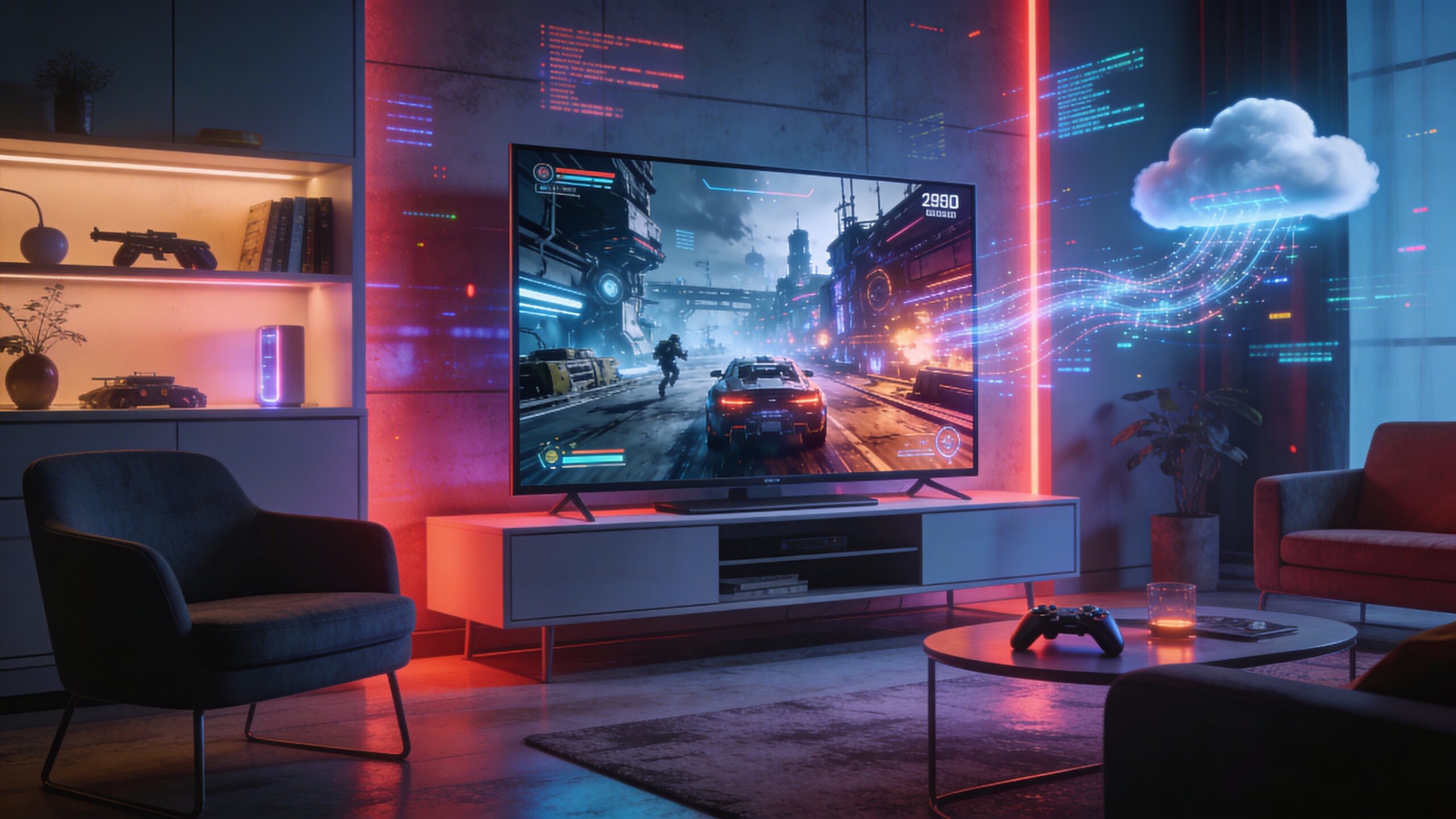
For decades, every new console generation has followed a familiar rhythm. A company unveils a more powerful box, promises sharper graphics and faster loading, and invites players into a new cycle of hardware upgrades. That model has shaped gaming culture for years, but the rise of AI-driven cloud gaming is beginning to challenge the idea that the future of gaming must live inside a machine under the television. The next console generation may still feature powerful hardware, but it could also be the first generation where the most important technology is invisible. Cloud gaming has already proven that high-end games can be streamed across the internet in much the same way people stream movies and music. What changes the equation now is artificial intelligence. AI is making cloud gaming smarter, more efficient, more personalized, and potentially more scalable than earlier streaming efforts ever allowed. Instead of simply delivering games remotely, AI-driven platforms may be able to predict player behavior, optimize performance in real time, reduce lag, upscale visuals, tailor recommendations, and even reshape game worlds on the fly. That is a far more disruptive idea than streaming alone.
A: Probably not right away; it is more likely to grow alongside hardware during the next generation.
A: It helps improve streaming quality, predict demand, reduce lag, and personalize the player experience.
A: Dependence on fast, stable internet and low latency remains the biggest challenge.
A: It can be, especially when it reduces the need for expensive new hardware upfront.
A: In some cases it can get close, especially as AI upscaling and smarter compression continue improving.
A: They offer predictable performance, offline reliability, and a stronger sense of ownership.
A: Yes, cloud-based AI could support smarter characters, larger simulations, and more adaptive worlds.
A: Often yes, because instant access and lower hardware costs are especially attractive to broader audiences.
A: It may mean shaping the industry’s direction even if dedicated consoles still exist.
A: A hybrid model where local consoles and AI-driven cloud gaming both play major roles.
Why Cloud Gaming Has Always Felt Like the Future
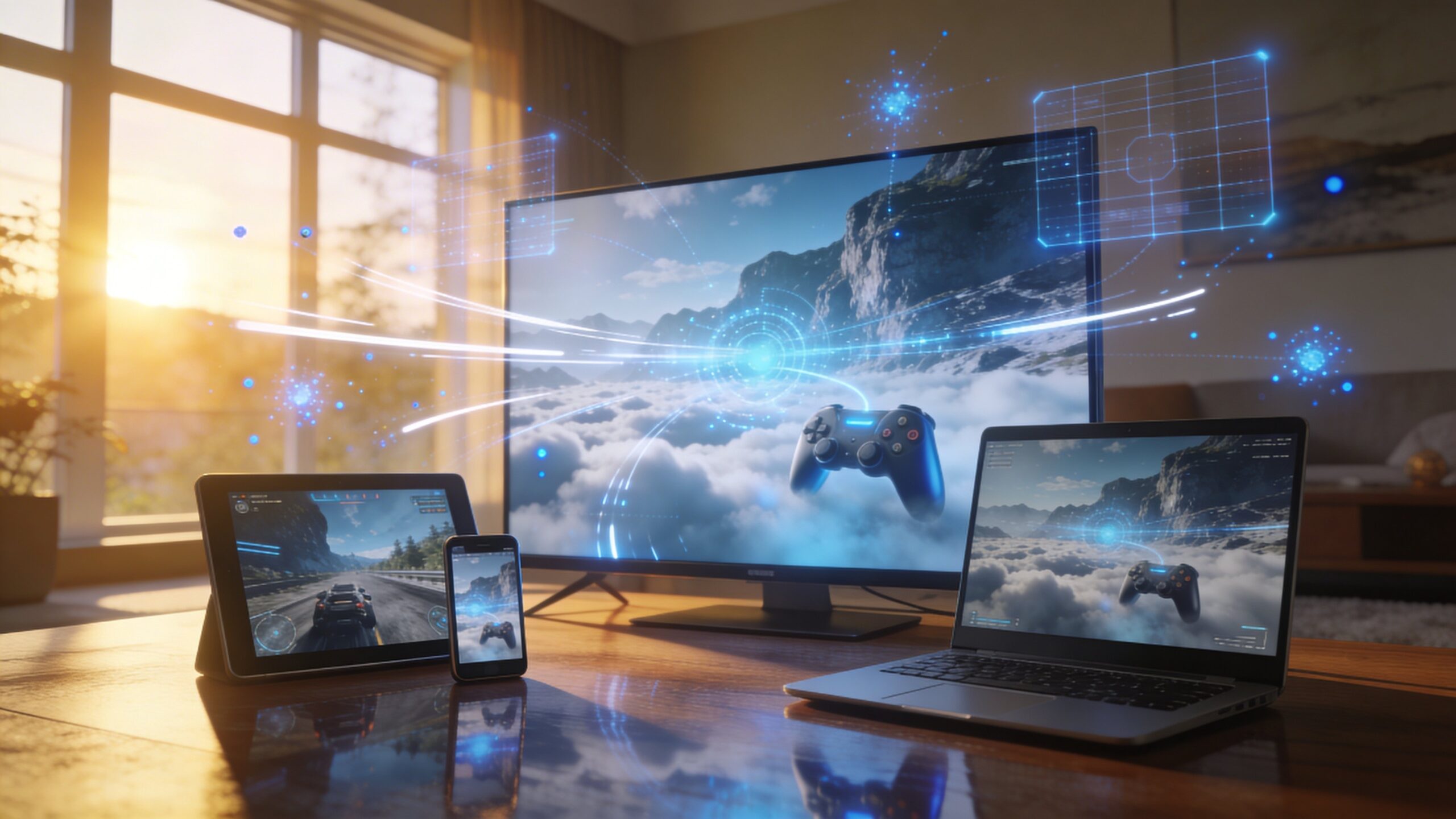
Cloud gaming has long appealed to the imagination because it removes one of the biggest barriers in gaming: expensive hardware. If a player can access a demanding game from a smart TV, tablet, phone, or budget laptop, the traditional need to buy a premium console becomes less urgent. That vision has been powerful for years, but technical limitations kept it from becoming the industry standard. Internet speeds, latency, server costs, and inconsistent performance often created an experience that felt promising but not yet definitive. Still, the advantages have never gone away. Cloud gaming offers instant access, easier updates, no downloads, and a cleaner entry point for casual players. It also opens the door to gaming across more devices and locations. A player could move from the living room television to a handheld screen without changing platforms or losing progress. That flexibility fits modern digital habits, where people expect their entertainment to travel with them across screens. The reason the next generation feels different is that AI may finally solve some of the problems that made cloud gaming feel incomplete. Instead of brute-forcing the challenge with raw bandwidth and massive data center expansion alone, companies can now use intelligent systems to make streaming more adaptive and efficient.
How AI Changes the Cloud Gaming Equation
Artificial intelligence gives cloud gaming something it has lacked for much of its history: responsiveness beyond raw infrastructure. Traditional streaming systems rely heavily on bandwidth, stable connections, and powerful servers. AI allows platforms to do more with the resources they already have. It can predict network fluctuations, compress video streams more intelligently, sharpen lower-resolution frames, and prioritize the visual or gameplay elements that matter most in a given moment. That matters because cloud gaming succeeds or fails on feel. If a game looks blurry, stutters, or reacts half a second too slowly, players notice immediately. AI can help close that gap. Machine learning systems can anticipate player input patterns, optimize server load distribution, and adjust video delivery dynamically depending on motion, scene complexity, and device capability. In effect, AI makes cloud gaming less rigid and more adaptive.
AI can also personalize the player experience in ways console ecosystems have only partially explored. It can learn genre preferences, difficulty habits, session length, social behavior, and even control tendencies. That data can be used to recommend games more accurately, fine-tune streaming quality, reduce wait times, and shape a platform that feels individually responsive. The more friction cloud services remove, the stronger their case becomes against dedicated hardware.
The Convenience Advantage Could Be Massive
One of the most powerful arguments for AI-driven cloud gaming is convenience. Every generation of traditional consoles asks consumers to spend hundreds of dollars upfront, wait for storage installs, manage updates, and eventually think about upgrading again. Cloud gaming shifts that burden away from the user. If the service works well enough, the platform becomes less about ownership of hardware and more about access.
That model could be especially attractive to younger players, families, and casual users who are less interested in technical specifications and more interested in instant play. AI strengthens that advantage by making access smarter. It can predict when servers will be needed in specific regions, reduce queue bottlenecks, and balance demand more efficiently during major launches. That means fewer of the frustrating service spikes that hurt adoption. Convenience also changes the business side of gaming. Publishers may prefer a future where players can enter games instantly, subscriptions create recurring revenue, and hardware barriers shrink. Console makers have traditionally relied on exclusive games and ecosystem lock-in, but cloud gaming offers a different kind of lock-in: a seamless service layer that becomes harder to leave once libraries, saves, achievements, and social features are deeply integrated.
AI Could Redefine Visual Quality Without Local Hardware
One of the biggest assumptions in gaming is that visual leaps must come from more powerful local hardware. AI challenges that idea. Already, AI-assisted upscaling and frame generation are changing how images are rendered and delivered. In a cloud environment, these tools could become even more powerful because they can be handled server-side and deployed at scale. That means a device with limited local power could still display a game that feels premium. AI can reconstruct detail, smooth performance, and deliver cleaner visuals than raw transmission alone might allow. Instead of every player needing a cutting-edge graphics chip in their home, much of the visual heavy lifting can happen remotely.
This does not mean cloud gaming will instantly match or surpass every local console experience in every scenario. But it does mean the gap may narrow faster than many expect. If enough players perceive the visual difference as minor, the economic case for buying an expensive console becomes weaker. Gaming history shows that convenience often beats purity once the quality passes a certain threshold.
The Subscription Era Favors Cloud Platforms
The broader entertainment market has trained consumers to think in subscriptions. Music, movies, television, software, and storage are now widely accessed through monthly services. Gaming has been moving in the same direction, and AI-driven cloud gaming fits that pattern almost perfectly. Instead of selling a machine every several years, companies can sell continuous access, premium tiers, curated libraries, and personalized engagement.
AI can increase the value of that model by making subscriptions feel smarter. It can surface games at the right moment, revive lapsed users with better recommendations, and identify the kinds of content that keep players engaged longer. It can also help platforms understand how players move through catalogs, what causes churn, and where technical problems break immersion. That level of intelligence makes cloud gaming more than a delivery method. It becomes a living service, constantly optimizing itself around user behavior. Traditional consoles can adopt some of these features too, but cloud-native ecosystems are built to collect and respond to this kind of data more directly. In a subscription-first future, that could become a decisive advantage.
Why Traditional Consoles Still Have Powerful Defenses
Even with all of this momentum, it would be a mistake to assume traditional consoles are about to disappear. They still offer something cloud gaming struggles to guarantee: consistency. A dedicated console delivers performance without depending on household internet quality, regional server health, or data caps. For competitive players, latency-sensitive genres, and users in areas with unstable broadband, local hardware still provides peace of mind.
Consoles also have emotional and cultural weight. They are physical products with identity, launch excitement, collector appeal, and living-room presence. They mark generations in a way cloud services do not. People remember iconic systems, controllers, startup sounds, and midnight release moments. A streaming app, no matter how advanced, has a harder time creating that same symbolic attachment. There is also the issue of ownership perception. Many players still prefer buying hardware and games outright rather than depending on a subscription model that can change pricing, remove titles, or alter access terms over time. Cloud gaming often feels more temporary, and AI will not solve that trust issue by itself.
Infrastructure Will Decide More Than Marketing
The biggest obstacle to cloud gaming dominance is not imagination. It is infrastructure. AI can make streaming smarter, but it cannot fully erase the realities of internet quality, regional inequality, and network congestion. For cloud gaming to dominate a console generation, it must work not just in ideal conditions, but in ordinary homes, crowded apartments, rural areas, and busy evenings when networks are under pressure.
That is a very high bar. A next-generation console only needs to function once it is in the home. A cloud platform needs to function continuously across millions of sessions. AI can help manage bandwidth, anticipate problems, and improve compression, but the internet itself still sets the outer limit. In regions with strong fiber networks and low-latency infrastructure, cloud gaming may feel increasingly natural. In less connected markets, dedicated consoles may remain the safer choice. This split suggests that the future may not be one winner replacing the other. Instead, the next generation may become hybrid. Some players will embrace cloud-first gaming, while others continue to rely on local hardware, and many will move between both depending on the context.
AI May Change the Games Themselves
The conversation becomes even more interesting when AI is not only improving the delivery of games, but also helping shape their design. Cloud-based systems can potentially support larger simulations, more intelligent non-player characters, real-time world adaptation, and dynamic content generation that would be harder to manage on fixed local hardware. If AI-driven cloud platforms enable entirely new gameplay possibilities, then they gain a stronger argument than convenience alone.
Imagine game worlds that evolve in response to player communities, characters that converse more naturally, or large-scale environments supported by remote computation and live machine learning systems. If those experiences become compelling enough, players may begin accepting cloud dependency as the cost of accessing the most ambitious interactive worlds. This could mirror how past generations were defined by technological breakthroughs. Earlier console transitions were shaped by 3D graphics, online multiplayer, downloadable content, and digital storefronts. The next defining leap may be games that feel less static and more adaptive, powered by AI systems that work best in the cloud.
The Real Future May Be a Blended Ecosystem
The most likely outcome is not absolute domination, at least not immediately. AI-driven cloud gaming is positioned to become a central pillar of the next console generation, but probably alongside hardware rather than in place of it. Major platform holders may continue releasing consoles while treating them as premium access points to broader ecosystems that also include cloud streaming, cross-device play, subscription libraries, and AI-enhanced services. In that world, the console becomes one gateway instead of the gateway. A household might still own a powerful gaming box, but the platform’s identity would be less about the machine itself and more about the continuity of access across devices. AI would sit behind the scenes making that ecosystem smoother, more predictive, and more engaging.
This hybrid path makes strategic sense. It allows companies to preserve their hardware business while gradually training consumers to depend more on services. It also reduces the risk of betting everything on a cloud-only future before infrastructure is universally ready. For players, it offers choice. They can play locally when performance matters most and stream when convenience matters more.
So, Will AI-Driven Cloud Gaming Dominate the Next Console Generation?
The answer depends on how domination is defined. If domination means the complete disappearance of traditional consoles, the next generation is unlikely to go that far. Dedicated hardware still has meaningful advantages, and the global internet landscape is too uneven for cloud gaming to fully replace local play in the near term. But if domination means shaping the direction of the industry, influencing platform design, redefining player expectations, and becoming a major force in how games are distributed and experienced, then AI-driven cloud gaming has a very real chance. What makes this moment different is that cloud gaming is no longer relying only on the promise of remote access. It now has artificial intelligence as an accelerator. AI can reduce friction, improve image quality, personalize ecosystems, optimize infrastructure, and unlock new forms of game design. Those capabilities push cloud gaming from interesting experiment toward serious generational contender. The next console generation may still launch with impressive machines and familiar rivalries, but the deeper story could be the quiet shift happening behind the screens. Power may matter less than access. Ownership may matter less than continuity. Hardware may matter less than the intelligence of the platform delivering the experience. If that happens, the winners of the next generation may not be defined only by the consoles they build, but by how effectively they use AI to make gaming feel instant, adaptive, and everywhere. Cloud gaming does not need to eliminate consoles to dominate the conversation. It only needs to become the model that everyone else is forced to answer. And with AI rapidly improving the economics, quality, and flexibility of streaming, that future no longer feels distant. It feels like the next battle is already underway.