The Hidden Trick Behind Cloud Gaming’s Best Moments
Cloud gaming feels almost magical when it works well. A player presses a button, the character moves instantly, the camera swings smoothly, and the world responds without obvious delay. Yet under the surface, something remarkable is happening. The game is not running on the local device in the usual way. It is running somewhere else, often in a distant data center, while video frames are compressed, transmitted, displayed, and updated fast enough to feel interactive. That challenge is enormous, and one of the most important tools helping make it possible is AI predictive rendering. Predictive rendering is the art of guessing what the player is likely to do or see next, then preparing for it before the input fully arrives or before the next frame must be shown. In cloud gameplay, this matters because even tiny delays can damage immersion. AI helps reduce the visible effects of that delay by forecasting movement, camera behavior, object trajectories, and even probable scene changes. Instead of waiting passively for every action to travel across the network, the system becomes proactive. It uses data, patterns, and machine learning to stay one step ahead.
A: It is the use of intelligent forecasting to estimate upcoming frames or player actions so cloud gameplay feels smoother and more responsive.
A: No. It reduces how obvious lag feels by preparing likely outcomes early and smoothing transitions.
A: Inputs and frames must travel across a network, adding delay that local hardware usually avoids.
A: Not exactly. Interpolation is one technique; predictive rendering is the broader strategy of anticipating what comes next.
A: Fast-moving games with continuous motion, like racing, sports, action, and many third-person adventures, often show the clearest gains.
A: Yes, but well-designed systems use confidence checks and correction blending to keep mistakes subtle.
A: Absolutely. AI helps a lot, but stable low-jitter connections still improve cloud gaming noticeably.
A: Compression may lower some image detail to keep motion responsive and streaming efficient.
A: Yes. Predictive rendering helps cloud platforms deliver polished experiences even on lower-powered devices.
A: Very much so. It is one of the key technologies helping cloud gaming feel practical, flexible, and immersive.
Why Cloud Gameplay Feels Different From Local Play
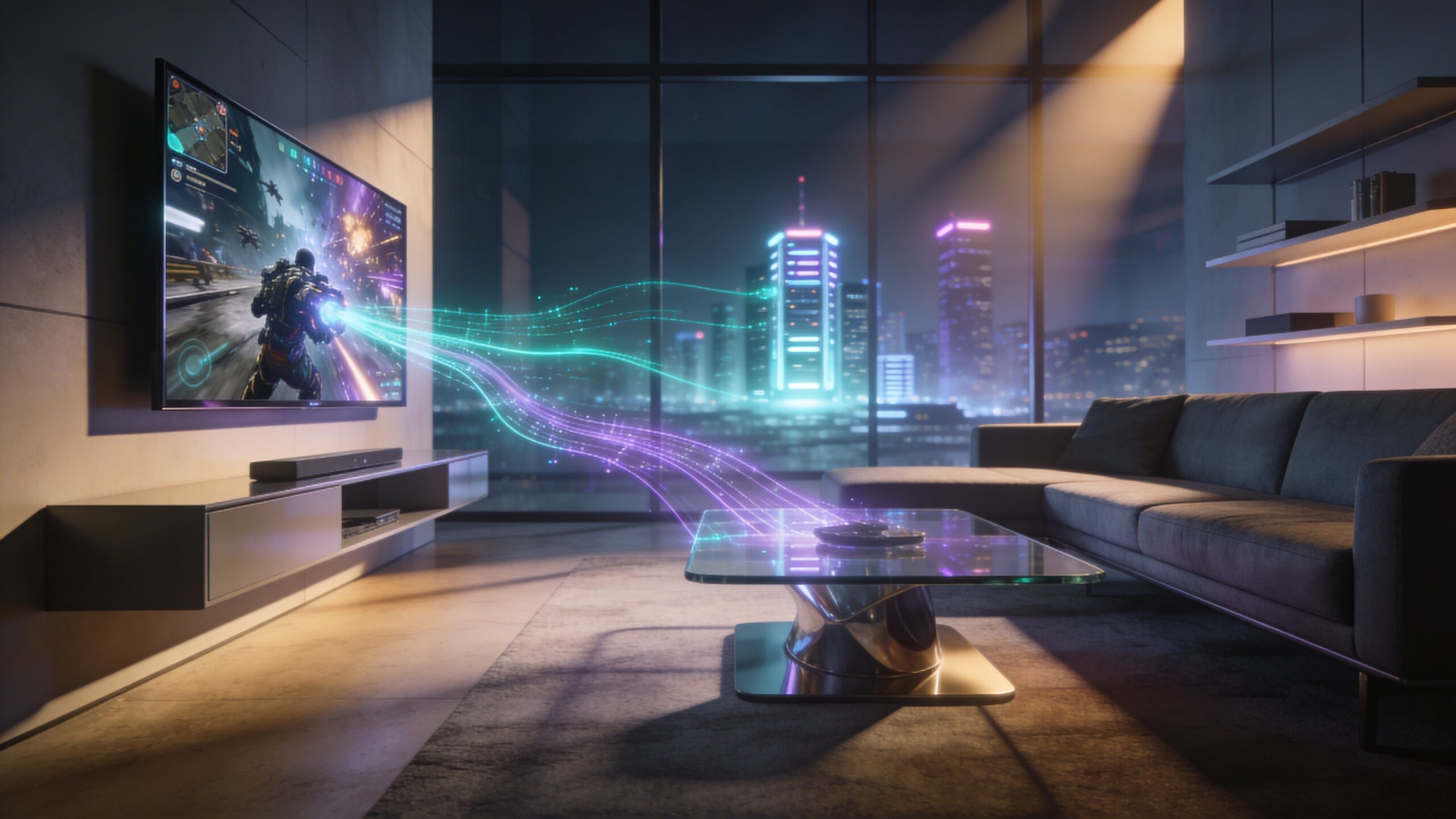
In traditional gaming, the device in front of the player handles most of the work. The console, PC, or handheld processes inputs directly, renders frames locally, and shows the result almost immediately. There are still delays, but they are typically much smaller and more predictable because the hardware and display are physically close to the player. Cloud gaming changes that equation by moving the heavy computation to a remote server. That shift creates several advantages. Players can enjoy demanding games without expensive local hardware, and games can run across phones, tablets, smart TVs, and lower-powered laptops. But it also introduces a serious challenge: latency. Every button press has to travel to the server, be processed by the game engine, be rendered into a frame, encoded into video, sent back over the internet, decoded by the device, and finally displayed. Each step adds time. AI predictive rendering exists because human perception is very sensitive to those accumulated milliseconds, especially in fast-moving games.
What Predictive Rendering Actually Means
Predictive rendering is not simply about making the game look prettier. It is about preparing or shaping upcoming frames using intelligent predictions so the final experience feels smoother, more immediate, and more stable. The system studies patterns in player input, movement habits, camera rotation, object motion, and previous frames to estimate what is most likely to happen in the next moment.
For example, if a player is sprinting down a corridor and gently turning the camera to the right, the system can predict that the next frames will likely continue that movement. It can begin preparing the visual direction of that turn before the complete round-trip input cycle finishes. If the prediction is correct, the experience feels responsive. If the prediction is slightly off, correction techniques can blend the rendered result back toward the true game state. The goal is not perfect fortune-telling. The goal is to make likely outcomes arrive faster and feel seamless.
How AI Learns to Anticipate Player Behavior
Artificial intelligence becomes powerful in this context because players are often more predictable than they realize. Human movement in games tends to follow patterns. People hold forward for more than one frame. They continue aiming at a target for fractions of a second. They adjust camera direction in arcs, not random teleports. They repeat familiar actions in combat, driving, platforming, and exploration. AI systems can learn these recurring behaviors and use them to estimate what the next frame should prioritize. Machine learning models can be trained on huge volumes of gameplay data, including controller inputs, mouse motion, touch gestures, scene transitions, and player reactions to visual prompts. Over time, the system becomes better at recognizing when the user is likely to continue a motion, stop abruptly, dodge, turn, or trigger a common action. In cloud gameplay, that anticipation gives the platform valuable time. Even a short prediction window can help hide latency, smooth motion, and reduce the harsh feeling of waiting for the network.
The Relationship Between Prediction and Latency
Latency is the enemy of fluid cloud gaming, but prediction turns latency into something more manageable. Instead of accepting delay as a hard wall, AI predictive rendering treats it as a gap that can sometimes be bridged with educated guesses. When the system predicts what will likely appear next, it can start preparing those visual outcomes early, reducing the perception of delay.
This is especially useful because not all latency feels the same. A stable delay can be easier for the brain to tolerate than erratic delay. Sudden spikes, stutters, and frame inconsistencies feel worse than a consistent lag of similar length. Predictive rendering helps by making the visual flow more continuous. Even when the network is imperfect, the player may still perceive the game as responsive because the frames arriving on screen align closely with expected motion. The result is not the elimination of latency, but the masking and softening of its most noticeable effects.
Why Smoothness Matters as Much as Speed
Many people think the key to better cloud gaming is simply reducing input lag as much as possible. That certainly matters, but smoothness is just as important. A game that responds a little slower but moves consistently can feel better than one that alternates between fast and jerky. Human perception cares deeply about continuity. When motion looks stable and visual updates arrive with confidence, the experience feels more natural. AI predictive rendering contributes to this sense of smoothness by reducing the appearance of broken transitions. It can help stabilize frame pacing, estimate intermediate motion, and preserve the flow of camera movement. In fast-paced scenes, that can mean the difference between gameplay that feels slippery and gameplay that feels grounded. The player does not necessarily notice the prediction itself. What they notice is that the world seems to keep up with them.
Frame Interpolation and the Illusion of Continuity
One of the major techniques connected to predictive rendering is frame interpolation. This involves generating additional frames between rendered frames to make motion appear smoother. In cloud gaming, where bandwidth and processing limits may prevent every single frame from being rendered and transmitted at the ideal rate, AI can help invent believable in-between frames.
These generated frames are not random. The AI studies movement vectors, object edges, camera direction, character animation, and scene structure to estimate what should exist between two real frames. When done well, interpolation creates a stronger sense of fluidity. A camera pan looks less choppy. Character movement looks more natural. Rapid action becomes easier to track. In a cloud environment, this technique can be especially valuable because it enhances perceived smoothness without always requiring the network to send vastly more raw data.
Predicting Camera Motion in Real Time
Camera motion is one of the clearest areas where AI predictive rendering can shine. In many games, especially first-person and third-person titles, the camera follows patterns that are continuous rather than chaotic. Players sweep their view, track enemies, glance around corners, or pan while driving. These movements contain direction, speed, and momentum, all of which can be modeled and anticipated.
If the system predicts the likely continuation of a camera turn, it can prepare the scene composition ahead of time. That means textures, geometry, and motion information likely to enter view can be prioritized. It also means the server and client can cooperate more efficiently on what needs to be encoded and displayed next. When that works well, the world feels ready for the player rather than late to respond. That readiness is one of the defining qualities of high-quality cloud gameplay.
How AI Helps With Compression and Visual Quality
Cloud gaming does not send raw rendered worlds directly to the player. It usually sends compressed video. That means another major challenge appears: preserving visual clarity while keeping transmission fast. AI predictive rendering can assist here too. By predicting which parts of the next frame matter most, the system can allocate compression resources more intelligently.
Fast-moving character edges, aiming zones, enemy silhouettes, and camera-direction details may deserve more attention than static background areas. AI can identify those priority regions and help shape encoding decisions so crucial interactive information remains clearer. This is important because visual degradation is not just an aesthetic problem in games. Blurring, artifacting, or delayed detail can affect gameplay decisions. Better prediction lets the platform decide where precision matters most, improving both visual quality and practical playability.
The Role of Edge Servers and Smart Infrastructure
AI predictive rendering becomes even more powerful when combined with edge computing. Edge servers are positioned closer to players than distant centralized data centers, reducing travel time for data. The shorter that distance, the more effectively prediction can operate, because the system has less uncertainty to overcome and less time for conditions to change. When predictive models run alongside smart infrastructure, cloud gaming platforms can respond more dynamically to real-world conditions. They can monitor network quality, player behavior, scene complexity, and device performance all at once. If the connection worsens, the system may lean more heavily on predictive smoothing. If the network improves, it may rely more on direct rendered updates. This adaptive behavior is where AI becomes especially valuable. It does not just guess frames. It helps the whole delivery pipeline become more flexible and resilient.
Why Different Games Need Different Prediction Strategies
Not every game benefits from prediction in the same way. A racing game has different visual demands than a strategy game. A competitive shooter requires different timing and precision than a narrative adventure. Cloud platforms cannot treat all genres identically if they want the best possible results. AI predictive rendering works best when it understands the kind of game being played.
In a racing game, the system may focus heavily on road curvature, camera acceleration, vehicle direction, and motion blur continuity. In a fighting game, it may need to emphasize instant input fidelity and animation transitions. In an open-world adventure, it might prioritize camera exploration, streaming scenery, and character locomotion. Genre-aware prediction helps the platform decide what to anticipate, what to preserve, and where mistakes would be most noticeable to the player.
The Challenge of Being Wrong
Prediction is powerful, but it is never perfect. A player can suddenly stop, reverse direction, snap the camera, or do something unexpected. When the AI guesses wrong, the system must recover gracefully. This is one of the most delicate aspects of predictive rendering. A bad prediction can create visual popping, input mismatch, or a brief sense that the game is fighting the player.
To reduce these problems, modern systems often use confidence levels and fallback strategies. If the model is highly confident, it may allow more aggressive pre-rendering or interpolation. If confidence is low, it may act more conservatively. Correction techniques can also blend the predicted frame back toward the true frame once the actual input arrives. The art lies in making those corrections subtle enough that the player barely notices them. A strong predictive system is not one that never makes mistakes. It is one that hides mistakes well.
How AI Predictive Rendering Supports Accessibility and Reach
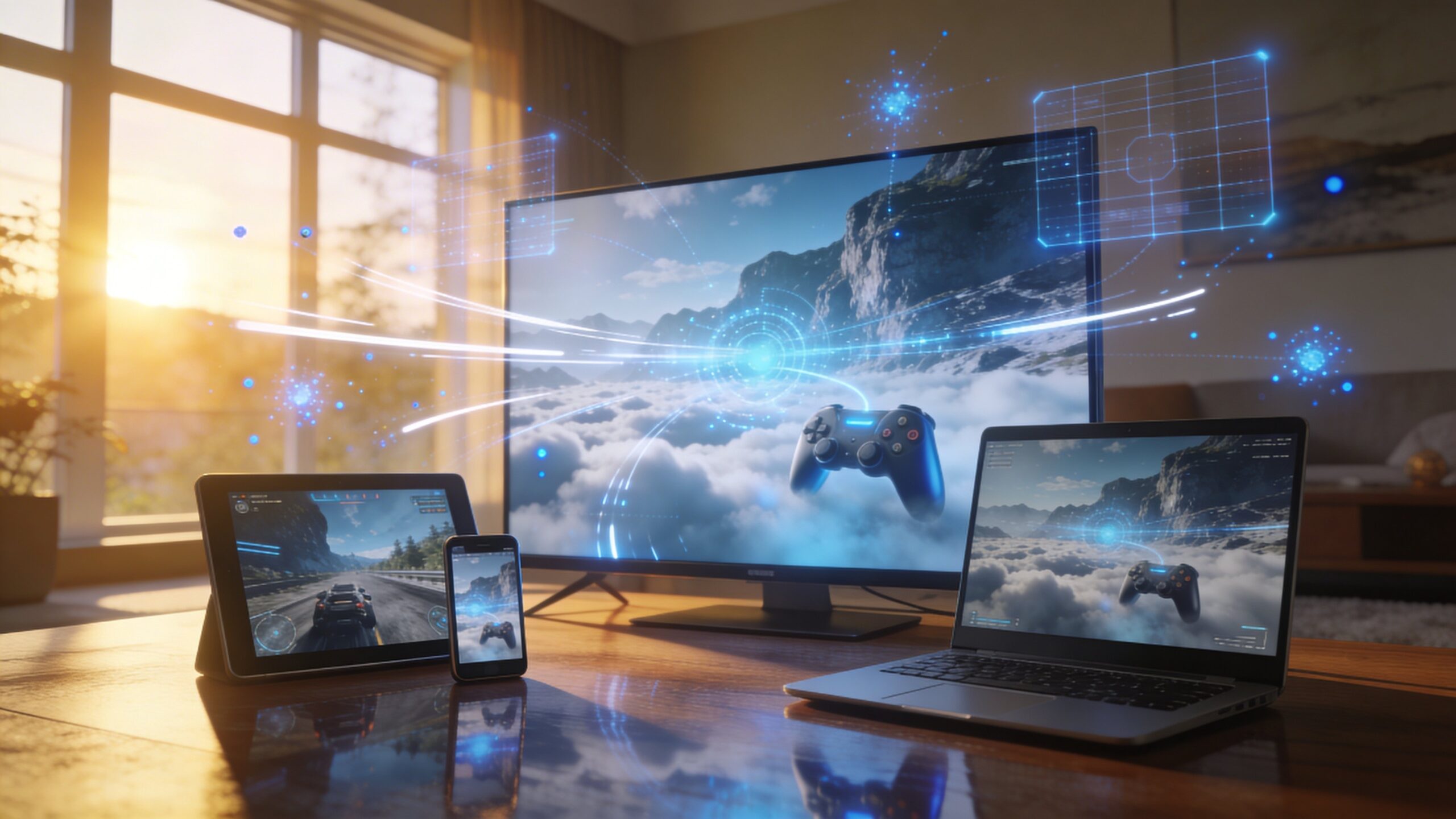
One of the most exciting aspects of this technology is how it can expand access to modern games. Cloud gameplay already lowers hardware barriers by reducing the need for powerful local machines. Predictive rendering pushes that benefit further by helping weaker devices display smoother gameplay than they otherwise could. Phones, tablets, entry-level laptops, and older smart TVs can all benefit from smarter delivery. This matters because the future of gaming is increasingly about reach. Players want flexibility. They want to begin a session on one device and continue on another. They want visually rich games without constant upgrades. AI predictive rendering supports that future by helping cloud platforms deliver experiences that feel polished even outside the traditional gaming setup. It is not just a technical feature. It is part of what makes gaming more portable, more inclusive, and more adaptable.
The Psychological Side of Responsive Play
Smooth cloud gameplay is not only a technical achievement. It is also a psychological one. Players judge responsiveness emotionally as much as mechanically. A game that feels crisp encourages confidence. A game that feels delayed creates hesitation. Even when the actual network conditions are not ideal, predictive rendering can shape how the experience is perceived.
That matters because gaming is deeply tied to timing, rhythm, and trust. Players want to feel connected to the action. They want to believe their decisions matter in the moment they make them. AI predictive rendering helps preserve that feeling. By reducing visual discontinuity and anticipating likely outcomes, it keeps the illusion of immediacy alive. In many cases, that illusion is what makes cloud gaming feel not merely usable, but genuinely enjoyable.
Where the Technology Is Heading Next
The future of AI predictive rendering will likely involve even richer models of motion, scene awareness, and player intent. Systems may become better at understanding context, not just raw input patterns. They may learn the difference between cautious exploration and panic movement, between cinematic camera drift and competitive target tracking. That deeper understanding could lead to smarter predictions, better correction, and more convincing fluidity.
We may also see tighter integration between game engines and cloud streaming infrastructure. Instead of treating rendering, encoding, transmission, and prediction as separate layers, future platforms may coordinate them as one intelligent system. AI could decide what to render first, what to stream with higher fidelity, what to interpolate locally, and what to defer without noticeable harm. As networks improve and models become more sophisticated, cloud gameplay will likely feel less like a compromise and more like a natural extension of how games are played.
Why Predictive Rendering Is Central to the Future of Cloud Gaming
Cloud gaming promises freedom from hardware limits, but that promise depends on delivering an experience that still feels immediate, fluid, and satisfying. AI predictive rendering is one of the quiet technologies making that promise more believable. It helps anticipate player behavior, smooth motion, support compression, reduce the sting of latency, and preserve the feeling of control that games depend on. The most impressive part is that players may never think about it when it works. They simply notice that the game feels smooth, the world responds naturally, and the experience remains immersive across devices and connections. That invisibility is a sign of success. The technology fades into the background while the gameplay stays front and center. As cloud gaming continues to grow, AI predictive rendering will remain one of the essential engines behind its smoothest and most convincing moments.