The Shift That Changes Everything
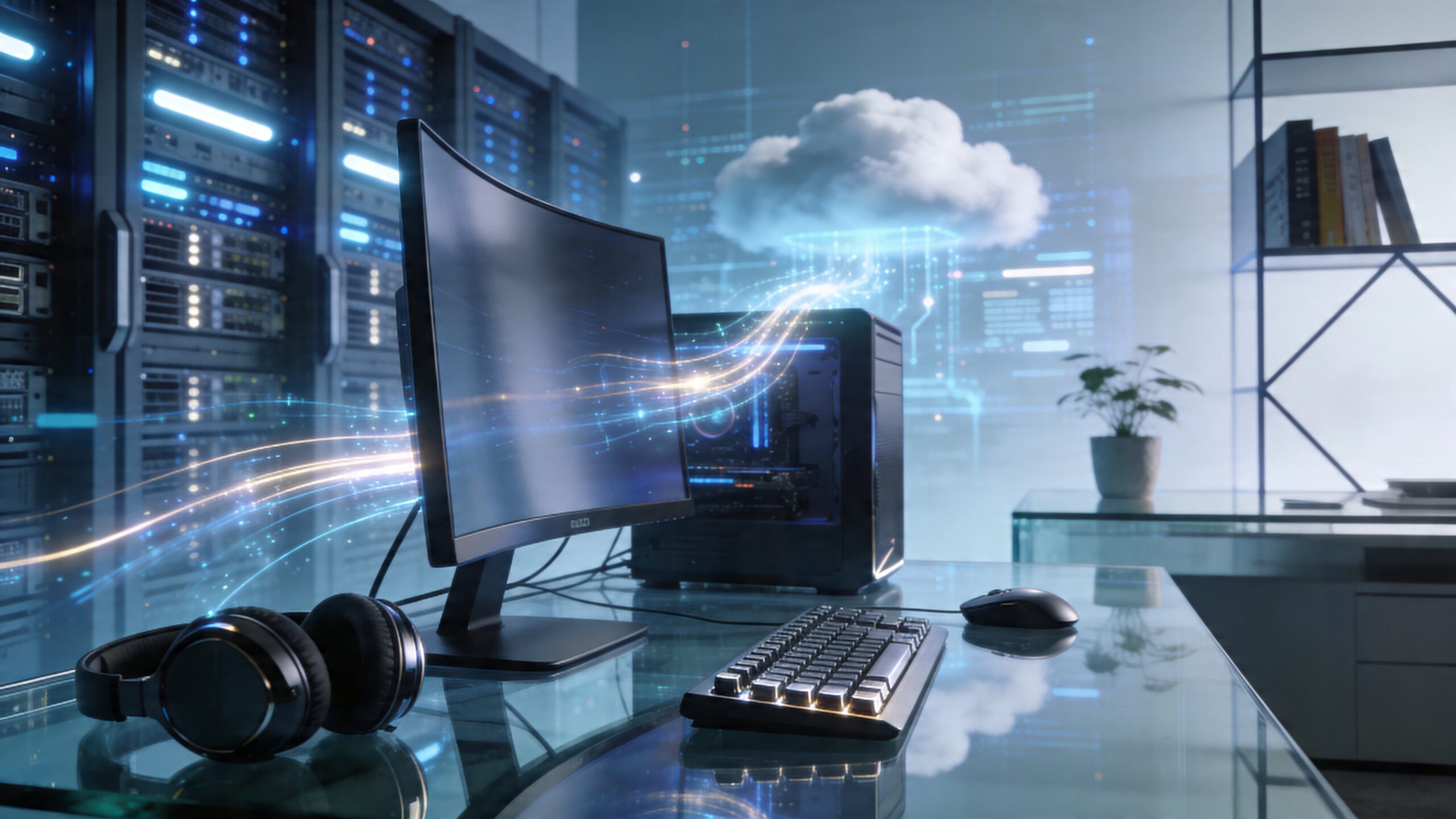
Gaming has always been tied to hardware. For decades, the experience depended on what sat under the television, on the desk, or in a pocket. Every generation of players learned the same rule: if you wanted better graphics, larger worlds, smoother performance, and access to the newest releases, you needed a more powerful machine. That model shaped the business of gaming and the identity of gamers themselves. Consoles became status symbols, PCs became performance battlegrounds, and upgrades became part of the cost of belonging. Cloud-based gaming challenges that entire tradition. Instead of requiring expensive local hardware to do the heavy lifting, it moves much of the processing to remote servers and streams the result to the player’s screen. In simple terms, the game runs somewhere else, and the player experiences it almost instantly at home. That one change is massive. It transforms gaming from a hardware-first activity into a service-first experience, and that is why cloud-based games feel like the Netflix moment of gaming. The comparison matters because Netflix did not merely offer a new way to watch movies. It changed expectations. It shifted the focus from owning the right discs and players to having immediate access to a huge library whenever people wanted it. Convenience became the killer feature. Cloud gaming has the potential to do the same thing for interactive entertainment. It takes an industry built on barriers and begins replacing those barriers with access, flexibility, and speed.
A: Usually far less than traditional gaming, since the main processing happens remotely.
A: For many players it can cover a lot of needs, though preferences and connection quality still matter.
A: Because it emphasizes instant access, streaming convenience, and large libraries over local ownership.
A: Keeping latency low and performance stable enough that the stream feels natural.
A: Speed matters, but consistency, low congestion, and stable latency are often just as important.
A: Yes, that flexibility is one of the biggest appeals of cloud-based gaming services.
A: No, but the more competitive the game, the more performance precision tends to matter.
A: Not entirely, but it reduces how much local power is needed for many experiences.
A: It fits modern habits built around streaming, subscriptions, and seamless cross-device access.
A: When the technology disappears and the player simply feels like they are playing, not streaming.
From Boxes and Discs to Instant Access
The history of gaming is filled with physical gates. First there were cartridges, discs, and dedicated arcade cabinets. Then came digital downloads, which removed the trip to the store but still required strong local hardware, long installation times, storage space, patches, and constant system management. Even as games became easier to buy, they did not necessarily become easier to start. A player might still spend hours downloading a title before reaching the main menu. Cloud gaming reimagines that path. The dream is simple and powerful: see a game, click play, and begin. No install. No giant patch. No waiting for storage to clear. No panic about whether the processor or graphics card meets the minimum requirements. This immediate, friction-light approach mirrors the reason streaming video changed media habits. People loved not only the content itself but the ease of getting to it. That ease matters more than many enthusiasts admit. Players do not always want to research specs, compare devices, or think about download sizes. Many want to jump into a world quickly after work, during travel, or in a free hour between obligations. When cloud gaming works well, it turns gaming into something available rather than something prepared for. That emotional shift is a major part of why it feels like a streaming revolution instead of a simple technical upgrade.
Convenience Is More Disruptive Than Raw Power
It is tempting to think revolutions happen because something looks better or runs faster. In reality, many of the biggest media shifts happen because something becomes easier. Streaming music did not win because it sounded dramatically different from digital files. It won because it made access effortless. Video streaming did not triumph because televisions suddenly became better. It won because it made vast libraries available with almost no friction.
Cloud gaming follows that pattern. Its greatest promise is not that it will instantly outperform every high-end gaming PC. Its promise is that it can reduce the weight of the gaming experience. A person can move from one device to another, pick up progress without complex setup, and access demanding games without buying premium hardware first. That changes who can participate and how often they play. This is especially important for players who exist outside the traditional image of the hobbyist gamer. Families sharing screens, adults with busy schedules, curious newcomers, and people in regions where expensive hardware is harder to buy all benefit from a model built around access instead of ownership. When technology lowers the effort required to start, entire new audiences can enter. That is what makes convenience disruptive. It does not just improve an experience for existing users. It expands the audience itself.
The End of Hardware as the Main Gatekeeper
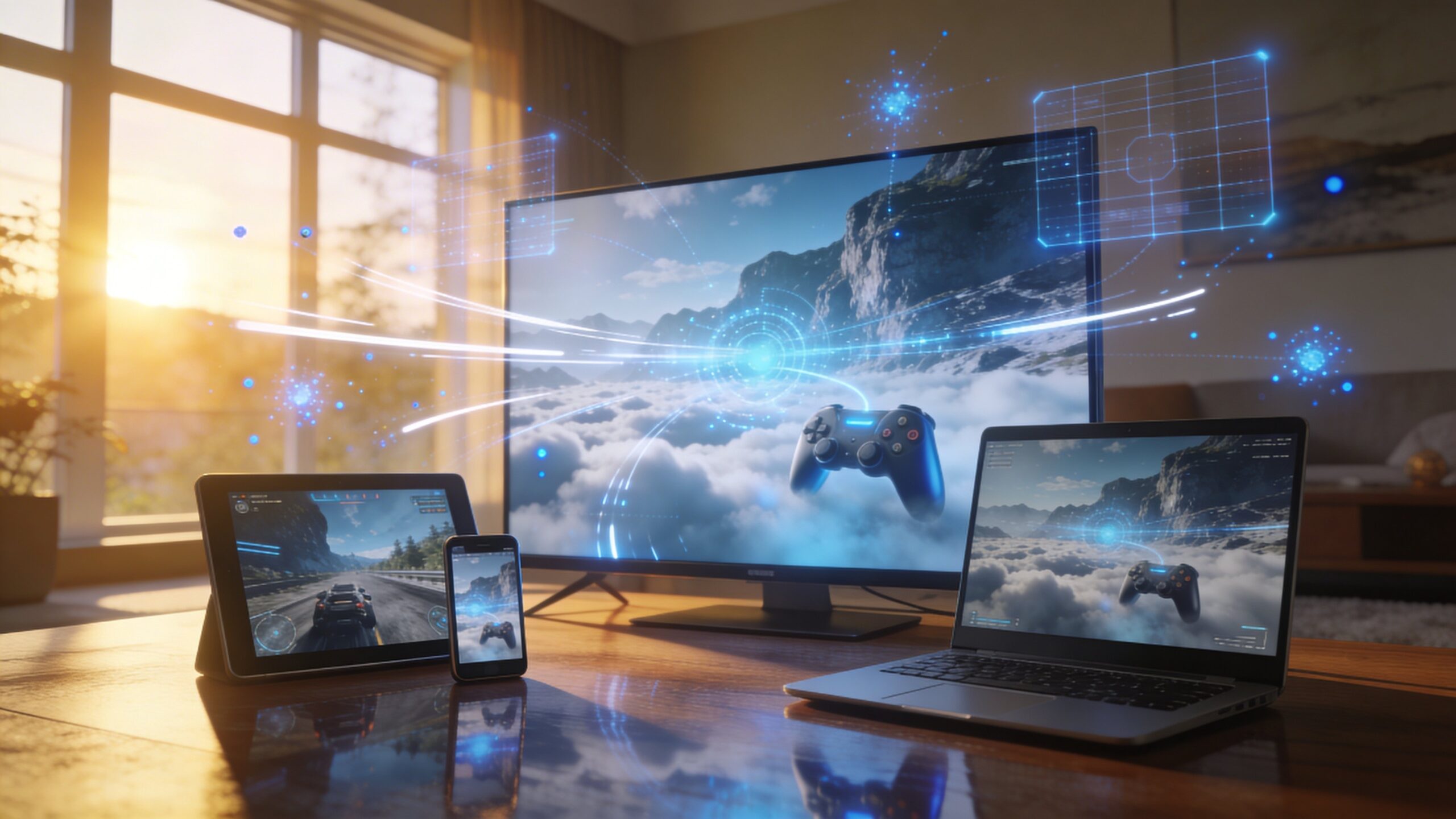
For years, gaming’s first question was simple: what are you playing on? The answer determined what was possible. Cloud-based gaming weakens that question. In a cloud-first model, the screen becomes more important than the box attached to it. A smart television, tablet, laptop, phone, or low-powered computer can potentially become a portal to high-end experiences because the demanding work happens elsewhere. That does not mean hardware disappears. Screens, controllers, internet connections, and network quality still matter. But the role of local hardware changes. It becomes a window rather than the engine. That is a major philosophical shift for gaming. Once the device is no longer the main gatekeeper, the entire market begins to open in unexpected ways.
This may also change upgrade culture. Traditional gaming has long relied on the excitement and frustration of refresh cycles. New consoles launch, graphics cards become outdated, and players face the pressure to spend again to stay current. Cloud gaming offers a different relationship with progress. Improvements can happen on the server side without requiring each player to replace their machine. In theory, the platform evolves while the player keeps the same screen in front of them. That feels remarkably similar to what happened in streaming entertainment, where the platform and content improved constantly while the consumer’s basic access point stayed relatively simple.
Why the Subscription Mindset Fits Gaming
The Netflix comparison is also about payment psychology. Streaming video helped normalize the idea that access could matter more than ownership. Many people stopped buying movies one by one and instead paid for a service that gave them a rotating universe of choices. Gaming has been moving in that direction for years through downloadable libraries, memberships, and digital storefront ecosystems. Cloud gaming accelerates that trend because it pairs access with instant play. This model can be attractive for players who want variety more than permanence. Not everyone wants to commit to one giant game for six months. Many want to sample genres, try new releases, explore indie experiments, and move between experiences without feeling like every purchase is a major financial event. A cloud-based library can turn gaming into browsing, and browsing is one of the most powerful habits modern media platforms know how to encourage.
That does not mean ownership will vanish or that every player will prefer subscriptions. Some people value collecting, modding, archiving, or permanently controlling their libraries. Those concerns are real. But the cultural momentum behind subscription access is hard to ignore. Once consumers become comfortable with paying for availability rather than possession, industries tend to reorganize around that behavior. Gaming appears increasingly ready for that same shift.
A More Flexible Future for How People Play
One reason cloud gaming feels so important is that it matches the fragmented rhythm of modern life. People do not always sit down in one place for hours with one device. They move between rooms, commute, travel, multitask, and divide leisure time into smaller pieces. Traditional gaming can support some of that, but cloud platforms are especially well suited to it because the experience is designed around portability of access.
Imagine beginning a game on a television, continuing it on a tablet in another room, and checking progress later on a laptop without elaborate syncing rituals. That kind of flexibility makes gaming feel more woven into daily life. It no longer depends so heavily on one sacred space or machine. Like streaming video, it becomes something that can travel with the user rather than demand that the user travel to it. This flexibility can reshape the meaning of “gaming time.” Instead of requiring a formal session with setup, updates, and commitment, cloud play can fit into spontaneous moments. That accessibility may sound small, but habit formation often depends on small things. The easier something is to enter, the more likely it becomes a regular part of life.
The Big Challenge: Performance Has to Feel Invisible
Every major media shift comes with a test. For cloud gaming, that test is whether the technology can disappear. Players do not want to think about remote servers, network routing, input latency, bitrate compression, or resolution scaling. They want the game to feel responsive, sharp, and immediate. Streaming video could tolerate a little buffering because watching is passive. Gaming is interactive. Delay matters. Precision matters. The illusion only works when the player forgets about the infrastructure behind it. That is why cloud gaming has often felt like a promise racing ahead of its moment. The concept is easy to understand and exciting to imagine, but the real-world experience depends heavily on internet quality, server proximity, and consistent network conditions. When it works, it feels magical. When it stutters, blurs, or lags, the magic disappears quickly.
Still, the long arc favors improvement. Networks get better. Compression technologies improve. Devices become more streaming-friendly. Infrastructure expands. What once felt unreliable can gradually become normal. That was true in video streaming, music streaming, remote work tools, and video calling. Early imperfections did not stop adoption once convenience and demand aligned strongly enough. Cloud gaming appears to be traveling that same road.
Developers and Publishers Gain a New Kind of Reach
Cloud gaming is not only a player story. It changes what is possible for creators and publishers too. When games become easier to access across more screens, the addressable audience expands. A title no longer has to rely only on people who bought a specific console or own a capable PC. That can create fresh opportunities for studios to reach players who might otherwise never try their work. It may also influence design. If players can sample games instantly, first impressions become even more important. Opening sequences, onboarding, pacing, and discoverability could matter more than ever because the barrier to entry is lower and the barrier to leaving is also lower. In a cloud environment, attention becomes a fiercely competitive currency.
There is also the intriguing possibility of more seamless social sharing. A trailer, stream, recommendation, or live event could lead directly into playable access. Instead of watching someone talk about a game and then deciding whether to download it later, a player could theoretically move from interest to interaction in moments. That kind of immediate conversion is incredibly powerful, and it aligns perfectly with the habits of digital audiences who increasingly expect instant action.
The Cultural Meaning of a Streaming Gaming Era
The phrase “Netflix moment” suggests more than technology or business. It suggests a cultural tipping point. It marks the moment when the mainstream stops treating something as niche or specialized and begins seeing it as a normal part of everyday entertainment. Cloud gaming has the potential to move games further into that territory by making them easier to access for people who may have been curious but hesitant.
Gaming has already become one of the most influential entertainment forms in the world, but it can still feel intimidating from the outside. Hardware jargon, technical requirements, long install times, platform exclusivity, and steep entry costs can make it seem closed off. Cloud access softens those edges. It invites casual exploration. It tells newcomers they do not need to build a dedicated setup just to see what modern interactive storytelling and competitive play can offer. That matters because the future of gaming is not only about bigger worlds or better lighting. It is about broader participation. When more people can enter the medium more easily, gaming becomes more culturally central, more diverse in audience, and more influential in shaping how stories, communities, and digital identities evolve.
Why This Moment Feels Different
Cloud gaming has existed as an idea for a long time, so skepticism is understandable. Many technologies arrive early, overpromise, and struggle to meet real-world expectations. But some ideas remain powerful because the larger environment keeps moving in their favor. That is what makes this moment feel different. Consumer behavior already leans toward streaming, subscriptions, cross-device access, and instant availability. Cloud gaming does not ask people to learn an entirely new mindset. It fits the habits they already have.
It also arrives at a time when entertainment competes harder than ever for attention. The platforms that thrive are the ones that reduce friction. They make starting easy, returning easy, and exploring easy. Cloud gaming is built around that philosophy. Its success will depend on whether it can deliver that simplicity consistently enough to become invisible, reliable, and routine. If it does, the consequences will be enormous. Gaming could become less defined by machines and more defined by ecosystems. The question may shift from what device a player owns to what service, library, or community they are part of. That is a fundamental change in how the medium is organized and understood.
The Future Is Access
The real reason cloud-based games feel like the Netflix moment of gaming is not because the two industries are identical. It is because they share the same deeper transformation. Both move consumers away from hardware and ownership as the center of the experience and toward access, immediacy, and flexibility. Both promise to turn a more complicated entertainment habit into a smoother, more universal one. Cloud gaming will still face technical hurdles, business debates, and questions about preservation, ownership, and platform power. Those issues are serious, and they deserve attention. But revolutions do not need to be perfect on day one to be real. They only need to point clearly toward a different future and make that future feel increasingly natural. That is exactly what cloud gaming does. It suggests a world where powerful games can live beyond the limits of one expensive machine, where entry becomes easier, where play becomes more fluid, and where the medium grows by becoming simpler to reach. For an industry long defined by hardware walls, that is a dramatic change. And for millions of players, it may be the moment gaming stops being something you prepare for and becomes something you simply press play on.