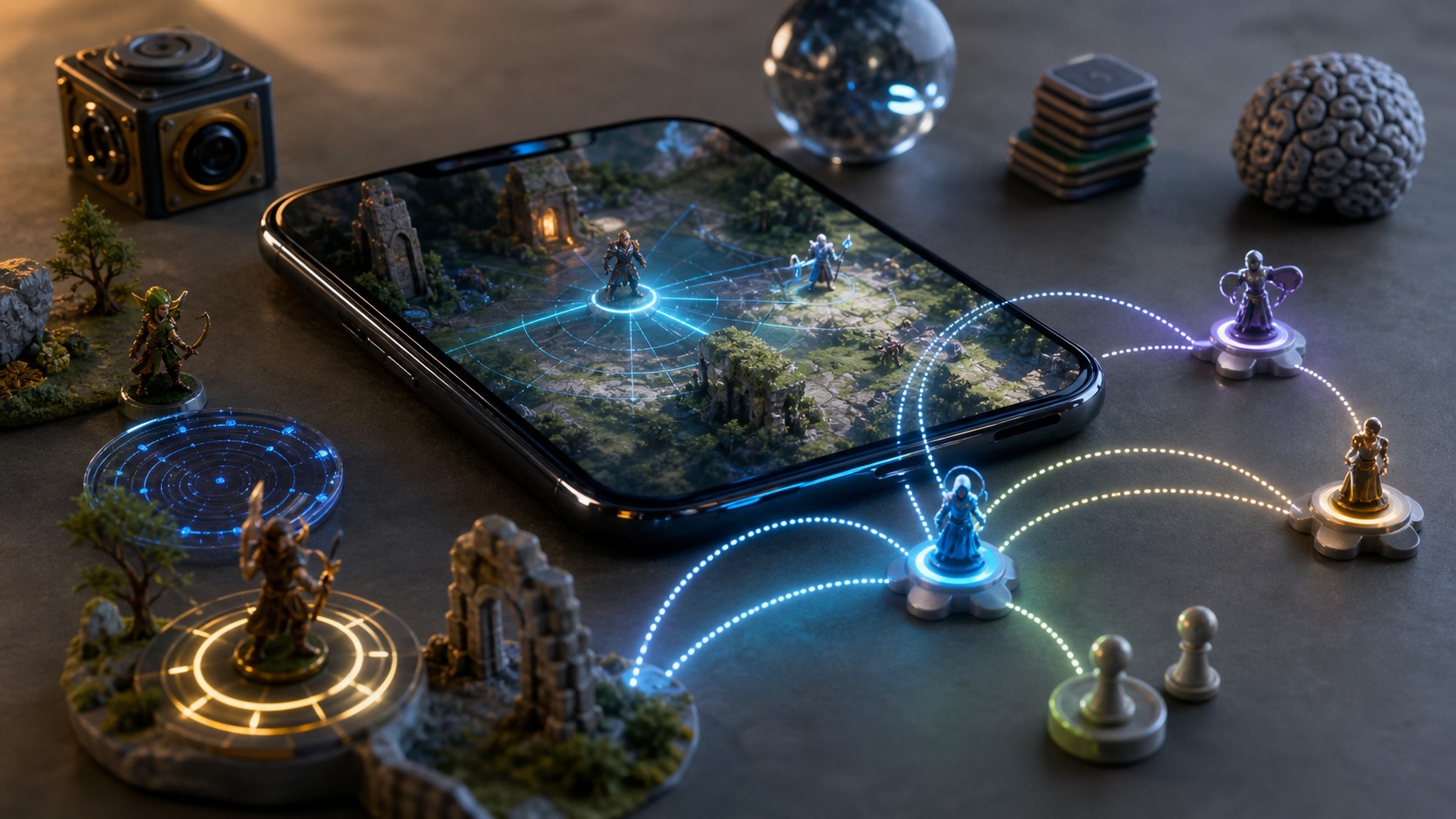
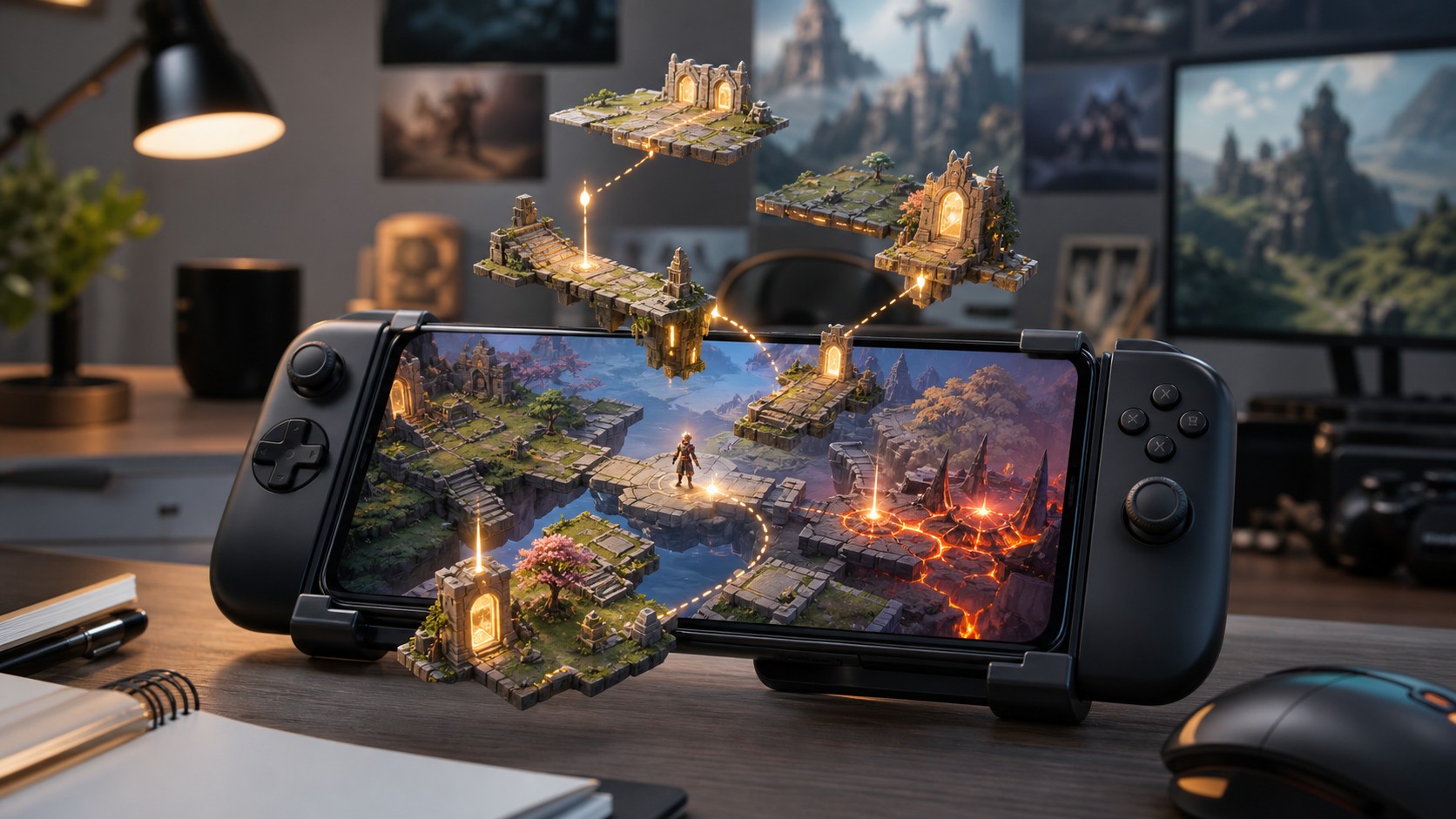
The rise of personalized mobile games powered by AI is redefining how players experience entertainment in the palm of their hands. What once felt like static levels and predictable storylines has transformed into dynamic worlds that evolve with each tap, swipe, and decision. Today’s players expect more than repetition. They want games that understand them, adapt to their habits, and deliver content tailored to their preferences in real time. Artificial intelligence is making that vision a reality. Mobile gaming has become one of the largest segments in the global entertainment industry, driven by smartphones that are more powerful than ever. With billions of players worldwide, developers are competing not only on graphics and mechanics but also on personalization. AI-driven systems analyze player behavior, difficulty preferences, session length, spending habits, and engagement patterns to create experiences that feel uniquely crafted for each individual. This shift marks a new era where mobile games are no longer one-size-fits-all products but living, breathing ecosystems shaped by data and intelligence.
A: It analyzes behavior and adapts content in real time.
A: Responsible developers anonymize and protect all analytics.
A: It balances difficulty, not just lowers it.
A: Yes, through procedural generation systems.
A: They aim to increase engagement responsibly.
A: No, it enhances creative workflows.
A: Many do, but levels of personalization vary.
A: Many games offer privacy controls.
A: Yes, by analyzing performance metrics.
A: Hyper-personalized, generative worlds.
From Static Gameplay to Adaptive Experiences
In early mobile games, personalization was minimal. Difficulty settings were fixed. Storylines unfolded in linear sequences. Rewards were distributed based on predefined logic. Today, AI engines observe how players interact with the game and adjust accordingly. If a player struggles with certain challenges, the system can subtly reduce difficulty. If another player thrives on competition, the AI can escalate complexity or introduce tougher opponents. Adaptive gameplay is powered by machine learning models that detect patterns across millions of interactions. These systems evaluate performance metrics in real time and respond dynamically. This means two players can start the same game and experience entirely different progression curves, challenges, and rewards. Personalization enhances engagement by ensuring players remain in that optimal state between boredom and frustration, often referred to as the flow state. As a result, retention rates improve, session times increase, and overall satisfaction climbs. Personalized mobile games powered by AI are designed to evolve continuously, learning from every action to refine the player journey.
The Data Engine Behind Personalization
At the core of AI-powered mobile games lies data. Every tap, pause, purchase, victory, and defeat contributes to a profile that informs the game’s adaptive systems. These data streams are processed through advanced analytics platforms that identify behavioral clusters and predictive patterns.
Player segmentation once relied on broad categories such as age or region. AI now enables micro-segmentation based on behavioral fingerprints. For example, one player might prefer short bursts of casual play during commutes, while another engages in long competitive sessions at night. AI recognizes these differences and adjusts notifications, rewards, and content pacing accordingly. Predictive algorithms can forecast churn risk and intervene before a player disengages. They may introduce bonus content, exclusive challenges, or personalized incentives. The use of reinforcement learning further enhances this system, as AI models experiment with different engagement strategies and learn which ones yield the highest satisfaction for specific player profiles. The personalization of mobile games is no longer reactive. It is proactive, anticipating player needs before they are explicitly expressed.
AI-Driven Storytelling and Narrative Branching
One of the most exciting developments in personalized mobile games powered by AI is dynamic storytelling. Traditional narrative games follow predetermined paths. AI-powered narrative engines allow stories to shift based on individual decisions and play styles. Natural language processing enables dialogue systems that respond intelligently to player choices. Character relationships can evolve uniquely for each user. Emotional tone, plot twists, and character arcs may differ depending on gameplay behavior. The result is a storytelling experience that feels deeply personal.
Procedural content generation further expands narrative diversity. AI can create new quests, missions, and environments on the fly, ensuring that no two players encounter identical scenarios. This continuous content generation not only increases replay value but also reduces the limitations of static game design. Dynamic storytelling gives players a sense of agency and ownership, strengthening their emotional connection to the game world.
Smarter Opponents and Cooperative Companions
Artificial intelligence has long been associated with non-player characters, but today’s AI systems are far more sophisticated. In personalized mobile games, opponents can adapt to individual player strategies. If a player consistently relies on a specific tactic, AI adversaries can counter it, encouraging strategic evolution.
Beyond competition, AI also powers cooperative companions that learn alongside the player. These virtual allies may adjust their support style based on player preferences. For instance, some players enjoy guidance and hints, while others prefer independence. AI companions can detect these tendencies and modify their behavior accordingly. Adaptive enemy scaling ensures that competitive matches remain balanced and engaging. Rather than relying on rigid difficulty tiers, AI models calibrate challenges based on real-time performance analytics. This creates an experience that feels fair, immersive, and consistently stimulating.
Personalization in Monetization and Reward Systems
Monetization strategies in mobile games have become more refined through AI personalization. Instead of offering identical in-app purchases to every player, AI systems present tailored bundles and promotions aligned with individual interests. For example, a player who frequently engages in cosmetic customization may receive exclusive design packages. A competitive player may be offered power-up bundles suited to their play style. These targeted offers increase conversion rates while improving user satisfaction because players feel that the game understands their preferences.
Reward systems are also becoming more intelligent. AI can adjust daily challenges, seasonal events, and progression incentives to align with each player’s behavior patterns. By optimizing reward timing and structure, developers maintain engagement without overwhelming users. Personalization in monetization must be balanced carefully with ethical considerations. Transparency and fairness remain critical to sustaining player trust.
Cloud Gaming and Real-Time AI Processing
Advancements in cloud computing have accelerated the rise of personalized mobile games powered by AI. Cloud-based infrastructure allows heavy machine learning models to operate seamlessly without overloading mobile devices. This enables real-time adaptation and complex AI decision-making without sacrificing performance. Edge computing further enhances responsiveness by processing data closer to the user. As 5G networks expand, latency decreases, making dynamic personalization smoother and more immersive. Games can instantly adjust graphics settings, gameplay pacing, and multiplayer matchmaking based on device capability and network conditions. Cloud-driven AI systems also facilitate large-scale experimentation. Developers can test new personalization strategies across millions of users and refine them continuously. This iterative feedback loop accelerates innovation and ensures that games remain relevant in a rapidly evolving market.
Ethical Considerations and Player Trust
As personalization deepens, ethical questions emerge. Data privacy, algorithmic transparency, and player autonomy must be prioritized. Players should understand how their data is used and have control over personalization settings. Responsible AI implementation includes anonymized data processing, secure storage, and compliance with privacy regulations. Developers must avoid manipulative engagement tactics that exploit behavioral vulnerabilities. Instead, personalization should enhance enjoyment and accessibility. Trust becomes a competitive advantage. Games that clearly communicate their AI-driven features and respect player boundaries are more likely to build long-term loyalty.
Accessibility and Inclusive Design Through AI
Personalized mobile games powered by AI are expanding accessibility in unprecedented ways. AI systems can adjust visual contrast, text size, control sensitivity, and difficulty levels based on individual needs. For players with disabilities, adaptive interfaces create more inclusive experiences.
Speech recognition and AI-driven voice control open new possibilities for hands-free interaction. Machine learning models can detect patterns of frustration and suggest alternative control schemes or assistive features. Language localization powered by AI allows real-time translation, broadening global reach. Inclusivity is no longer an afterthought. It is embedded within AI personalization frameworks that aim to serve diverse audiences.
The Competitive Future of AI-Powered Mobile Gaming
The future of mobile gaming lies in hyper-personalization. As AI models become more advanced, games will anticipate player preferences with increasing accuracy. Cross-platform data integration may allow personalization to follow players across devices and genres. Generative AI could enable fully customized game worlds, characters, and soundtracks tailored to individual tastes. Real-time emotional analysis may adjust gameplay intensity based on facial expressions or biometric signals, creating deeper immersion.
Esports and competitive gaming may benefit from AI coaching systems that analyze performance and provide personalized improvement strategies. Social features may be enhanced through AI matchmaking that aligns players with compatible teammates. The competitive landscape will reward developers who master AI integration while maintaining ethical standards. Personalized mobile games powered by AI are not just a trend. They represent the next foundational layer of interactive entertainment.
Conclusion: Gaming Designed Around You
The rise of personalized mobile games powered by AI signals a transformative shift in digital entertainment. No longer confined to rigid design structures, mobile games are becoming intelligent ecosystems that evolve alongside their players. Through adaptive gameplay, dynamic storytelling, predictive engagement systems, and inclusive design, AI is reshaping the relationship between player and platform. Personalization enhances immersion, retention, and emotional connection. It empowers developers to craft experiences that resonate deeply with individuals rather than generic audiences. As technology advances, the boundary between player and game will continue to blur, creating worlds that feel truly alive. In this new era, the most powerful console is not defined by hardware. It is defined by intelligence. And that intelligence is learning more about each player every second.