Custom Levels Begin With Player Signals
How AI creates custom levels just for you is less about a game magically inventing a perfect map and more about a design system listening carefully. A mobile game can track where a player hesitates, which challenges they replay, how quickly they recover from failure, and what kinds of routes keep them curious. The best custom levels still feel authored because designers define the ingredients, boundaries, difficulty bands, and tone. AI becomes useful when it assembles those pieces with enough sensitivity that the next stage feels like it belongs to the player without feeling unfair, random, or cheaply personalized.
A: Yes, but the best results usually come from recombining designer-made pieces under strict rules.
A: No. It can change pacing, route shape, reward timing, or challenge type without lowering ambition.
A: They are more likely to extend authored design than replace it entirely.
A: Look for changes in decisions, recovery space, and challenge rhythm, not just shuffled scenery.
A: They can if the game changes pressure without giving visible clues.
A: Often yes, because mobile sessions are frequently interrupted or brief.
A: Only when the variation changes meaningful choices instead of cosmetic details.
A: Good systems provide settings, rerolls, or stable modes for practice.
A: Basic play behavior is often enough: retries, route choices, speed, and session length.
A: Letting novelty replace rhythm, fairness, and authored taste.
The Game Builds a Model Before It Builds a Map
A custom level starts with a rough picture of the player. The system may look at movement speed, combat choices, puzzle retries, session length, missed pickups, and how often the player abandons a route. None of that has to be invasive to matter. Even simple play signals can tell the game whether the next level should teach, pressure, surprise, or simply get out of the way.
That model is most effective when it stays humble. A game should not assume that one bad run means the player needs an easier world forever, or that one clean win means every next stage should become punishing. Good AI treats behavior as evidence, not destiny. It keeps adjusting as the player experiments, warms up, gets tired, or decides to chase a different kind of fun.
Level Pieces Need Designer Guardrails
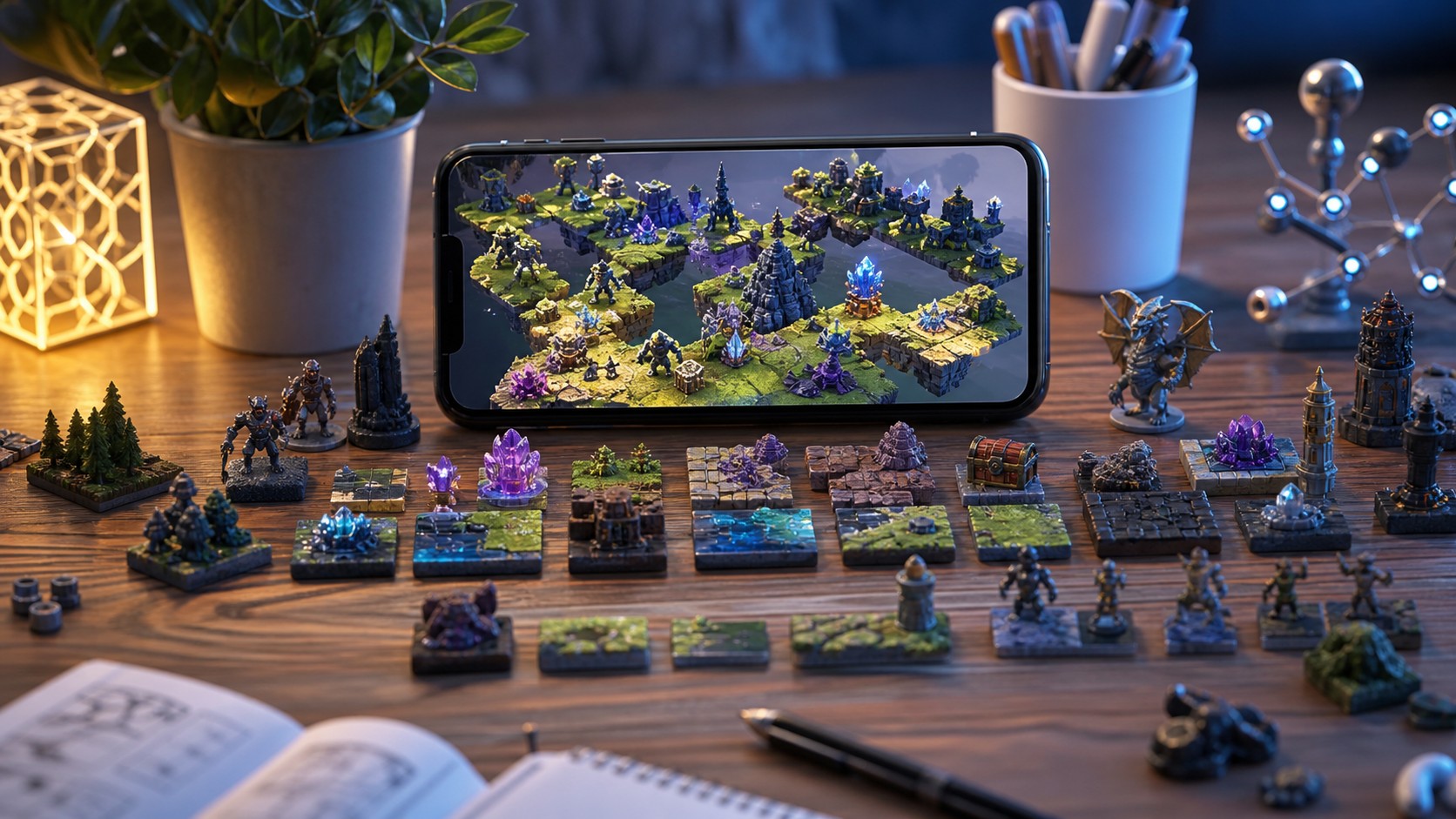
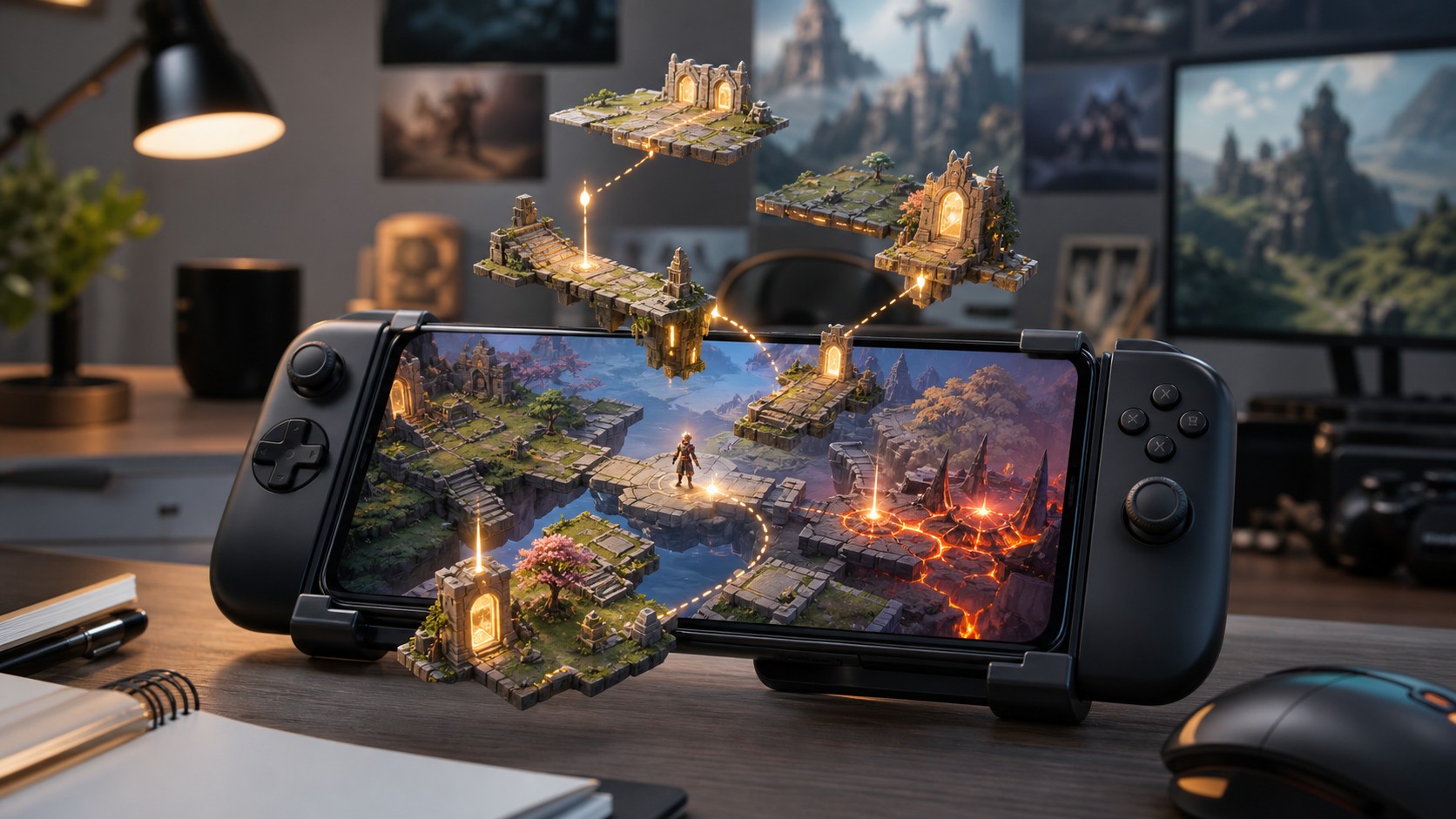
AI-generated mobile levels usually work from a library of human-made pieces: corridors, arenas, shortcuts, hazards, enemy groups, rewards, traversal beats, and rest spaces. The system can recombine those pieces, but the quality depends on the rules around them. A platform gap should land near the right kind of recovery space. A hard enemy room should not appear immediately after a confusing tutorial. A reward path should feel tempting rather than mandatory.
Those guardrails are what keep personalization from turning into mush. Without constraints, the system might create stages that are technically new but emotionally flat. With strong constraints, a custom level can still have rhythm, anticipation, and payoff. The player feels variety, while the design still has a spine.
Personal Difficulty Is More Than Easy or Hard
When people imagine custom levels, they often think of difficulty first. Difficulty matters, but useful personalization is more specific than a slider moving up or down. One player may need shorter enemy waves but trickier path choices. Another may prefer longer exploration with fewer precision checks. A third may want the same danger level but more room to recover after a mistake.
This is why mobile AI design pays attention to pressure shape. A short session might need a compact challenge with an immediate reward. A longer session can afford a slow build, a detour, and a final test. Custom levels are strongest when they tune intensity, recovery, complexity, and reward timing separately.
Replay Value Comes From Meaningful Variation
A personalized level should not simply shuffle furniture. Players notice when a stage has the same emotional shape wearing a different coat. Meaningful variation changes the decision the player has to make. A familiar route might gain a new risk, a safe reward might move behind a tactical tradeoff, or an enemy pattern might force the player to use a neglected tool.
The trick is to keep enough familiarity for mastery. If every level becomes completely unrecognizable, players cannot build skill. If every level repeats the same structure, personalization feels cosmetic. A good custom level keeps a recognizable rule set while changing the questions the player has to answer.
Mobile Sessions Create Special Design Pressure
Mobile games have a unique challenge because players often arrive in short bursts. Someone may play on a couch, in a waiting room, during a break, or while half-monitoring something else. AI level creation can help by matching the level shape to the session context without making the game feel thin. A quick stage can still include a satisfying choice, a clean failure state, and a visible reason to return.
The best systems avoid punishing interrupted play. If the game knows a player often leaves after five minutes, it can place progress beats earlier and save larger arcs for longer sessions. That is not dumbing the game down. It is respecting how mobile play actually happens.
The Player Should Feel Agency, Not Surveillance
Personalization can become uncomfortable if it feels too eager to profile the player. Most people do not need to see every signal being tracked, but they do need the experience to feel respectful. A custom level should respond to play behavior, not make the player feel watched. Clear settings, fair difficulty, and predictable consequences all help keep trust intact.
Agency also means letting players resist the model. If someone wants to practice a harder route, replay an easier area, or turn off certain adaptive features, the game should make that possible. Custom levels are better when the player can still choose a direction instead of being quietly pushed into one.
What Good Custom Levels Feel Like
A strong custom level often feels quietly right before it feels spectacular. The challenge arrives at the right moment. The map nudges a player toward a tool they forgot. A reward appears after real effort rather than at a random interval. The player may not know exactly how the level was assembled, but they can feel that the game is responding with taste.
The warning sign is sameness disguised as novelty. If the level only changes colors, enemy count, or room order, the AI is not doing much design work. If the level changes pacing, decision pressure, recovery, and opportunity in ways the player can understand, it becomes part of the game’s creative engine.
The Future Is Guided Personalization
The strongest future for AI-created mobile levels is not unlimited generation. It is guided personalization: human designers create the rules and emotional targets, while AI adapts the assembly to the moment. That partnership can make mobile games feel less repetitive without sacrificing craft.
For players, the practical takeaway is simple. Judge custom levels by whether they make play feel sharper, fairer, and more memorable. When personalization helps a game notice your habits while still giving you room to grow, AI level creation becomes more than a feature. It becomes a new kind of pacing tool.
How Players Can Evaluate the Design
A practical way to judge How AI Creates Custom Levels Just for You is to ignore the promotional language and watch what changes during ordinary play. If the game reacts only by changing surface details, the AI is probably decorative. If it changes timing, pressure, route choice, recovery, or teaching in ways that match what the player just did, the system is contributing to the design. The difference becomes clearer over several sessions because mobile AI often reveals itself through patterns rather than one dramatic moment.
Players can also compare how the game handles success and failure. Good adaptive design does not simply reward wins and soften losses. It reads the lesson inside each result. A smooth clear may open a deeper challenge, while repeated mistakes may create a better practice path. The important sign is whether the game still asks for skill while making the next step easier to understand.
The player signal map ideas in this article are especially useful because they focus on observable behavior. A player does not need to know the model, the algorithm, or the production pipeline. They only need to see whether the game responds with fair clues and meaningful choices. When that response is visible, AI becomes part of the play experience instead of a hidden claim.
Where Developers Need Restraint
Developers have to decide which parts of a mobile game should adapt and which parts should remain stable. Too much movement can make a game feel slippery, as if the rules are changing behind the player’s back. Too little movement makes the AI hard to feel. Restraint is the craft of choosing where flexibility improves the loop and where consistency protects mastery.
The custom level ingredients layer matters because it keeps technology connected to purpose. Every adaptive feature should answer a player-facing design problem: boredom, confusion, unfair difficulty, weak motivation, repetitive routes, or poor session fit. If a feature cannot name the problem it solves, it may add complexity without improving the game.
Why Trust Decides Whether AI Feels Good
Trust is the invisible foundation of AI-driven mobile design. Players will accept a surprising level, a changed reward path, or a smarter opponent when the result feels fair. They become suspicious when the system seems to hide information, push spending, or erase the value of practice. The more personal a game becomes, the more carefully it has to protect the player’s confidence.
That is why quality warning signs should be treated as more than a checklist. Trust is built through repeated evidence: readable feedback, clear settings, honest failure, and rewards that connect to play rather than pressure. A mobile game can be highly adaptive and still feel respectful if the player understands the boundaries.
The Long-Term Direction
The future of this space is likely to feel quieter than the hype suggests. The best AI-driven mobile games will not constantly announce that they are adapting. They will simply feel better paced, more attentive, and less repetitive. Players may describe them as fair, fresh, generous, or surprisingly personal before they describe them as intelligent.
That quieter future is also the healthier one. AI should give designers more ways to honor how people actually play on mobile devices: in short bursts, across changing moods, with different skill levels, and often in the middle of busy lives. When the technology serves those realities, the result is not just longer play. It is a better reason to keep playing.
What This Means for Everyday Mobile Players
For everyday players, the useful habit is to pay attention to how a game changes after repeated sessions. Notice whether a difficult level becomes clearer without becoming empty, whether rewards line up with goals you actually care about, and whether the next challenge respects what you have already learned. Those small signs reveal more than a menu label or a launch trailer ever can.
It is also worth noticing how the game behaves when you step away. A respectful AI-driven mobile game welcomes return without punishing absence, preserves progress without turning it into obligation, and gives the next session a clear shape. That balance is where smart design becomes genuinely player-friendly. The technology matters, but the emotional result matters more.
The same standard applies to reviews, previews, and everyday player discussion. Instead of asking whether a mobile game uses AI, it is more useful to ask what the system lets the player do differently. Better routing, clearer teaching, smarter pacing, and fairer recovery are real design outcomes. Vague claims about intelligence are not enough on their own.
A good adaptive feature should also remain understandable after the novelty fades. The first session may impress with surprise, but the tenth session reveals whether the system has durable judgment. If the experience keeps creating fresh decisions while preserving a stable sense of skill, then the AI is doing more than decorating the game loop.
That durability is especially important on mobile, where a player may revisit the same game dozens of times in uneven bursts. Adaptive design earns its place when it helps those returns feel coherent, not when it merely reshuffles content for the sake of novelty.
The best designs also keep room for player taste. Some people want a demanding test, some want a calm routine, and others want a game that can move between both depending on the day. AI is most useful when it gives designers a finer set of dials for those differences while still protecting the identity of the game.
That balance is why article-specific evaluation matters. Two AI mobile games can use similar technology and produce very different player experiences. The valuable question is always whether the system makes the next session clearer, richer, fairer, or more memorable for the person holding the device.
The strongest examples will feel specific without feeling narrow. They will notice habits, but still leave room for surprise. They will support short sessions, but still reward deeper mastery. Most of all, they will make adaptation feel like craft rather than pressure, giving players a clearer path through the game without reducing the pleasure of discovery, recovery, and hard-earned improvement across many different styles of mobile play. That is the standard worth demanding from every serious adaptive mobile game.