The Human Feeling Comes From More Than Dialogue
Next-gen AI games that feel almost human are not impressive only because a character can produce more lines of dialogue. The human feeling comes from timing, memory, hesitation, attention, body language, and the sense that a character is reacting to the same world the player sees. A companion who pauses before disagreeing, an enemy who retreats after losing confidence, or a shopkeeper who treats the player differently after a public disaster can be more convincing than a thousand random sentences. For PC and console players, the next generation of AI is less about making digital people indistinguishable from real ones and more about making game characters coherent enough that players stop seeing the rails underneath.
A: No. Focused memory and timing usually matter more than endless speech.
A: They remove hesitation, uncertainty, and readable mistakes.
A: Yes. Strong animation and behavior design can age beautifully.
A: No. Many human-feeling systems are built from authored rules and memory.
A: Characters knowing things they could not perceive.
A: Enough to reflect important actions without tracking every trivial detail.
A: Yes, but their independence should respect player intent.
A: Absolutely. Restraint often makes characters feel more real.
A: RPGs, stealth games, and immersive sims benefit especially strongly.
A: Look for attention, memory, timing, and believable imperfection.
Believability Starts With Attention
Human behavior begins with attention. We notice sound, motion, danger, social cues, and changes in the environment. Game characters feel more believable when they appear to notice the right things at the right time. A guard should react differently to a distant clatter than to a door opening in front of him. A companion should recognize when the player is aiming, hiding, healing, or overwhelmed.
Attention systems make AI feel grounded because they connect character behavior to the shared space. Without attention, NPCs become either oblivious or all-knowing. Both break the illusion. The sweet spot is a character who knows enough to seem present but not so much that the player feels watched by a perfect machine.
Memory Turns Encounters Into Relationships
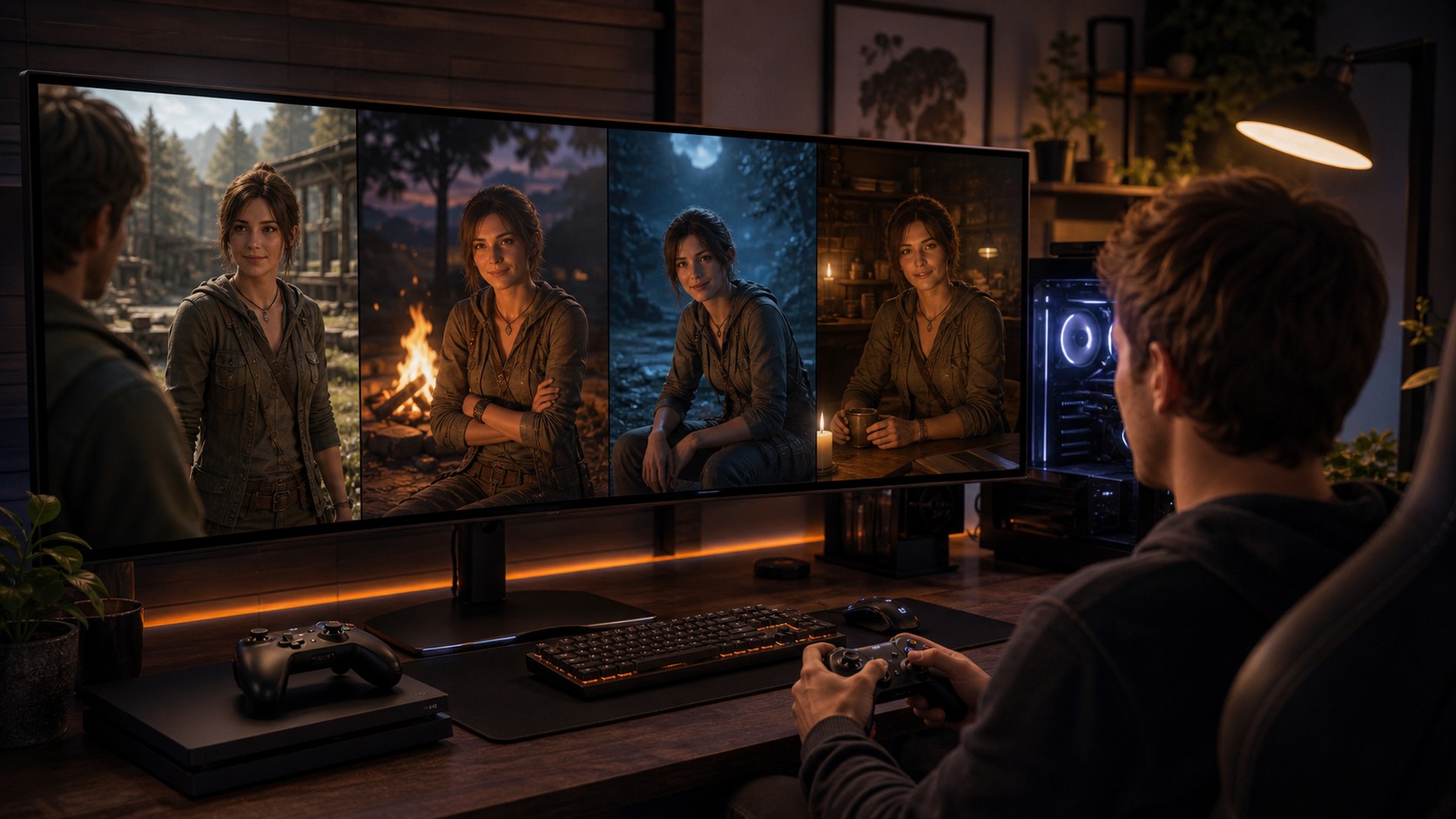
Memory is one of the clearest paths toward almost-human game characters. If an NPC remembers that the player spared them, betrayed their faction, stole from their shop, or helped their friend, future interactions gain weight. The memory does not need to be huge. Even a few well-chosen callbacks can make a character feel anchored in history.
The challenge is restraint. Real people forget, misinterpret, and prioritize. A game that remembers everything can feel less human than a game that remembers the emotionally important things. Designers need to choose which memories support the fantasy and which would only clutter the experience.
When memory works, players become more careful. They are not simply optimizing rewards; they are considering how the world will see them later. That small shift changes the emotional texture of play.
Almost-Human AI Needs Imperfection
Perfect AI rarely feels human. People hesitate, overcommit, misunderstand, and make decisions with incomplete information. Next-gen games can use those imperfections deliberately. An enemy squad that briefly panics after losing its leader may feel more alive than one that instantly calculates the optimal next move.
Imperfection also creates fairness. Players need openings. A believable mistake lets a player read the situation and respond. If every AI character behaves with flawless tactical precision, the game may be harder, but it will not feel more human. It will feel colder.
Body Language Carries the Illusion
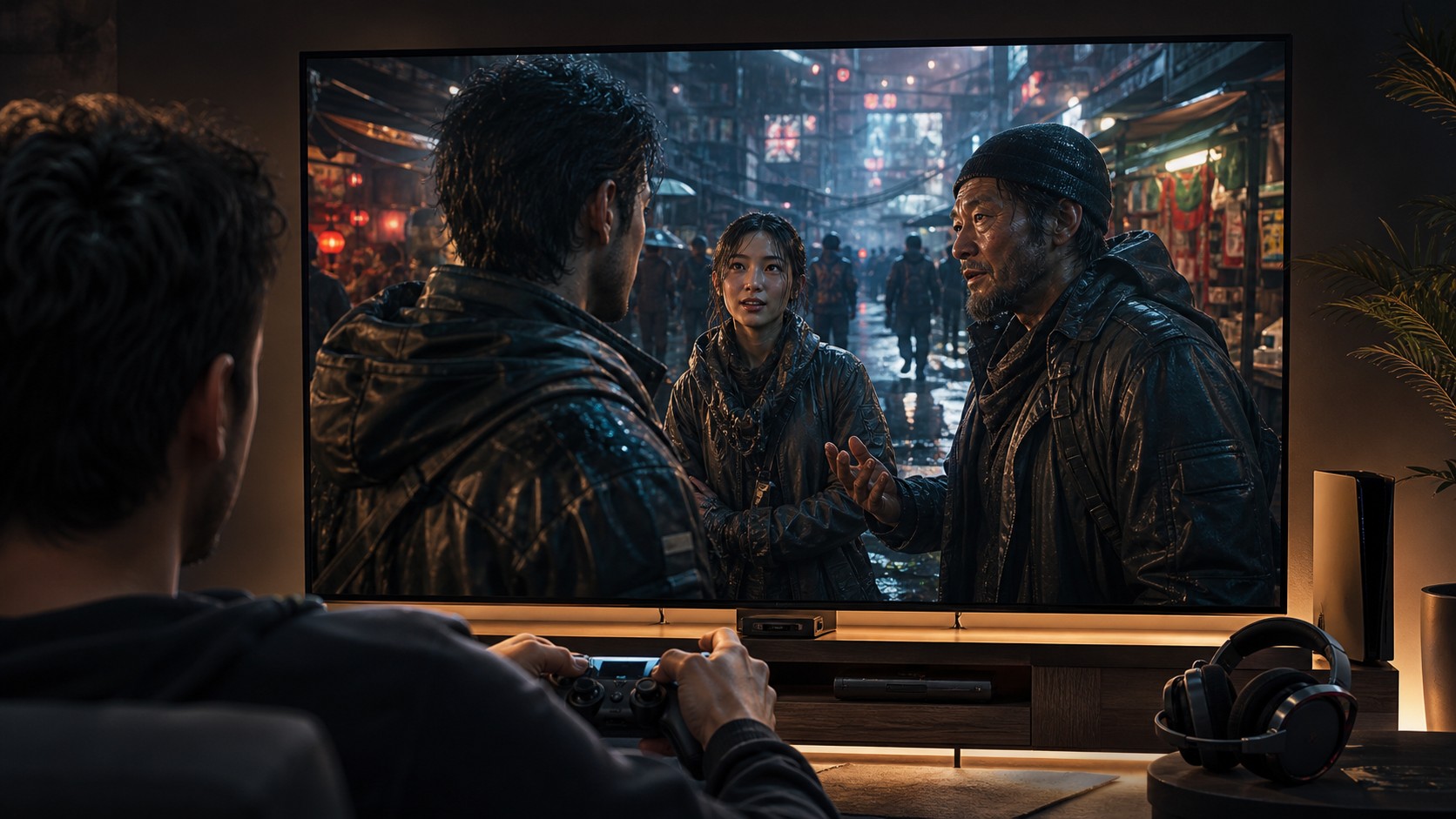
Voice and text get attention, but animation often does the heavier work. A character who turns their head before speaking, shifts weight when nervous, reaches toward cover under fire, or recoils from a moral choice can communicate intention before words arrive. AI-driven animation blending can help characters move between those states smoothly.
This is especially important in console living-room play, where the player may be several feet from the screen. Large readable gestures often matter more than tiny facial details. On PC, close monitor distance can make subtle eye movement and expression more noticeable, but only if the rest of the behavior supports it.
Conversation Has to Stay Inside the Story
Generative conversation can make NPCs feel flexible, but freedom without direction is risky. A character who says anything can also say something boring, contradictory, or tonally wrong. The most convincing near-term systems will likely blend authored character arcs with AI-assisted response selection, memory, and variation.
Players do not need infinite speech. They need the right speech at the right moment. A short line that reflects a previous choice can feel more human than a long improvised monologue. The goal is not endless conversation; it is continuity.
Games also need silence. People do not narrate every thought. A companion who knows when not to speak can feel more natural than one who constantly proves the technology is running.
Players Notice Consistency Before Complexity
A character does not need an enormous brain to feel believable. Consistency often matters more. If a cautious companion is careful during exploration but suddenly reckless during a story mission for no clear reason, players feel the machinery underneath. If a proud rival accepts defeat with the same emotional pattern each time, even simple behavior can feel like personality.
This is why designers talk about readable rules. Players are willing to believe in artificial people when they can form expectations. A suspicious guard should stay suspicious until something changes. A loyal companion should not abandon the player because a behavior tree picked a strange branch. Human-feeling AI needs enough stability for players to build a relationship with it.
Complexity becomes valuable when it supports that stability. A memory system, emotion model, or generative dialogue layer should make the character more coherent, not less. The more freedom a system has, the more carefully it needs identity, limits, and recovery behavior.
Almost Human Does Not Mean Replacing Human Writing
The strongest AI characters will still depend on writers, animators, quest designers, audio teams, and performance directors. AI can help select, vary, and respond, but the underlying character needs a point of view. Without that, the player may get novelty without meaning. A random answer is not the same as a believable answer.
Good writing gives AI a spine. It defines what a character wants, what they fear, how they joke, when they lie, and where they draw the line. Once those boundaries exist, AI can make interactions feel more responsive without dissolving the character into a chatbot. That partnership is where the most exciting games are likely to land.
Players should watch for games that treat AI as a craft tool rather than a replacement for craft. The almost-human feeling comes from many disciplines working together. When behavior, writing, animation, and sound agree with one another, the illusion becomes sturdy enough to carry emotion.
Why Players Form Attachments to AI Characters
Attachment forms when a character seems to have continuity. The player begins to expect a certain joke, a cautious glance, a protective habit, or a stubborn refusal. AI can strengthen that continuity by helping characters respond to fresh circumstances while still sounding like themselves. The attachment is not caused by technical complexity alone. It comes from repeated evidence that the character has a stable inner logic.
Next-gen games can deepen that effect by making relationships less binary. Instead of a companion simply approving or disapproving, the game can track trust, frustration, respect, fear, and shared history. Those states can influence small behaviors: who starts a conversation, how quickly help arrives, or whether a character challenges the player in private instead of in front of a crowd.
The danger is emotional overreach. Games should not pretend that simulated attachment is the same as a real relationship, and they should give players clear control over intensity. When handled carefully, though, almost-human AI can make fictional bonds feel more responsive without becoming manipulative. It gives players characters who remember enough to matter and change enough to feel alive.
The Environment Has to Believe in the Character Too
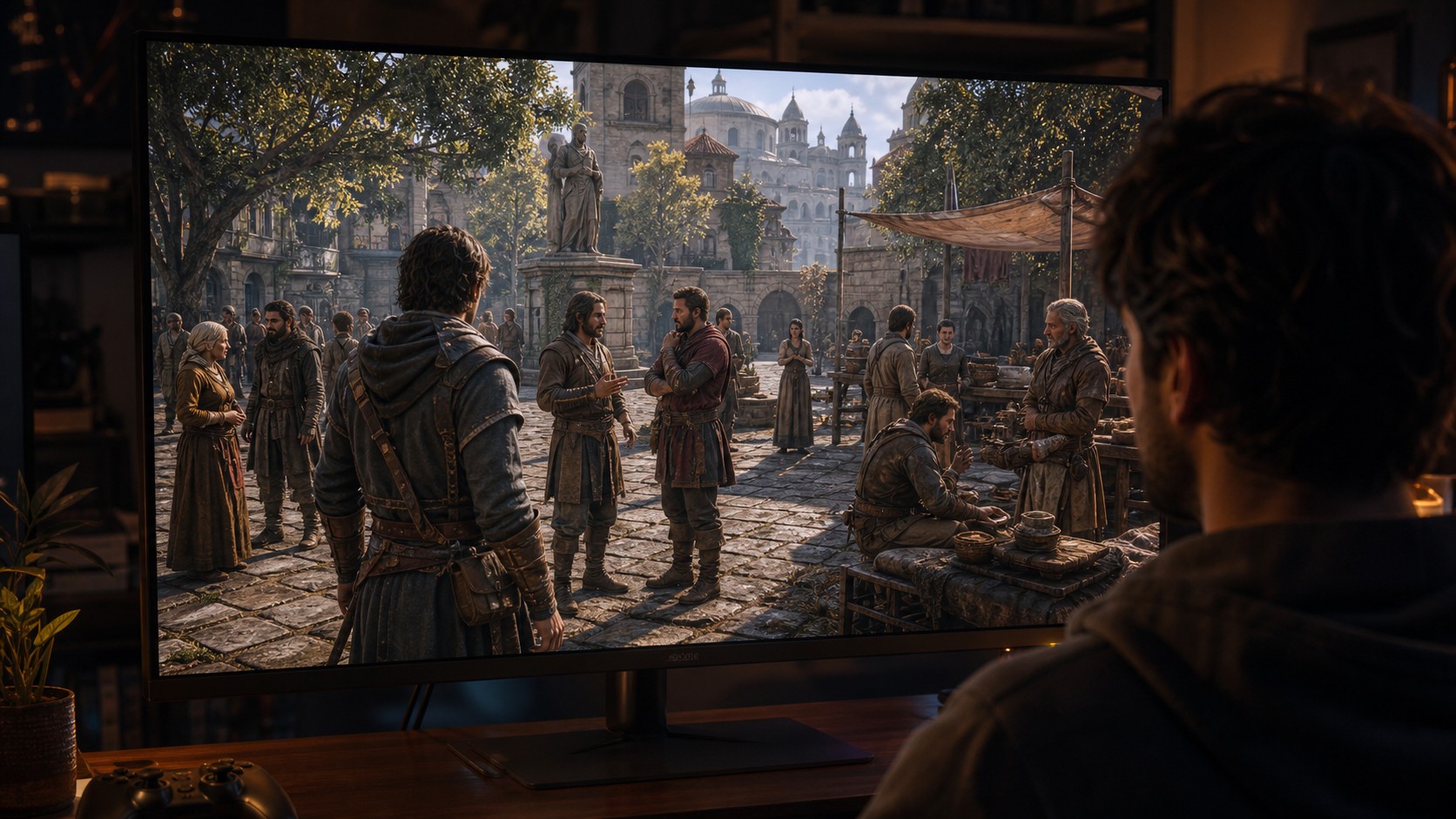
A nearly human character becomes less convincing if the surrounding world ignores them. If an NPC panics but the crowd keeps walking, the emotion feels staged. If a companion warns about danger while enemies stand idle, the behavior feels disconnected. Next-gen AI needs coordination between character systems and environmental systems so reactions support one another.
This is where small details matter. Doors should open when a character storms out. Nearby allies should notice an argument. Animals should scatter from gunfire before a dramatic speech continues. These reactions do not require every object to become intelligent. They require enough shared context that the scene feels like one world instead of several isolated features.
Environmental belief also helps quieter moments. A character sitting in a familiar spot, avoiding a place associated with loss, or changing their route after a threat can communicate memory without a line of dialogue. Players are good at reading spaces. When the environment reflects the character’s state, the almost-human illusion becomes stronger and less dependent on constant speech.
How Almost-Human AI Changes Player Responsibility
When characters feel more human, players may treat decisions differently. Betrayal, kindness, neglect, and risk can carry more emotional weight if the game responds with continuity. This does not mean players forget they are interacting with fiction. It means the fiction gives them enough feedback to make choices feel socially textured rather than purely mechanical.
Designers need to handle that responsibility with care. They should avoid guilt systems that manipulate players unfairly or relationships that become demanding in ways the player did not choose. Strong opt-outs, clear boundaries, and respectful pacing matter. Almost-human AI should enrich play, not trap players in emotional maintenance.
At its best, this technology lets games explore loyalty, trust, fear, rivalry, and forgiveness with more nuance. The player is not simply selecting dialogue options to earn points. They are shaping a pattern of behavior that the world can recognize. That is where the next generation begins to feel meaningfully different.
It may also encourage slower play. When characters appear to notice tone and habit, players often pause before choosing the fastest or most profitable route. They test whether mercy matters, whether impatience leaves traces, and whether a rival can be understood rather than simply beaten. That curiosity is a powerful sign that the AI is doing more than filling space.
The most interesting games will let that curiosity breathe. They will give players time to observe expressions, revisit strained relationships, and notice how small choices echo later. Almost-human AI does not need to dominate the screen. Sometimes it only needs to make the player wonder what a character is thinking before the next scene begins.
That wonder is fragile, which is why polish matters. A single broken reaction can remind players that the person in front of them is only a system. A dozen consistent reactions can make them lean closer and care anyway, especially during quiet optional scenes between major missions and return visits afterward too.
The Future Is Guided Humanity, Not Unlimited Autonomy
The best next-gen AI characters will probably be guided rather than fully free. They will have goals, boundaries, memories, emotional states, and behaviors that designers can test. Within those boundaries, they can improvise enough to surprise players without breaking the story. That balance is where almost-human AI becomes useful instead of chaotic.
For players, the measure is simple. Do characters make you adjust emotionally, not just tactically? Do you feel seen by the world in a way that matches your actions? Do companions and rivals behave with enough consistency that you start predicting them like personalities rather than systems? When the answer is yes, the game has crossed into something powerful.