Spatial Games Need Spatial Intelligence
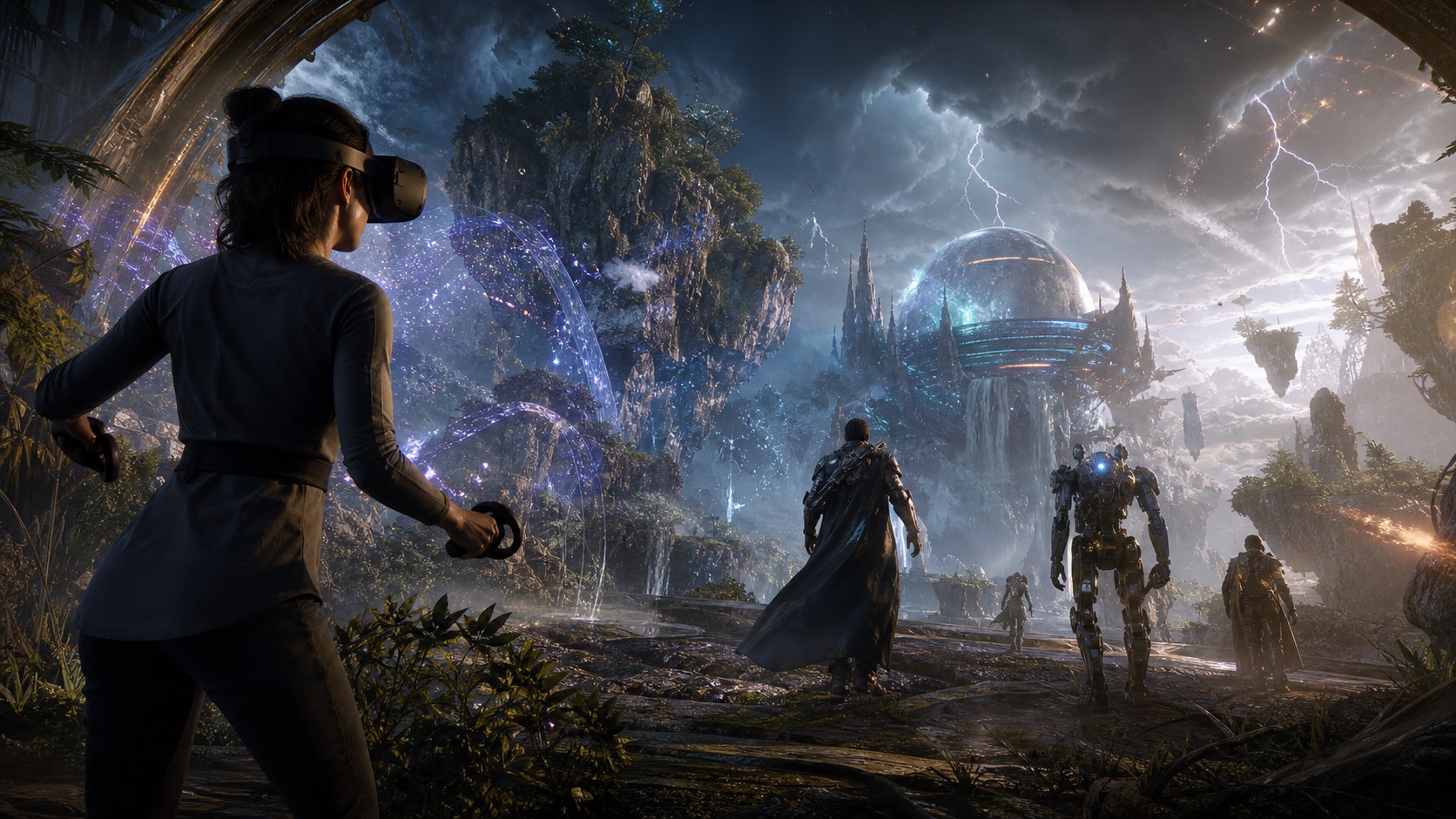
AI is transforming VR and AR games in 2026 because immersive games ask more from artificial intelligence than flat-screen games do. A VR enemy has to understand distance, gaze, body movement, and player comfort. An AR creature has to share a real room with furniture, lighting, and unpredictable human motion. The player is not just pressing buttons at a screen; they are leaning, turning, reaching, stepping back, and expecting the world to respond at human scale. That makes AI essential. It helps virtual characters respect personal space, mixed reality objects anchor to real surfaces, tutorials adapt to physical movement, and games remain comfortable even when the action becomes intense.
A: Because the game must respond to body movement, scale, and comfort.
A: Yes, if AI scales encounters and chooses safe surfaces.
A: Not alone, but adaptive comfort can reduce common triggers.
A: No. AI can improve both hand tracking and controller play.
A: No. Distance and approach speed feel different at human scale.
A: Some systems can, but privacy controls are important.
A: Very. It can adjust reach, height, and interaction placement.
A: Stable anchoring, obstacle awareness, and reactions to player movement.
A: No. Some games use abstract spaces, but AR benefits heavily.
A: Look for comfort, spatial awareness, and NPCs that respect real movement.
VR AI Has to Read the Body
In VR, player intent is not limited to controller input. Head direction, hand position, posture, reach, timing, and hesitation all communicate something. AI systems can use those signals to make enemies, companions, puzzles, and training sequences feel more responsive. A creature that backs away when a player leans forward feels different from one that simply waits for a button press.
This body awareness is also important for comfort. If a game notices that a player is moving cautiously, missing grabs, or turning their head less often, it can reduce intensity, offer alternate locomotion, or slow tutorial pacing. The best systems will adapt without making the player feel monitored or judged.
AR Worlds Depend on Real-World Understanding
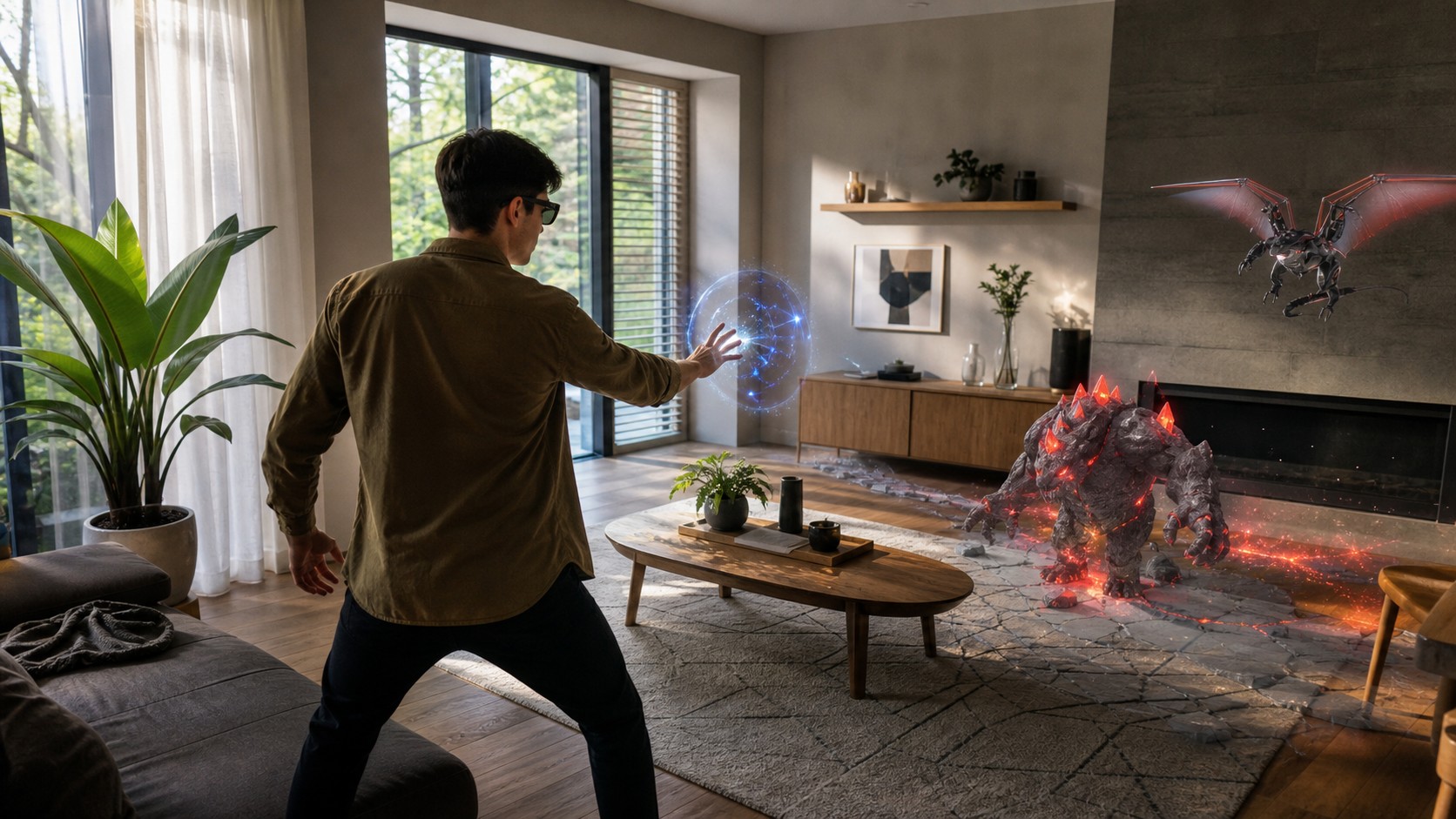
AR games live inside imperfect rooms, sidewalks, offices, and parks. AI helps interpret those spaces. It can identify floors, tables, walls, seating areas, open paths, and unsafe play zones. That information lets virtual objects sit more naturally in the real world and prevents gameplay from constantly fighting the environment.
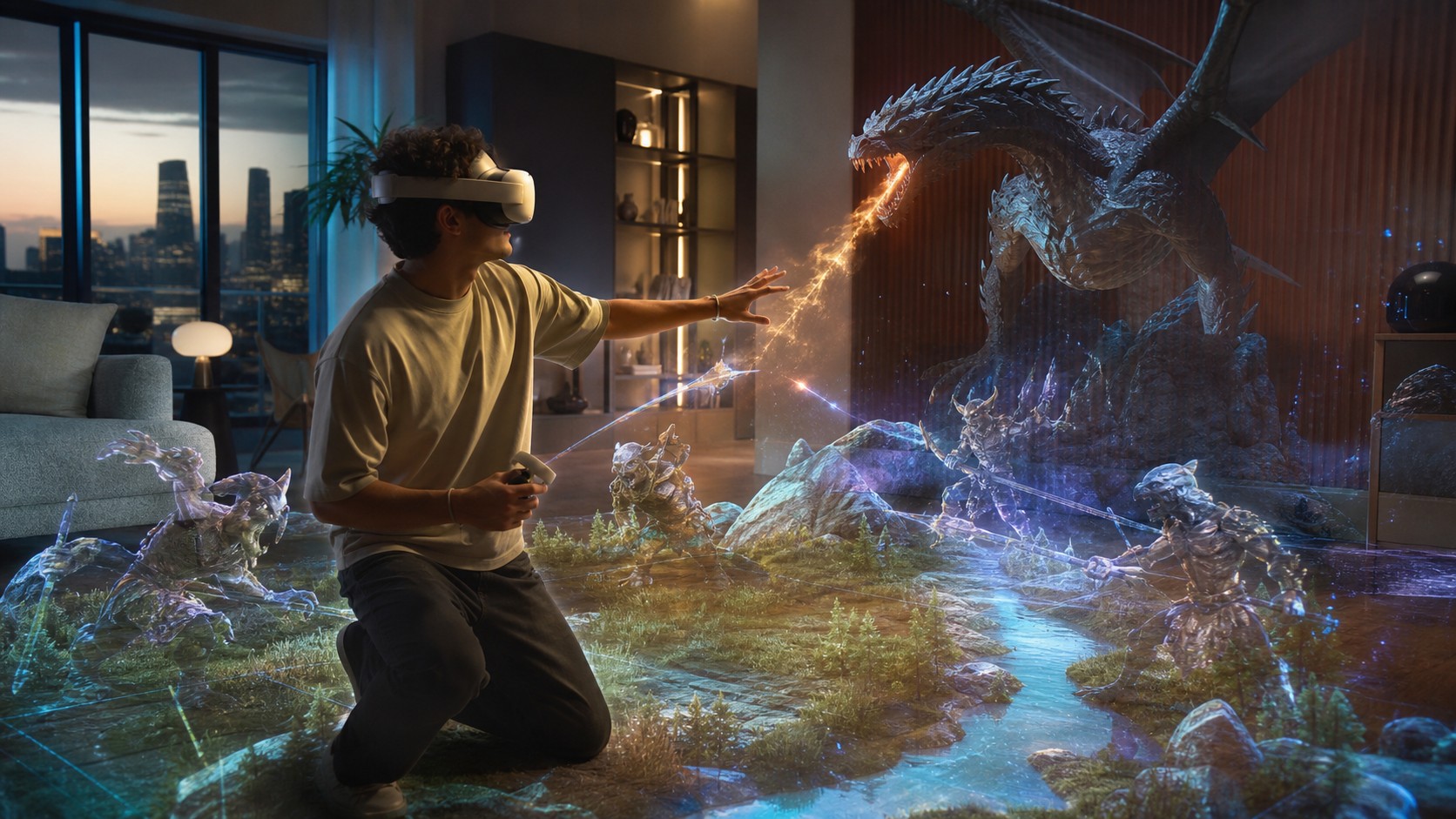
Good AR design does not assume every player has a large empty room. A mixed reality puzzle might scale itself to a coffee table. A creature collection game might choose safe spawn points away from stairs. A tactical AR game might use furniture as cover without requiring the player to rearrange the house.
When AR understands space well, the magic feels calmer. The player stops adjusting the game and starts playing inside the room they already have.
NPCs Feel Different at Human Scale
NPC behavior becomes more intimate in VR and AR. A character who stands too close, stares too long, or clips through a couch can break immersion immediately. AI needs to manage gaze, distance, approach speed, and emotional intensity with more care than in a traditional game.
That care can create powerful moments. A guide who steps aside when the player reaches for an object, a rival who circles at a believable distance, or a small companion who reacts to a hand wave can make the world feel present. These interactions do not need to be huge. In spatial games, tiny responses often feel enormous.
AI Can Make Immersive Games More Accessible
VR and AR accessibility is not only about menus. Players differ in mobility, height, room size, vision, hearing, balance, and tolerance for motion. AI can help by noticing play patterns and offering adjustments that fit the moment. It might bring interactable objects closer, provide seated alternatives, reduce rapid camera movement, or change enemy approach angles.
The key is consent and clarity. Adaptive comfort should be easy to understand and override. Players should know when a game is changing locomotion, reach distance, or visual intensity. The best accessibility systems feel like respectful tools, not hidden corrections.
Mixed Reality Will Become More Personal
As headsets and glasses improve, mixed reality games will use AI to remember spaces and preferences. A pet game might learn that the player likes a creature resting near the window. A fitness game might understand which part of the room is safest for lunges. A tabletop strategy game might preserve a campaign across the same kitchen table night after night.
This personalization raises privacy questions. Spatial maps can reveal a lot about a home or workplace. Developers will need to be clear about what stays on device, what is uploaded, and how players can delete stored room data. Trust will be part of the game design.
Developers Are Learning to Design Around Real Rooms
The most important design change may be humility. VR and AR games cannot assume ideal conditions. Players have low ceilings, pets, roommates, bright windows, reflective tables, small apartments, and limited time. AI can help immersive games adapt to those realities instead of demanding that every player create a perfect play space.
This changes level design. A mixed reality encounter might have several valid layouts depending on available floor area. A VR tutorial might detect whether a player is reaching comfortably or struggling near the edge of their boundary. A room-scale adventure might move optional objects closer while keeping key moments dramatic. These choices make immersive games feel less brittle.
There is also a creative upside. When a game understands the room, ordinary spaces become part of the fantasy. A couch can become cover, a table can become a command board, and an empty corner can become a portal. AI is what lets those transformations happen without forcing every home into the same template.
Social Presence Will Need Smarter Guardrails
Multiplayer VR and AR raise a different challenge: other people. AI can help moderate gestures, proximity, voice behavior, and environmental placement in shared spaces. This is not just about punishment. It is about creating social defaults that prevent accidental discomfort and reduce the amount of manual blocking players must do.
A good social system might warn someone before they stand too close, soften disruptive effects near sensitive players, or detect repeated harassment patterns faster than a report queue. It might also help hosts manage shared AR sessions by keeping objects aligned and preventing visual clutter. These tools can make immersive play more welcoming when they are transparent and adjustable.
Social AI has to be handled carefully because mistakes feel personal. False positives, unclear rules, or hidden recordings can damage trust. The best games will make safety features visible enough to understand while keeping them quiet enough that play still feels natural.
The New Design Test Is Presence
In 2026, the best VR and AR design test is presence. Does the game understand where the player is, what the player can reach, and how the player is likely feeling? A spatial game can have beautiful assets and still fail if it ignores the human body. AI gives developers a way to tune around presence rather than treating the player like a floating camera.
Presence also depends on timing. A hint that appears too early feels intrusive, while one that appears after the player has physically tried a solution can feel helpful. An enemy that waits too long feels passive, while one that rushes too close feels uncomfortable. AI can help find the middle ground by responding to real behavior instead of fixed timers.
The result should be less friction. Players should spend less time fighting calibration, boundaries, awkward object placement, and unreadable intent. When AI removes those rough edges, VR and AR can focus on what they do best: making the player feel located inside a world that notices them.
How AI Changes the Role of Tutorials
VR and AR tutorials have always been difficult because players learn with their bodies. A written instruction may not help someone understand reach distance, throwing angle, hand pose, or safe turning. AI can make tutorials more responsive by watching what the player actually attempts. If someone repeatedly grabs too early, looks away during an important cue, or avoids a movement type, the game can adjust the next lesson.
This creates a better path into immersive games for new players. Instead of forcing everyone through the same sequence, a tutorial can spend more time on the motions that need practice and move quickly through the ones the player already understands. That keeps confident players from getting bored and cautious players from feeling rushed.
The same idea can continue after onboarding. A mixed reality game might introduce room-scale mechanics only after it understands the play space. A VR action game might delay complex enemy behaviors until the player has shown comfort with movement. AI turns learning into an ongoing conversation between the game and the body.
Why Developers Must Keep Player Control Visible
Adaptive immersive games need visible controls because the systems affect comfort and safety. If a game changes movement speed, reach assistance, enemy distance, or visual intensity, players should be able to see and adjust those choices. Hidden adaptation can feel uncanny when it touches the body directly.
Clear controls also build trust. A player may appreciate adaptive comfort on a tired evening but want a more intense session another day. A parent may want strict boundaries for a child. A competitive player may want consistent conditions for practice. AI can support all of those needs if the settings are understandable.
The best 2026 immersive games will not treat intelligence as a black box. They will make the experience feel responsive while still giving players authority over their own space. That balance is especially important in VR and AR, where the boundary between game design and physical comfort is unusually close.
Visible control does not have to mean complicated menus. Simple presets, clear labels, and honest explanations can do a lot. Players should understand whether the game is changing comfort, challenge, spatial layout, or social safety. When those choices are plain, AI feels like a helpful layer rather than an unseen force in the headset.
This is especially important for households where several people use the same device. One player may want seated comfort and low intensity, while another wants full room-scale movement and tougher encounters. AI can remember those preferences and load them quickly, but it should never make players hunt for the reason a session feels different. Profiles, calibration notes, and quick reset options make adaptive systems easier to trust.
Clear control also helps developers learn responsibly. When players can opt into or reject adaptive changes, the game receives better signals about what actually helped. That feedback loop can improve VR and AR design without making players feel like test subjects.
For players, that means the most advanced immersive game may also be the easiest to tune. The future should feel smarter, but it should also feel calmer, clearer, and more respectful of the room you actually play in, across short sessions and longer nights with different players sharing one headset in everyday homes and apartments together.
Why 2026 Feels Like a Turning Point
The hardware is becoming good enough that software intelligence matters more. Better tracking, clearer passthrough, improved hand recognition, and stronger mobile chips create room for AI systems that were awkward a few years ago. VR and AR games can now ask not just where the player is, but what the player is likely trying to do.
The result is a more grounded form of immersion. Instead of overwhelming the player with spectacle, AI can make virtual worlds behave with awareness. That is what spatial gaming needs most: not louder effects, but smarter presence.