AI Is Becoming Part of the Game Engine
Artificial intelligence is changing PC and console gaming forever because it is moving from a background trick into the structure of how games are designed, built, balanced, and played. It helps enemies interpret the battlefield, companions act with better timing, worlds react to player behavior, and developers create larger experiences without relying only on hand-authored content. For players, the change can feel subtle at first. A mission flows more naturally, a racing rival takes a believable risk, a town responds to a previous choice, or a tutorial quietly adjusts when someone struggles. Taken together, those moments point toward a new baseline: games that are less static, more responsive, and more capable of meeting different players where they are.
A: No. It changes tools and systems, but strong design direction remains essential.
A: No. Linear games can use AI for polish while keeping authored pacing.
A: Not directly. It often affects behavior, workflow, and simulation more than visuals.
A: Yes. It can personalize prompts, assists, and friction when designed carefully.
A: Some experiments will, but most polished games will keep strong boundaries.
A: Many adaptive systems use telemetry, so privacy choices will matter more.
A: Yes, though PC may expose more scalable simulation settings.
A: It can if enemies cheat or adaptive tuning hides too much.
A: They should discuss behavior, simulation, and companion reliability.
A: Games will increasingly remember, react, and tune themselves around play.
From Scripted Illusion to Responsive Systems
Classic game AI often relied on carefully scripted behavior. Designers built routes, triggers, and state changes that created the appearance of intelligence as long as the player stayed inside expected boundaries. That approach produced many great games, but it could also break when players experimented. A guard might ignore an obvious clue, a boss might repeat the same pattern forever, or a companion might fail to understand a simple doorway.
Modern AI does not remove scripting; it expands what scripting can support. Developers can combine authored story beats with agents that evaluate cover, sound, line of sight, group tactics, and player tendencies. The result is a game that still has direction, but does not collapse the instant the player approaches a problem from the wrong angle.
Worlds Are Starting to Remember More
One of the biggest changes is persistence. PC and console games increasingly track more than quest completion. They can remember faction reputation, local damage, economy shifts, weather patterns, enemy losses, companion trust, and how often the player uses certain strategies. AI systems turn that stored information into future behavior.
Memory makes a game world feel less like a stage reset after every scene. If a camp becomes more guarded after repeated raids, the player understands that action has consequence. If a rival changes tactics after losing to the same build twice, the experience feels less mechanical. The trick is to make memory meaningful without overwhelming the player with invisible bookkeeping.
This is where good interface and audio design matter. Players need clues that the world has changed because of them. A line of dialogue, a new patrol route, a altered shop inventory, or a visible repair crew can make AI memory legible.
Development Tools Are Changing Behind the Scenes
AI is also reshaping production. Studios use assisted tools for animation cleanup, test coverage, terrain generation, localization workflows, moderation support, and bug discovery. These tools do not replace the creative direction of a strong team, but they can reduce repetitive labor and allow more time for tuning the parts players actually feel.
For large PC and console games, testing is a massive challenge. Players will combine abilities, equipment, physics, and route choices in ways no designer can fully predict. AI-driven test agents can run through thousands of scenarios, identify stuck points, find crashes, and reveal difficulty spikes before launch. That can make ambitious games more stable when used responsibly.
Adaptive Difficulty Is Getting More Respectful
Old adaptive difficulty often felt like cheating. The game might secretly weaken enemies after repeated failures or boost opponents when the player was winning. Players noticed the invisible hand and resented it. Newer AI-driven tuning can be more respectful because it adjusts support around behavior rather than simply changing numbers.
A game might offer better tutorial prompts, change enemy aggression, adjust resource placement, or vary encounter composition. The goal is not to fake victory. It is to keep the player in the zone where learning remains possible. That is especially valuable on console, where the same game may be played by a child, a competitive veteran, and someone returning to games after years away.
The best adaptive systems protect player pride. They should make the path clearer without announcing that the player has been rescued by an algorithm.
NPCs Are Becoming More Socially Believable
Believable NPCs are not just talkative NPCs. A character feels more alive when their movement, attention, timing, memory, and emotional response line up. AI helps connect those layers. A shopkeeper who reacts to danger, a companion who notices repeated choices, or a crowd that parts naturally around a fight can make a world feel inhabited.
Generative dialogue gets the most attention, but it is only one piece. Without strong boundaries, generated speech can drift away from tone, lore, or pacing. The better near-term approach is likely curated conversation supported by better memory and response selection. Players want characters who surprise them, but they also want the story to hold together.
The PC and Console Split Will Matter More
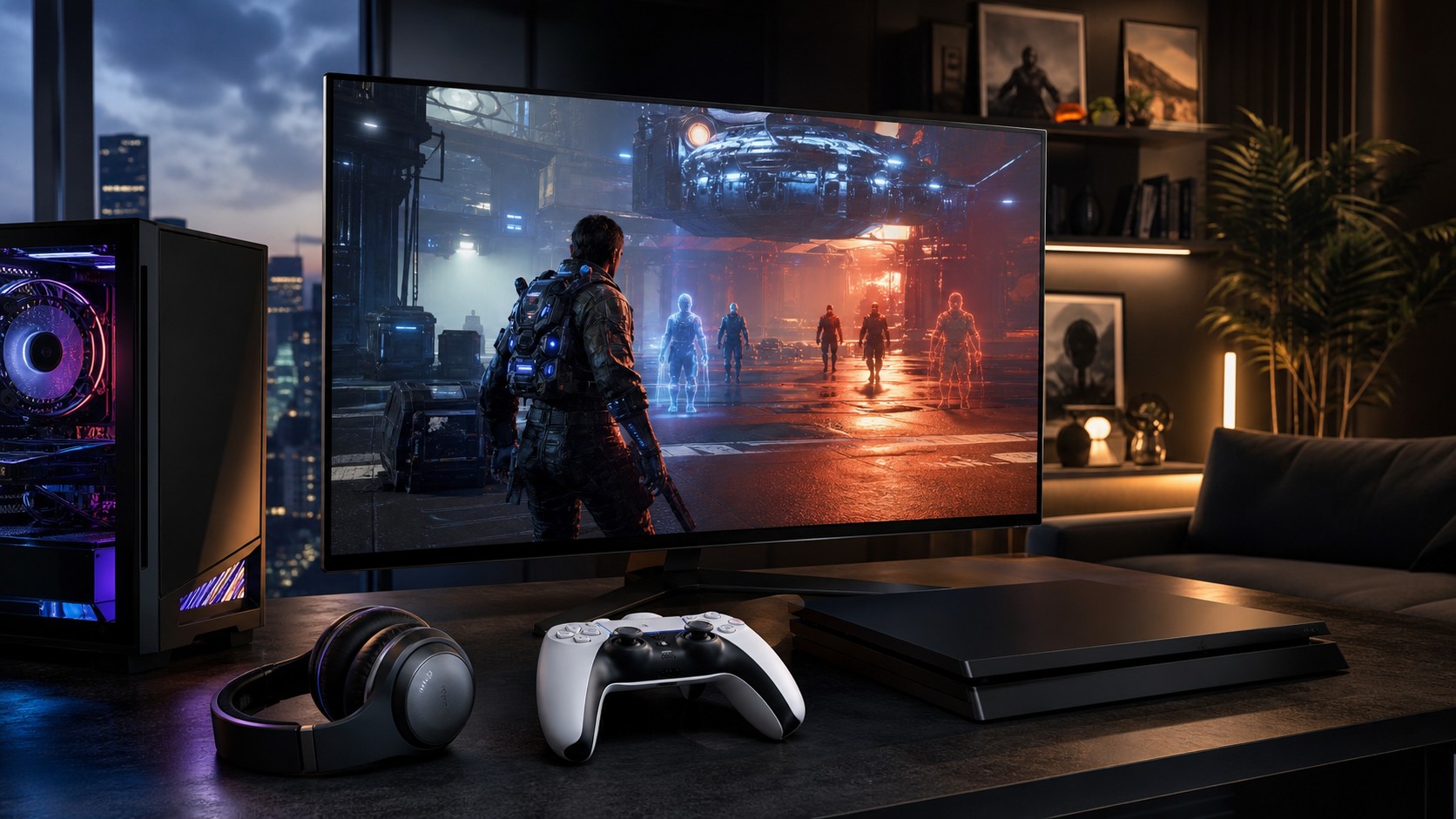
PC and console players will experience the AI shift differently. Consoles give developers a fixed hardware target, which can make behavior easier to tune and test. A studio knows the CPU budget, memory limits, and storage speed it can rely on. That consistency helps when a world depends on dozens or hundreds of agents behaving predictably.
PC gaming brings flexibility. Higher-end systems can support denser crowds, wider simulation ranges, more background processes, and more ambitious modding experiments. At the same time, PC variety makes quality harder to guarantee. A system that feels alive on one machine may stutter on another if the simulation is too CPU-heavy or memory hungry.
The best developers will design scalable intelligence rather than a single rigid target. A city might preserve important NPC behavior on every platform while increasing crowd density on stronger PCs. A strategy game might keep the same decision logic but vary animation detail or background simulation frequency. Players should expect more settings that affect world behavior, not just shadows and textures.
Live Games Will Use AI After Launch
Artificial intelligence is also changing what happens after release. Live service teams can use models to detect balance problems, identify toxic behavior patterns, recommend matchmaking adjustments, and find missions where players quit early. Used well, those tools can make updates faster and more targeted. Used poorly, they can make a game feel overmanaged.
The player-facing question is transparency. Competitive players especially need to know when matchmaking, moderation, or balance changes are being influenced by automated systems. Trust depends on clear rules and meaningful appeal paths. AI can help maintain a healthier game, but it should not become an invisible authority that no one can question.
Single-player games may benefit too. Post-launch patches can improve pathfinding, companion behavior, economy tuning, and encounter pacing based on real play data. This creates a future where a game’s intelligence may improve months after release, provided the studio commits to maintenance rather than treating AI as a launch bullet point.
How Players Can Read the Change Clearly
The easiest way to read the AI shift is to compare what a game remembers, what it reacts to, and what it allows. A traditional scripted game can still be excellent, but its boundaries become visible when the player experiments. A more responsive game may bend without breaking. It might let the player approach a base from an odd direction, recover from a failed stealth attempt, or solve a quest through an unexpected chain of systems.
Players should also separate intelligence from scale. A huge map full of shallow routines may feel less advanced than a small district where characters react convincingly to sound, reputation, danger, and time of day. The future is not only bigger worlds. It is worlds where the pieces relate to one another with more purpose.
That shift changes how games are discussed. Frame rate and resolution still matter, but they do not explain why an encounter stays in memory. The memorable part may be a rival adapting, a companion saving a bad decision, or a town feeling different after the player caused trouble. Those are the experiences AI is making easier to build, and they are the moments players should learn to notice.
The Risks Are Part of the Transformation
AI will not improve games automatically. Poorly tuned systems can make enemies feel unfair, companions feel intrusive, and worlds feel inconsistent. A game that changes too much behind the scenes may also weaken the player’s sense of mastery. If no one understands why an encounter became easier or harder, the experience can feel slippery rather than responsive.
There are production risks too. Tool-assisted content still needs editing, taste, and accountability. If a studio uses AI to fill space without a clear creative standard, players will feel the emptiness quickly. More content is not the same as better content, and faster production does not guarantee stronger design.
The healthiest future is one where AI handles scale, variation, testing, and responsiveness while people still make the hard calls about tone, pacing, ethics, and meaning. PC and console gaming changes forever not because the machine takes over, but because developers gain new ways to make authored worlds feel less rigid.
Why This Shift Will Touch Every Genre
Action games will use AI to make encounters less repetitive. Sports games will use it to model team identity and player tendencies. RPGs will use it to track relationships and consequences. Racing games will use it to create rivals that pressure without rubber-banding. Even puzzle games can benefit from hint systems that understand what the player has tried instead of dumping a canned answer.
The genres will not all become the same. That is the point. AI is flexible enough to serve different fantasies. A horror game may use it to pace dread, while a cozy sim may use it to make neighbors feel attentive. The permanent change is not one specific feature. It is the expectation that games should respond more gracefully to the person playing them.
That expectation will change criticism and community conversation. Players will ask whether a world reacts, whether teammates understand context, and whether difficulty feels personal without feeling rigged. Those questions used to belong mostly to simulation-heavy genres. Soon they will be ordinary parts of judging nearly every major PC and console release.
Developers that answer those questions well will earn trust. Players may forgive smaller maps or less spectacle when the game consistently acknowledges their choices. That is a different kind of next-generation promise: not merely more pixels, but more recognition.
What This Means for Players
For PC and console players, AI will change buying decisions. Performance reviews will need to discuss simulation, companion reliability, and late-game behavior alongside frame rate. A game that looks beautiful but feels inert may age faster than one with simpler visuals and richer reactivity. Players will also need to distinguish meaningful intelligence from marketing language.
The lasting impact is not that every game becomes unpredictable. Some genres need precision and authored pacing. The real change is that developers now have more ways to make games respond. The future of PC and console gaming will still depend on art direction, controls, level design, music, and story. AI becomes powerful when it supports those crafts instead of trying to replace them.