The New Frontier of Digital Scale
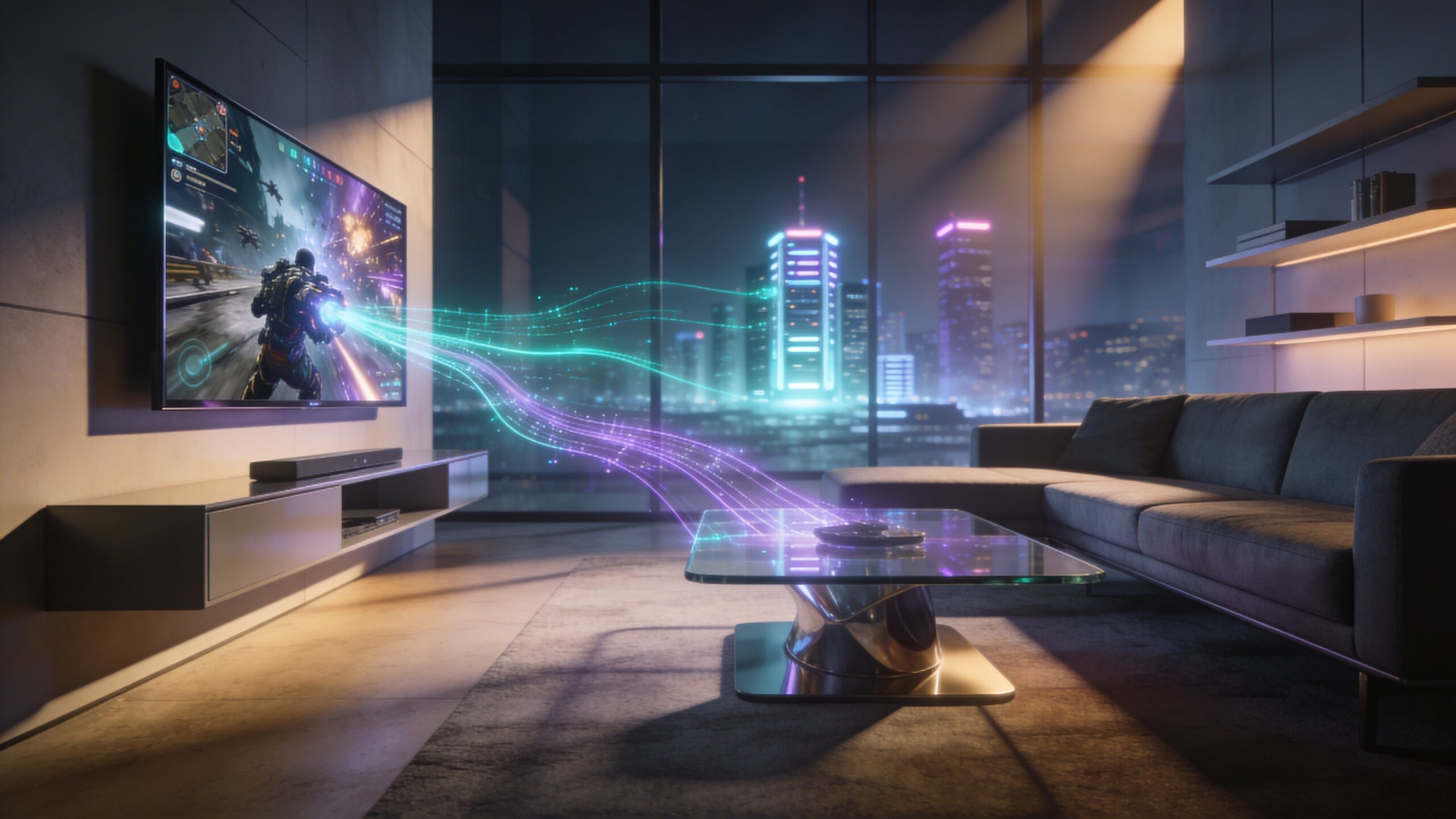
Open-world gaming has always chased one powerful fantasy: the ability to step into a living digital universe that feels endless. Players do not just want a map that looks large on paper. They want a world that breathes, surprises, reacts, and stretches beyond the horizon with no obvious seams. For years, that dream was limited by hardware. Storage space, memory bandwidth, CPU budgets, and loading systems forced developers to make difficult compromises. A world could be beautiful, or large, or detailed, or dynamic, but rarely all at once. That balance is changing because of AI streaming. Instead of treating a game world as one giant block of content that must sit fully loaded on a machine, AI streaming allows pieces of the world to be delivered, predicted, adjusted, and refreshed in real time. This creates the illusion of an enormous, richly layered environment without requiring every mountain, city block, forest path, and crowd animation to exist in memory all at once. It is not just a technical trick. It is becoming one of the most important foundations behind the future of immersive game design. As open worlds grow more ambitious, AI streaming is helping developers move past the old limits of static design. It makes possible worlds that feel larger because they are smarter about what appears, when it appears, and how it appears. It helps transform giant maps from empty land masses into believable ecosystems filled with motion, texture, and activity. In many ways, AI streaming is not merely supporting massive open worlds. It is redefining what “massive” can mean.
A: It is the smart delivery of world data in real time using predictive systems to improve performance and immersion.
A: Because giant maps need efficient loading to feel seamless, detailed, and stable while players move freely.
A: Not always; it often helps decide how existing assets are loaded, prioritized, or enhanced.
A: No; cloud gaming delivers games remotely, while AI streaming manages how world content is served and displayed.
A: Yes, especially when it predicts movement well and prepares nearby assets before players reach them.
A: Absolutely; SSD speed is a major factor in how quickly a world can stream assets smoothly.
A: Yes, it can decide when full behavior simulation is needed and when lighter background logic is enough.
A: Not literally, but it can make them feel far larger and more alive than traditional systems allow.
A: Yes; AI streaming works best when art, code, and asset design are already efficient.
A: Smarter loading lets developers build bigger, richer, more believable worlds without sacrificing smooth gameplay.
Why Traditional Open Worlds Hit a Wall
To understand why AI streaming matters, it helps to understand the old problem. Traditional open-world games rely on a careful balancing act. Developers divide the world into sections, load nearby assets, unload distant ones, and try to hide transitions through tunnels, elevators, fog, narrow cliffs, or cinematic camera tricks. Even the most seamless worlds are often carefully staged illusions built on aggressive memory management. This method works, but only up to a point. The more detailed a world becomes, the more expensive it is to store and deliver its parts. High-resolution textures consume enormous space. Character behaviors demand processing power. Environmental systems like weather, traffic, wildlife, destructible objects, and dynamic lighting all compete for resources. Add multiplayer layers or real-time procedural interactions, and the challenge grows even more intense. The result is that developers often have to scale back somewhere. They may reduce environmental density, simplify non-player characters, shrink interactivity, or limit how much the world can change over time. A map may look huge, but large sections can feel repetitive or underpopulated. The player sees the size, but not always the life within it. AI streaming changes this equation by making the world more selective, adaptive, and intelligent in the way it is delivered.
What AI Streaming Actually Means
AI streaming is the use of machine learning and predictive systems to manage how game data is generated, delivered, prioritized, and displayed in real time. Instead of loading content through rigid rules alone, AI models can analyze player movement, likely next actions, system performance, environmental context, and world complexity to decide what needs to appear first and at what quality level.
In simple terms, AI streaming helps a game become smarter about attention. It does not waste valuable processing time giving full detail to distant objects the player will never inspect. It can predict that a player moving quickly down a highway is more likely to need road geometry, vehicle traffic, skyline silhouettes, and destination landmarks before tiny storefront clutter on a side street. Meanwhile, if the same player slows down and enters a market district, the system can pivot and prioritize pedestrian behavior, small props, fine textures, and localized soundscapes. This approach is powerful because it turns streaming from a reactive system into a predictive one. Traditional streaming often loads content because the player is already near it. AI streaming attempts to anticipate what the player will need before they consciously notice the transition. That anticipation makes worlds feel smoother, denser, and more convincing.
The Illusion of Infinity
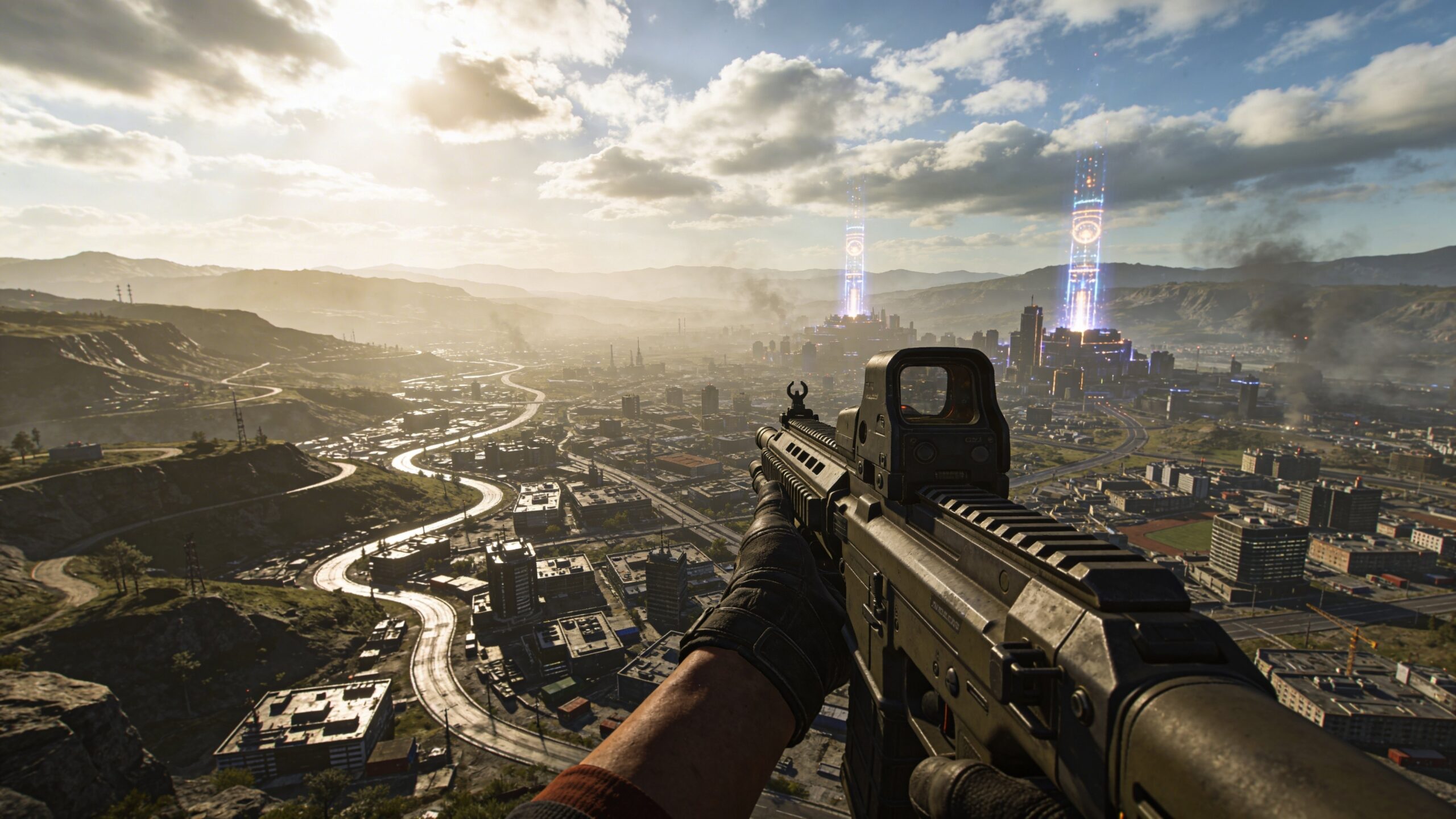
Massive open worlds do not have to be truly infinite to feel infinite. They need to create continuity. That means the player should sense that the world extends naturally in all directions, with enough variation and responsiveness to avoid feeling artificial. AI streaming helps build that illusion by feeding the right content at the right moment and shaping how the world reveals itself. A distant mountain range may begin as a low-detail silhouette. As the player approaches, the terrain can gain sharper textures, more distinct vegetation, weather reactions, and trail networks. A city skyline can begin as a dramatic visual promise, then gradually unfold into neighborhoods, interiors, traffic patterns, shops, side quests, and ambient stories. The world feels coherent because the player never sees the machinery underneath. This matters because immersion depends on timing. If detail pops in too late, the illusion breaks. If too much content loads at once, performance suffers. AI streaming helps solve that tension by learning how to balance anticipation and efficiency. It makes massive worlds possible not by brute force, but by selective intelligence.
Smarter Asset Delivery Creates Richer Environments
One of the greatest advantages of AI streaming is its ability to improve asset delivery. In an open world, assets include terrain meshes, trees, rocks, buildings, shadows, textures, NPC animations, audio layers, effects, and countless background details. A truly large world may contain millions of such elements, but only a fraction can be fully active at any given time.
AI systems can rank asset importance in real time. A road sign on the edge of vision may need only a basic model until the player turns toward it. A marketplace full of characters may require only simple crowd logic until the player enters conversation range. A storm rolling across a valley may begin as a lighting and sky effect before adding rainfall particles, wet surfaces, and wind-driven foliage when the player gets close enough to experience it directly. Because of this selective delivery, developers can devote more resources to what matters in the moment. That means better visual fidelity where the player is focused, more believable environmental activity, and less wasted overhead on unseen details. The result is not just a bigger map. It is a bigger map with more presence.
AI Streaming and Procedural Expansion
AI streaming becomes even more exciting when paired with procedural systems. Procedural generation has long been used to create terrain, biomes, dungeons, and environmental variation. But older procedural approaches often produced worlds that felt broad rather than deep. They were large, but sometimes repetitive or emotionally flat. AI changes that by helping procedural systems become more context-aware. Instead of generating content from a narrow set of static rules, machine learning models can help tailor world elements based on location, style, player behavior, narrative tone, and performance constraints. That could mean creating more natural road networks, more believable foliage clustering, more varied architectural layouts, or more organic population patterns.
When streaming and procedural logic work together, a world can expand more fluidly without overwhelming hardware. The system can create or refine content just ahead of the player’s experience, then gracefully simplify or retire content left behind. This allows worlds to feel handcrafted in their most important moments while still maintaining tremendous scale.
Performance Without Breaking Immersion
Performance has always been the silent judge of open-world ambition. Players may forgive a modest map if it feels smooth and responsive, but they quickly notice frame drops, stuttering, texture pop-in, and delayed interactions. Large worlds magnify these risks because so much must happen at once. AI streaming helps preserve performance by distributing workload more intelligently. Rather than applying the same streaming logic everywhere, the system can adapt to context. A dense urban environment may need different priorities than a desert, mountain pass, or underwater ruin. A player sprinting, gliding, driving, or flying changes the streaming challenge again. AI can respond to those shifts dynamically.
This flexibility is especially important for modern cross-platform development. Open-world games now often target a wide range of devices, from powerful gaming rigs to consoles and cloud-based platforms. AI streaming helps developers scale experiences more gracefully across hardware differences. The world can remain consistent in identity while adjusting detail, simulation depth, and content timing to match the available system resources.
Living Worlds Need Intelligent Streaming
The future of open worlds is not only about geography. It is about simulation. Players increasingly expect worlds to do more than sit still. They want NPCs with routines, ecosystems that react to weather, factions that remember outcomes, and cities that evolve over time. A world that simply looks large is no longer enough. It must feel active.
That is where AI streaming becomes even more valuable. It can decide which systems need full simulation and which can operate in simplified form until the player comes closer. A distant village does not need every resident fully animated at all times, but it can still maintain enough background logic to feel coherent when the player arrives. Wildlife herds can migrate through a region in broad strokes, then resolve into individual behaviors when observed. Traffic can be abstracted from afar and detailed up close. This layered simulation helps developers create worlds that feel alive without paying the cost of full complexity everywhere at once. It is a practical path toward deeper immersion, and it gives open worlds more dramatic storytelling potential.
Cloud Gaming and the Rise of Streaming Intelligence
AI streaming also fits naturally into the growth of cloud gaming and connected experiences. As more game systems rely on high-speed data delivery, developers gain the ability to offload some processes, update world states more frequently, and create richer forms of dynamic content delivery. This does not mean every open-world game must live entirely in the cloud, but it does mean the line between local and streamed content is becoming more fluid.
In that hybrid future, AI can help decide what should be processed locally, what should be streamed from remote infrastructure, and how to blend those layers without visible friction. This could support larger crowds, more detailed weather systems, smarter world events, and faster updates to live environments. Seasonal shifts, evolving cities, changing enemy territories, and player-driven community content all become easier to scale when the world is not locked into a purely static delivery model. For players, the biggest benefit is simple. The world feels more responsive and more surprising. It can grow, adapt, and transform with a level of flexibility that older content pipelines struggled to support.
Creative Freedom for Developers
One of the most exciting parts of AI streaming is what it means for creative teams. Technical limits have always shaped design decisions. Entire quests, districts, mechanics, and systems have been cut because they were too expensive to store, load, or simulate at scale. When streaming becomes more intelligent, those limits begin to loosen.
Artists can build richer assets knowing they do not all need to be fully active at once. Designers can create faster movement systems because the world can prepare ahead of the player. Writers can imagine more dynamic settings because background simulation can be layered more intelligently. Engineers can focus less on brute-force compromises and more on elegant orchestration. This does not eliminate challenge. Building a seamless open world remains one of the hardest tasks in game development. But AI streaming gives teams more room to aim high. It allows scale and density to support each other rather than compete with each other.
The Risks and Challenges Ahead
For all its promise, AI streaming is not magic. It introduces new design challenges and technical risks. Predictive systems must be accurate enough to avoid immersion-breaking mistakes. Poorly tuned streaming can still lead to visible pop-in, missing assets, inconsistent behaviors, or strange detail priorities. Developers also have to think carefully about data efficiency, latency, player privacy, and the cost of maintaining more complex pipelines.
There is also an artistic question. A world can be technically vast but still emotionally hollow if its content lacks purpose. AI streaming can help deliver more detail and smarter systems, but it cannot replace vision, tone, and meaningful design. The best open worlds will still depend on strong creative direction. Technology makes possibility, but artistry makes memory. Even so, the direction is clear. As tools improve, AI streaming will likely become a standard part of how open worlds are built. It offers too many advantages in speed, scale, adaptability, and immersion to remain a niche experiment.
The Next Era of Open-World Design
Massive open worlds are evolving from giant maps into intelligent spaces. They are becoming more responsive to player behavior, more efficient in how they deliver detail, and more capable of supporting layered simulation. AI streaming sits at the center of that shift. It helps developers create worlds that feel larger not simply because they cover more territory, but because they reveal more life, more texture, and more continuity. The dream of seamless digital exploration has always been about more than size. It is about the sensation that anything could be over the next hill, around the next corner, or beyond the next skyline. AI streaming strengthens that sensation by making the world feel ready for the player at every moment. It supports the invisible choreography that keeps landscapes loading, cities humming, and stories unfolding without breaking the spell. As gaming continues to move toward richer, faster, more adaptive experiences, AI streaming will play a major role in what comes next. It is helping developers turn technical efficiency into artistic scale. And in doing so, it is making the impossible fantasy of truly massive open worlds feel more real than ever.