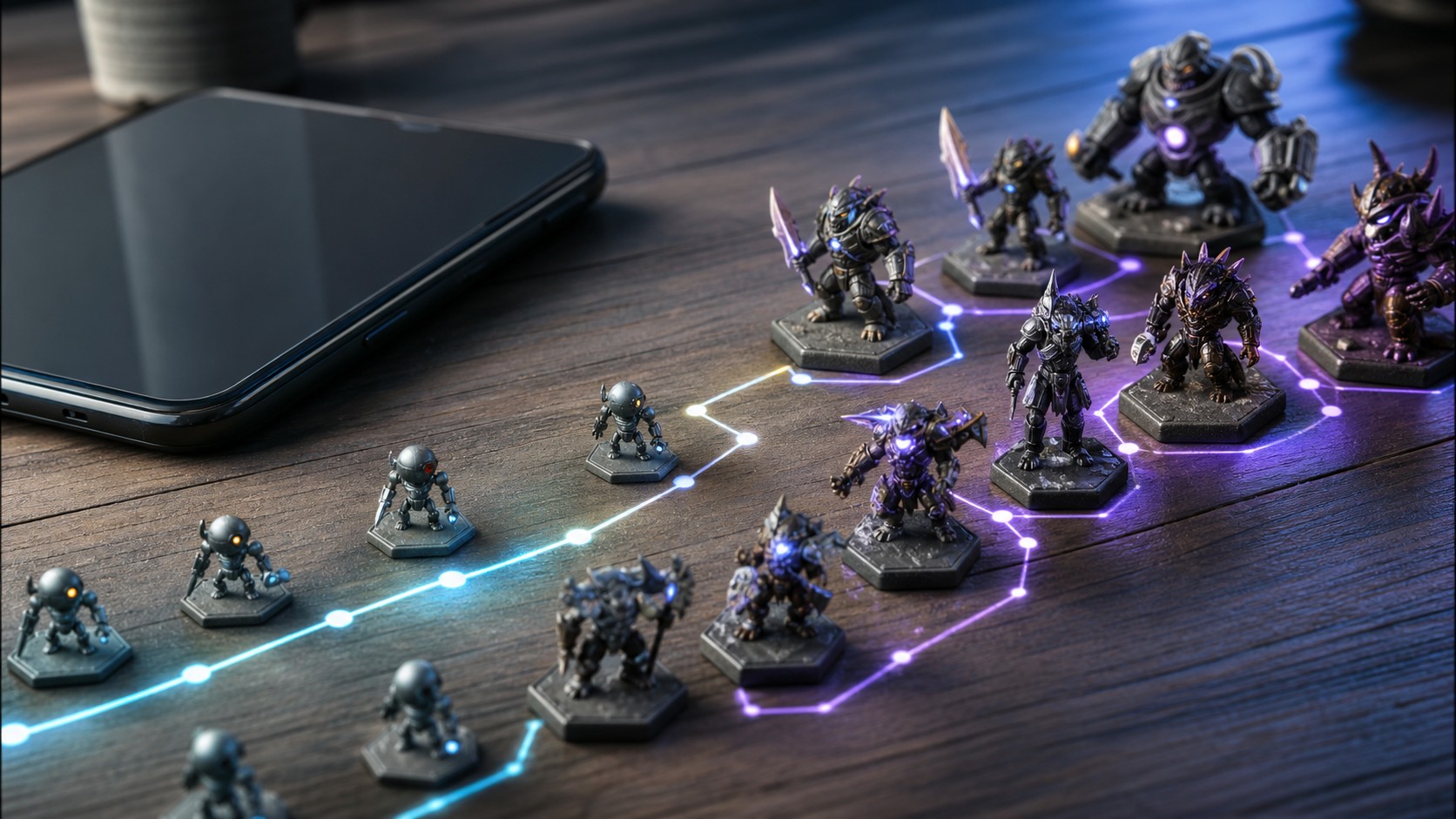
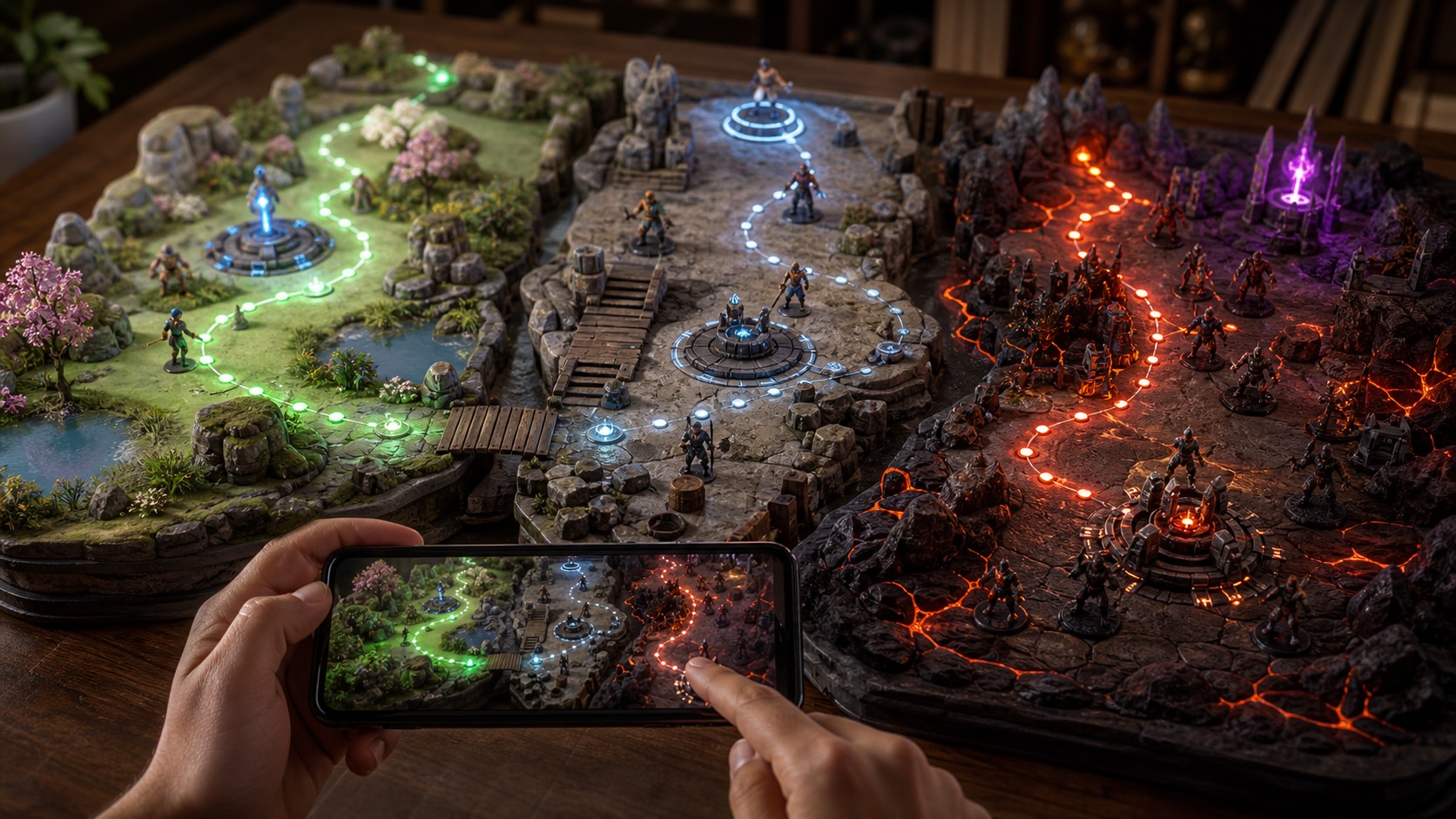
Mobile games have always flirted with infinity. From high-score chasers and endless runners to procedurally generated dungeons, developers have long pursued the promise of gameplay that never truly ends. The dream is simple but powerful: a mobile experience that adapts, evolves, and surprises forever. Today, artificial intelligence is pushing that dream closer to reality. As AI-driven design, generative content systems, and adaptive difficulty engines mature, the question is no longer whether mobile games can feel endless. The question is whether AI can make them truly endless in meaningful, player-centric ways. The rise of AI in mobile gaming development has introduced new possibilities in procedural generation, player modeling, and dynamic storytelling. AI doesn’t just automate content creation. It can analyze player behavior, generate new environments, rewrite challenges, and reshape entire game systems in real time. In a world where user retention defines success, AI-generated mobile game content could become the engine behind infinite replayability.
A: Practically endless through adaptive generation, though technically finite.
A: No—AI augments creativity rather than replacing it.
A: Personalized systems often improve long-term engagement.
A: Yes, but privacy-focused models can protect users.
A: AI reduces repetition by adapting in real time.
A: Yes, with dynamic narrative engines.
A: Hybrid cloud-edge systems are most effective.
A: Performance constraints exist but are improving.
A: Yes, if developers prioritize transparency.
A: Increasingly immersive, adaptive, and near-limitless mobile experiences.
From Procedural to Intelligent Generation
Procedural generation has existed for decades. Early examples relied on algorithms that rearranged tiles, maps, or enemy placements using randomized logic. While these systems created variation, they often lacked coherence or narrative depth. Players eventually recognized patterns. The illusion of infinity faded. AI-driven procedural generation changes that equation. Instead of repeating predefined rules, machine learning models can analyze massive datasets of design patterns, player decisions, and progression systems. AI can generate levels that feel hand-crafted, adapting their structure based on player skill, preferred playstyle, and historical choices. This shift from static randomness to adaptive intelligence gives endless mobile games a new dimension. Consider a roguelike mobile RPG powered by AI. Instead of cycling through preset dungeon rooms, the game might generate entirely new layouts, enemy archetypes, and environmental hazards based on a player’s combat tendencies. If the player favors ranged attacks, AI could introduce shielded enemies or maze-like corridors. If they rush forward recklessly, traps might become more prominent. The content would not merely expand; it would respond.
Personalized Difficulty and Adaptive Loops
One of the biggest challenges in mobile game retention is balancing difficulty. Too easy, and players disengage. Too hard, and they uninstall. AI allows for dynamic difficulty adjustment in mobile games that evolves continuously. By monitoring reaction times, win-loss ratios, engagement length, and even purchase behavior, AI systems can tune gameplay loops in real time. In an endless mobile game environment, AI could create a seamless skill gradient. Rather than predictable scaling, each challenge might feel custom-tailored. Bosses could adjust attack patterns. Puzzle complexity could rise subtly. Reward systems could shift to maintain motivation. This personalization increases emotional investment, making the experience feel fresh even after hundreds of sessions. True endlessness is not just about infinite content; it is about infinite relevance. AI personalization makes each session feel uniquely designed for the individual player.
AI-Generated Stories That Never Conclude
Narrative has traditionally required closure. Story-driven games rely on arcs, character development, and resolution. However, AI storytelling engines are changing that structure. Large language models and narrative AI tools can generate branching dialogue, evolving character arcs, and world events that expand indefinitely.
In a mobile adventure game, AI could generate new quests daily, tailored to the player’s past decisions. Characters might remember earlier encounters and develop relationships dynamically. Villains could evolve based on how players previously defeated them. Entire in-game civilizations might adapt over time. This approach transforms mobile gaming from finite storytelling into a living narrative ecosystem. The world never ends because it never stops evolving. AI does not simply extend the story; it perpetually rewrites it.
Dynamic Worlds and Living Ecosystems
Beyond story and difficulty, AI opens the door to simulated ecosystems that grow organically. Imagine a city-building mobile game where AI governs the economy, weather patterns, migration trends, and political events. Instead of scripted scenarios, the system responds to player policies and global trends.
Such AI-generated worlds create compounding interactions. Player decisions influence economic stability, which impacts population growth, which affects environmental conditions. These cascading systems create emergent gameplay that feels infinite because the interactions are complex and unpredictable. This is where AI in mobile gaming becomes transformative. Endless games are no longer repetitive loops but evolving simulations.
The Role of Generative Art and Asset Creation
Visual variety plays a crucial role in sustaining engagement. Repeated environments and character models break immersion. Generative AI tools can now create new character skins, landscapes, animations, and cosmetic variations on the fly. In an endless runner, AI could generate entirely new backdrops, obstacles, and stylistic themes every week. A space-themed track might shift into a neon cyberpunk city, then into a surreal alien jungle. Players would feel as though the game continually expands without requiring massive development teams to design each asset manually. Generative AI art tools also reduce production bottlenecks, allowing mobile studios to scale content rapidly. Infinite creativity becomes operationally feasible.
Player-Driven Evolution Through Machine Learning
AI can analyze millions of player sessions to refine gameplay systems automatically. Reinforcement learning models might adjust reward curves to maximize satisfaction. Retention models could detect churn risk and introduce new challenges at the perfect moment.
Over time, the game learns from its community. It becomes a collaborative system where collective behavior shapes the evolving design. This feedback loop contributes to the sense of endless growth. The more people play, the smarter the game becomes. However, this approach raises important ethical questions. If AI optimizes purely for retention and monetization, endless design can become manipulative. Responsible AI deployment is critical. Endless gameplay should empower players, not exploit them.
Technical Limitations and Infrastructure Challenges
Despite its promise, AI-powered endless mobile gaming faces significant technical barriers. Real-time generation requires computational resources. Mobile devices have limited processing power compared to PCs or consoles. Developers must balance cloud-based AI systems with on-device performance.
Latency is another issue. Endless worlds generated dynamically must load seamlessly. If AI systems slow down gameplay or create noticeable lags, immersion collapses. Data privacy is also central. Adaptive AI relies on player data. Transparent policies and secure infrastructure are essential to maintain trust. True endlessness demands robust architecture, efficient AI models, and ethical safeguards.
The Psychology of Endless Engagement
Endless mobile games thrive on dopamine loops. AI enhances these loops by tailoring progression systems to individual motivation triggers. Some players crave competition, others exploration, others mastery.
AI segmentation can identify motivational archetypes and adjust game mechanics accordingly. Competitive players might receive dynamic leaderboards and evolving challenges. Explorers might unlock hidden realms generated procedurally. Completionists might pursue AI-created micro-objectives. This psychological personalization deepens engagement. Endless gameplay becomes less about grinding and more about discovery.
Monetization in an Infinite Framework
Endless design changes monetization models. Instead of finite expansions, AI-generated mobile games can offer evolving content subscriptions. Cosmetic drops, story arcs, and dynamic events can refresh continuously. However, balance is critical. If monetization gates essential content, the illusion of endlessness fractures. Players must feel that the core infinite experience remains accessible. Sustainable monetization aligns with player value rather than artificial scarcity.
Can Endless Games Truly Exist?
The philosophical question remains. Can any digital system be truly endless? Technically, hardware constraints, finite datasets, and algorithmic boundaries impose limits. Yet from a player’s perspective, endlessness is experiential. If the game continues to generate meaningful novelty beyond human lifetime engagement, it effectively becomes infinite.
AI dramatically expands the horizon. Instead of thousands of prebuilt levels, games can generate billions of permutations. Instead of scripted dialogue, AI can produce evolving conversations indefinitely. Instead of static worlds, simulations can grow organically. True mathematical infinity may remain unreachable, but practical endlessness is closer than ever.
The Future of AI in Mobile Gaming
As edge computing improves and mobile chipsets become more powerful, AI-driven content generation will shift increasingly onto devices themselves. Hybrid systems combining local models and cloud intelligence will reduce latency while expanding creative range. Cross-game AI ecosystems could emerge, where player behavior in one title influences another. Endless universes may interconnect across franchises. Voice AI and natural language processing could allow players to speak directly to dynamic characters. Augmented reality layers might extend endless gameplay into the physical world. The boundary between mobile game and living digital environment will blur.
Ethical and Creative Responsibility
With great generative power comes responsibility. Endless AI systems must prioritize player well-being, fairness, and inclusivity. Transparent design principles will be essential.
Developers must avoid over-optimization that traps players in manipulative loops. Endless should mean expansive, not exploitative. When designed ethically, AI-powered endless mobile games can foster creativity, learning, and meaningful social interaction.
Conclusion: Infinity Within Reach
Artificial intelligence is redefining what mobile gaming can become. Through adaptive difficulty, generative storytelling, dynamic worlds, and personalized progression systems, AI is bringing the concept of truly endless mobile games within reach. Endless does not simply mean longer. It means evolving, responsive, and alive. It means worlds that adapt as players grow. It means stories that refuse to conclude because they are co-created in real time. AI may never achieve pure infinity in a mathematical sense, but it can deliver experiences that feel boundless. And for players holding a smartphone in the palm of their hand, that might be more than enough.