
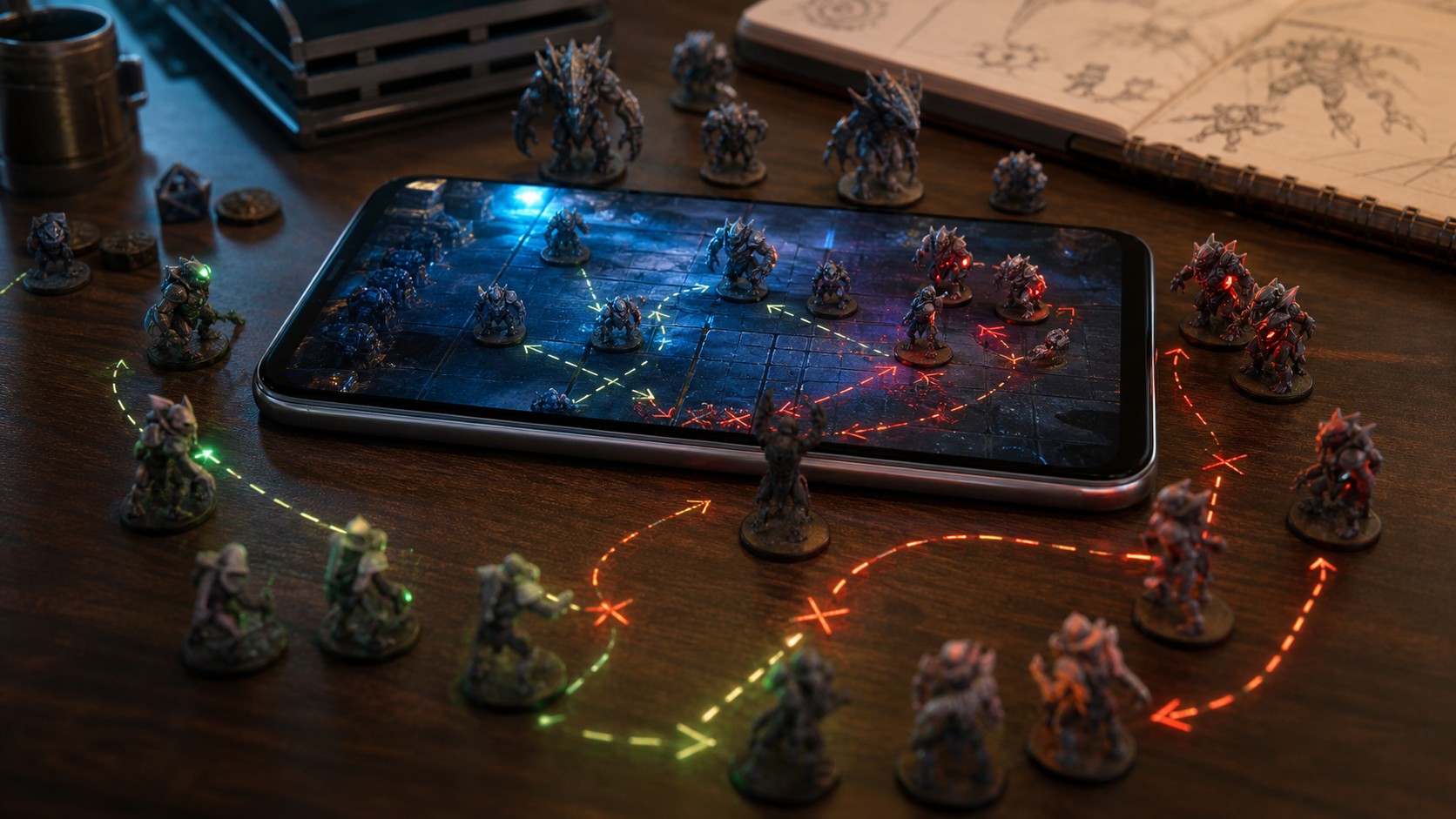
Learning Enemies Turn Mistakes Into Pressure
AI-generated enemies that learn from your mistakes can make a mobile game feel sharper because failure does not simply reset the same fight. The system can notice repeated dodges, predictable attacks, ignored tools, or risky routes, then change the next encounter in a way that asks for a better plan. The best version feels tactical rather than punitive. It gives enemies enough memory to create pressure, but it still leaves visible clues, honest weaknesses, and a path for the player to adapt back.
A: Yes, when they track repeated play patterns and adjust within fair limits.
A: Not if enemies respond to visible behavior and leave counterplay.
A: Usually no. Gradual change feels fairer and more readable.
A: Weaknesses let players solve the new tactic instead of feeling trapped.
A: Yes, but group adaptation must avoid screen clutter.
A: Look for changed positioning, delayed attacks, or new role coordination.
A: It can, so good systems separate testing from repeated habits.
A: Touch inputs require clearer tells and wider response windows.
A: The player changes strategy and feels smarter for doing it.
A: Enemies that seem to read inputs instead of observing play.
Mistakes Become Play Signals
A learning enemy does not need to know everything about the player. It can start with practical signals such as repeated movement direction, timing errors, missed interrupts, poor spacing, or overused attacks. Those patterns tell the game where the player is relying on habit rather than reading the encounter.
The system should treat mistakes as clues, not verdicts. A failed dodge may mean the player is experimenting, distracted, or still learning a mechanic. Good enemy adaptation waits for repeated behavior before changing tactics.
Adaptation Needs Clear Evidence
Enemies feel fair when players can see why behavior changed. A creature that guards the side the player always attacks can feel smart if it has observed that pattern. A creature that instantly counters a hidden input feels cheap.
Readable evidence can come from animation, positioning, delay, or group formation. The player may not need a tutorial message, but they need enough feedback to understand that the enemy is responding to behavior inside the fight.
Smart Pressure Is Not Perfect Pressure
Enemies that learn should still make mistakes. They can overcommit, hesitate, misread a bait, or leave a flank open while changing formation. Those gaps create counterplay, and counterplay is what keeps learning AI from becoming oppressive.
Perfect adaptation kills the game. If every repeated action is punished instantly, players stop experimenting. The goal is not to trap the player. It is to encourage them to develop a richer toolkit.
Mobile Controls Shape the Learning Curve
Mobile players often rely on touch inputs, virtual sticks, or short gesture windows. Enemy learning has to respect that control reality. If an enemy adapts faster than a player can physically respond, the fight feels unfair even if the logic is technically clever.
This is why telegraphs and recovery windows matter. Learning enemies need to communicate their new tactic clearly enough for small screens and thumbs. Intelligence should make decisions deeper, not inputs more stressful.
Enemy Memory Works Best in Stages
A strong system may begin with small adjustments: a wider guard, a delayed attack, or a different patrol route. Later encounters can build on that memory with coordinated pressure. This staged approach lets the player notice the enemy learning and respond with confidence.
Immediate large changes are harder to trust. If the whole enemy plan mutates after one mistake, the fight feels unstable. Gradual adaptation teaches the player that behavior matters without making the rules feel slippery.
Groups Can Learn Together
Learning becomes more interesting when enemy groups adapt roles. A shield unit might block the player’s favorite route while a ranged unit covers the escape path. A fast enemy might bait a dodge that a heavier enemy punishes.
Group learning should still be limited. Too many coordinated responses can turn a mobile screen into clutter. The best designs introduce one clear tactical change at a time so the player can read the new problem.
The Ethical Line Is Fair Counterplay
AI-generated enemies should never feel as if they are reading the player’s private intention. They should respond to visible habits and give the player a way to change the pattern. This keeps pressure inside the rules of the game.
Fair counterplay also means respecting accessibility and difficulty settings. If a player chooses a calmer mode, learning enemies should adapt within that promise rather than secretly escalating beyond it.
The Best Learning Enemies Create Stories
Players remember the moment an enemy stopped falling for the same trick. They remember changing tactics, baiting a guard, or finally beating a foe that had learned their rhythm. Those stories are the payoff of adaptive enemy design.
For mobile games, the ideal learning enemy is not the harshest enemy. It is the one that makes a short encounter feel alive, fair, and worth replaying.
How Players Can Evaluate the Design
A practical way to judge AI-Generated Enemies That Learn From Your Mistakes is to ignore the promotional language and watch what changes during ordinary play. If the game reacts only by changing surface details, the AI is probably decorative. If it changes timing, pressure, route choice, recovery, or teaching in ways that match what the player just did, the system is contributing to the design. The difference becomes clearer over several sessions because mobile AI often reveals itself through patterns rather than one dramatic moment.
Players can also compare how the game handles success and failure. Good adaptive design does not simply reward wins and soften losses. It reads the lesson inside each result. A smooth clear may open a deeper challenge, while repeated mistakes may create a better practice path. The important sign is whether the game still asks for skill while making the next step easier to understand.
The mistake signals ideas in this article are especially useful because they focus on observable behavior. A player does not need to know the model, the algorithm, or the production pipeline. They only need to see whether the game responds with fair clues and meaningful choices. When that response is visible, AI becomes part of the play experience instead of a hidden claim.
Where Developers Need Restraint
Developers have to decide which parts of a mobile game should adapt and which parts should remain stable. Too much movement can make a game feel slippery, as if the rules are changing behind the player’s back. Too little movement makes the AI hard to feel. Restraint is the craft of choosing where flexibility improves the loop and where consistency protects mastery.
The fair learning rules layer matters because it keeps technology connected to purpose. Every adaptive feature should answer a player-facing design problem: boredom, confusion, unfair difficulty, weak motivation, repetitive routes, or poor session fit. If a feature cannot name the problem it solves, it may add complexity without improving the game.
Why Trust Decides Whether AI Feels Good
Trust is the invisible foundation of AI-driven mobile design. Players will accept a surprising level, a changed reward path, or a smarter opponent when the result feels fair. They become suspicious when the system seems to hide information, push spending, or erase the value of practice. The more personal a game becomes, the more carefully it has to protect the player’s confidence.
That is why learning design pitfalls should be treated as more than a checklist. Trust is built through repeated evidence: readable feedback, clear settings, honest failure, and rewards that connect to play rather than pressure. A mobile game can be highly adaptive and still feel respectful if the player understands the boundaries.
The Long-Term Direction
The future of this space is likely to feel quieter than the hype suggests. The best AI-driven mobile games will not constantly announce that they are adapting. They will simply feel better paced, more attentive, and less repetitive. Players may describe them as fair, fresh, generous, or surprisingly personal before they describe them as intelligent.
That quieter future is also the healthier one. AI should give designers more ways to honor how people actually play on mobile devices: in short bursts, across changing moods, with different skill levels, and often in the middle of busy lives. When the technology serves those realities, the result is not just longer play. It is a better reason to keep playing.
What This Means for Everyday Mobile Players
For everyday players, the useful habit is to pay attention to how a game changes after repeated sessions. Notice whether a difficult level becomes clearer without becoming empty, whether rewards line up with goals you actually care about, and whether the next challenge respects what you have already learned. Those small signs reveal more than a menu label or a launch trailer ever can.
It is also worth noticing how the game behaves when you step away. A respectful AI-driven mobile game welcomes return without punishing absence, preserves progress without turning it into obligation, and gives the next session a clear shape. That balance is where smart design becomes genuinely player-friendly. The technology matters, but the emotional result matters more.
The same standard applies to reviews, previews, and everyday player discussion. Instead of asking whether a mobile game uses AI, it is more useful to ask what the system lets the player do differently. Better routing, clearer teaching, smarter pacing, and fairer recovery are real design outcomes. Vague claims about intelligence are not enough on their own.
A good adaptive feature should also remain understandable after the novelty fades. The first session may impress with surprise, but the tenth session reveals whether the system has durable judgment. If the experience keeps creating fresh decisions while preserving a stable sense of skill, then the AI is doing more than decorating the game loop.
That durability is especially important on mobile, where a player may revisit the same game dozens of times in uneven bursts. Adaptive design earns its place when it helps those returns feel coherent, not when it merely reshuffles content for the sake of novelty.
The best designs also keep room for player taste. Some people want a demanding test, some want a calm routine, and others want a game that can move between both depending on the day. AI is most useful when it gives designers a finer set of dials for those differences while still protecting the identity of the game.
That balance is why article-specific evaluation matters. Two AI mobile games can use similar technology and produce very different player experiences. The valuable question is always whether the system makes the next session clearer, richer, fairer, or more memorable for the person holding the device.
The same idea applies across genres. A puzzle game, strategy game, companion game, and action game may all benefit from different kinds of AI, but none of them benefit from adaptation that weakens purpose. The technology should sharpen the reason the game already works and make that strength easier to feel during normal everyday play.
The strongest examples will feel specific without feeling narrow. They will notice habits, but still leave room for surprise. They will support short sessions, but still reward deeper mastery. Most of all, they will make adaptation feel like craft rather than pressure, giving players a clearer path through the game without reducing the pleasure of discovery, recovery, and hard-earned improvement across many different styles of mobile play. That is the standard worth demanding from every serious adaptive mobile game, especially as AI becomes a normal part of everyday mobile play.
This is also why the details inside each system matter. A single adaptive feature can feel brilliant, invisible, manipulative, or pointless depending on how it is framed. Players should judge the result by the quality of decisions, the fairness of feedback, and the amount of control they still feel during the session.
For developers, the same discipline applies before launch and after updates. It is not enough to add a responsive system and assume the experience improves. The team has to test whether players understand the new pressure, whether the content still has rhythm, and whether the system respects the promise the game made in the first place consistently.
For players, the simple habit is to compare how the game treats success, failure, return, and experimentation. Those moments reveal whether AI is strengthening the loop or merely changing it. The best systems leave players with more confidence in the game, not less, across repeated sessions and changing moods overall, and across different forms of play.


