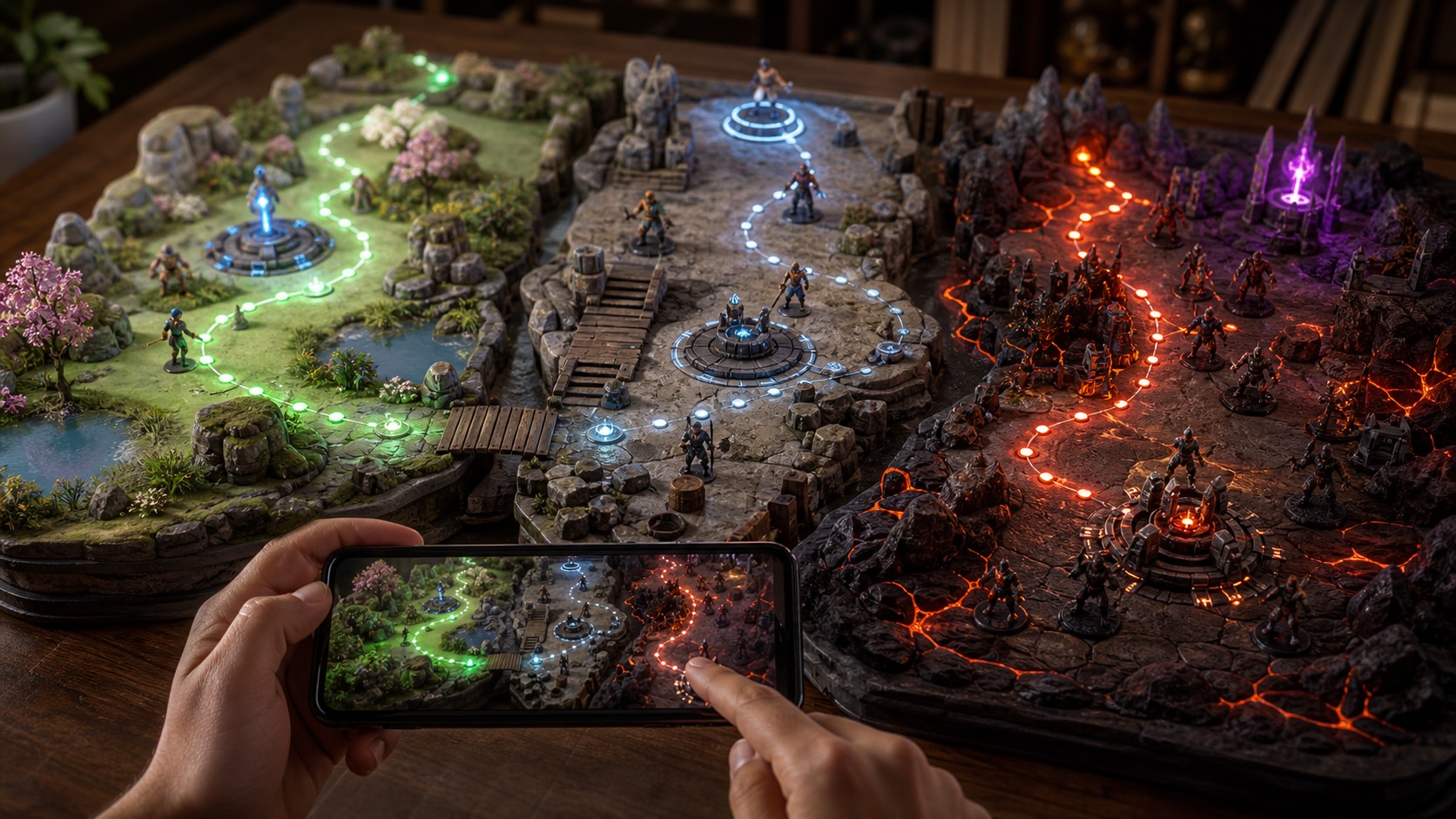
The Difference Is Response
AI-powered mobile games vs traditional mobile games is not a simple question of new technology replacing old design. Traditional mobile games can be polished, fair, memorable, and carefully paced because their rules are fixed and predictable. AI-powered mobile games add a different strength: response. They can adjust challenge, hints, rewards, enemy behavior, and session shape around the player. The most useful comparison is not which approach is automatically better, but which one gives the player the right balance of reliability, variety, and agency.
A: No. They are better only when adaptation improves the player experience.
A: Stable design supports mastery, fairness, and authored pacing.
A: Yes. Many strong games use fixed foundations with adaptive layers.
A: Traditional fixed rules usually protect fairness more clearly.
A: AI can help if it adds meaningful variation and re-entry support.
A: Not necessarily. They need strong constraints and human direction.
A: Yes, if scripted behavior is well designed and readable.
A: Changing the experience in ways players cannot understand or control.
A: Repetition that stops matching player skill or interest.
A: Judge the session quality, not the technology label.
Traditional Design Wins on Predictability
Traditional mobile games are strong when players need stable rules. A fixed level, known reward track, and repeated enemy pattern make the game easier to learn and easier to master. That consistency can be comforting, especially in puzzle games, arcade loops, and competitive modes.
Predictability also helps developers test difficulty and pacing. Every player faces the same designed sequence, so balance problems are easier to spot. The tradeoff is that a fixed sequence may not fit players who learn faster, struggle longer, or want more variation after repeated sessions.
AI-Powered Design Wins on Adaptation
AI-powered mobile games can respond to behavior instead of assuming one average player. They can soften a recovery path, add pressure after easy wins, recommend a relevant goal, or change an enemy formation. The result can feel more personal without throwing away the game’s core rules.
That flexibility is valuable on mobile because sessions vary so much. A traditional game may deliver the same level whether someone has two minutes or twenty. An AI-powered game can shape the next step around the session, which can make progress feel smoother.
Difficulty Feels Different in Each Approach
Traditional games usually express difficulty through level order, enemy stats, timers, or puzzle complexity. Players can learn the exact challenge and overcome it through repetition. That is satisfying when the game is fair and the player wants mastery.
AI-powered games can tune difficulty more fluidly. They might change enemy aggression, hint timing, resource placement, or route length. This can reduce frustration, but it must avoid making wins feel artificial. Players still need to believe their improvement matters.
Replay Value Has Different Sources
Traditional replay value often comes from mastery, score chasing, collectibles, or handcrafted alternate routes. Players return because they enjoy improving against a known structure. The content does not have to change if the skill challenge remains deep.
AI-powered replay value comes from variation and recognition. The game can create new combinations, surface different goals, or react to a changing play style. This works best when variation changes decisions instead of only changing scenery.
Enemies Reveal the Contrast Quickly
In traditional mobile games, enemies often follow clear scripted behavior. That can be excellent when the pattern is readable and satisfying to exploit. It also keeps combat accessible on touch screens.
AI-powered enemies can search, coordinate, retreat, or adapt to repeated habits. They feel smarter when they still communicate intent. If they adapt without readable cues, they can feel unfair faster than traditional scripted enemies.
Rewards Can Be Fixed or Personalized
Traditional reward tracks provide clarity. Players know what is coming, what effort is required, and how long progress will take. That transparency can build trust.
AI-powered rewards can be more relevant. A builder might see materials, a competitor might see ranked challenges, and an explorer might see new routes. The risk is pressure. Personalized rewards need ethical boundaries so relevance does not become manipulation.
Agency Is the Deciding Factor
Traditional games often give agency through stable rules: the player knows the challenge and chooses how to beat it. AI-powered games give agency when the player can shape adaptation, select modes, control notifications, and understand why the experience changes.
If AI removes control, the traditional game may feel better. If AI expands choice while preserving fairness, the powered version can feel richer. The best mobile games may blend both models rather than choosing one extreme.
The Best Choice Depends on the Game
A precision puzzle might benefit from fixed design because the pleasure comes from mastering one exact layout. A live adventure, strategy loop, or character-driven game might benefit from AI because the experience improves when it remembers context and varies pressure.
For players, the comparison should stay practical. Traditional design is not old-fashioned by default, and AI-powered design is not superior by default. The better game is the one whose systems make each session feel fair, interesting, and worth returning to.
How Players Can Evaluate the Design
A practical way to judge AI-Powered Mobile Games vs Traditional Mobile Games is to ignore the promotional language and watch what changes during ordinary play. If the game reacts only by changing surface details, the AI is probably decorative. If it changes timing, pressure, route choice, recovery, or teaching in ways that match what the player just did, the system is contributing to the design. The difference becomes clearer over several sessions because mobile AI often reveals itself through patterns rather than one dramatic moment.
Players can also compare how the game handles success and failure. Good adaptive design does not simply reward wins and soften losses. It reads the lesson inside each result. A smooth clear may open a deeper challenge, while repeated mistakes may create a better practice path. The important sign is whether the game still asks for skill while making the next step easier to understand.
The traditional strengths ideas in this article are especially useful because they focus on observable behavior. A player does not need to know the model, the algorithm, or the production pipeline. They only need to see whether the game responds with fair clues and meaningful choices. When that response is visible, AI becomes part of the play experience instead of a hidden claim.
Where Developers Need Restraint
Developers have to decide which parts of a mobile game should adapt and which parts should remain stable. Too much movement can make a game feel slippery, as if the rules are changing behind the player’s back. Too little movement makes the AI hard to feel. Restraint is the craft of choosing where flexibility improves the loop and where consistency protects mastery.
The ai-powered advantages layer matters because it keeps technology connected to purpose. Every adaptive feature should answer a player-facing design problem: boredom, confusion, unfair difficulty, weak motivation, repetitive routes, or poor session fit. If a feature cannot name the problem it solves, it may add complexity without improving the game.
Why Trust Decides Whether AI Feels Good
Trust is the invisible foundation of AI-driven mobile design. Players will accept a surprising level, a changed reward path, or a smarter opponent when the result feels fair. They become suspicious when the system seems to hide information, push spending, or erase the value of practice. The more personal a game becomes, the more carefully it has to protect the player’s confidence.
That is why where ai wins should be treated as more than a checklist. Trust is built through repeated evidence: readable feedback, clear settings, honest failure, and rewards that connect to play rather than pressure. A mobile game can be highly adaptive and still feel respectful if the player understands the boundaries.
The Long-Term Direction
The future of this space is likely to feel quieter than the hype suggests. The best AI-driven mobile games will not constantly announce that they are adapting. They will simply feel better paced, more attentive, and less repetitive. Players may describe them as fair, fresh, generous, or surprisingly personal before they describe them as intelligent.
That quieter future is also the healthier one. AI should give designers more ways to honor how people actually play on mobile devices: in short bursts, across changing moods, with different skill levels, and often in the middle of busy lives. When the technology serves those realities, the result is not just longer play. It is a better reason to keep playing.
What This Means for Everyday Mobile Players
For everyday players, the useful habit is to pay attention to how a game changes after repeated sessions. Notice whether a difficult level becomes clearer without becoming empty, whether rewards line up with goals you actually care about, and whether the next challenge respects what you have already learned. Those small signs reveal more than a menu label or a launch trailer ever can.
It is also worth noticing how the game behaves when you step away. A respectful AI-driven mobile game welcomes return without punishing absence, preserves progress without turning it into obligation, and gives the next session a clear shape. That balance is where smart design becomes genuinely player-friendly. The technology matters, but the emotional result matters more.
The same standard applies to reviews, previews, and everyday player discussion. Instead of asking whether a mobile game uses AI, it is more useful to ask what the system lets the player do differently. Better routing, clearer teaching, smarter pacing, and fairer recovery are real design outcomes. Vague claims about intelligence are not enough on their own.
A good adaptive feature should also remain understandable after the novelty fades. The first session may impress with surprise, but the tenth session reveals whether the system has durable judgment. If the experience keeps creating fresh decisions while preserving a stable sense of skill, then the AI is doing more than decorating the game loop.
That durability is especially important on mobile, where a player may revisit the same game dozens of times in uneven bursts. Adaptive design earns its place when it helps those returns feel coherent, not when it merely reshuffles content for the sake of novelty.
The best designs also keep room for player taste. Some people want a demanding test, some want a calm routine, and others want a game that can move between both depending on the day. AI is most useful when it gives designers a finer set of dials for those differences while still protecting the identity of the game.
That balance is why article-specific evaluation matters. Two AI mobile games can use similar technology and produce very different player experiences. The valuable question is always whether the system makes the next session clearer, richer, fairer, or more memorable for the person holding the device.
The same idea applies across genres. A puzzle game, strategy game, companion game, and action game may all benefit from different kinds of AI, but none of them benefit from adaptation that weakens purpose. The technology should sharpen the reason the game already works and make that strength easier to feel during normal everyday play.
The strongest examples will feel specific without feeling narrow. They will notice habits, but still leave room for surprise. They will support short sessions, but still reward deeper mastery. Most of all, they will make adaptation feel like craft rather than pressure, giving players a clearer path through the game without reducing the pleasure of discovery, recovery, and hard-earned improvement across many different styles of mobile play. That is the standard worth demanding from every serious adaptive mobile game, especially as AI becomes a normal part of everyday mobile play.