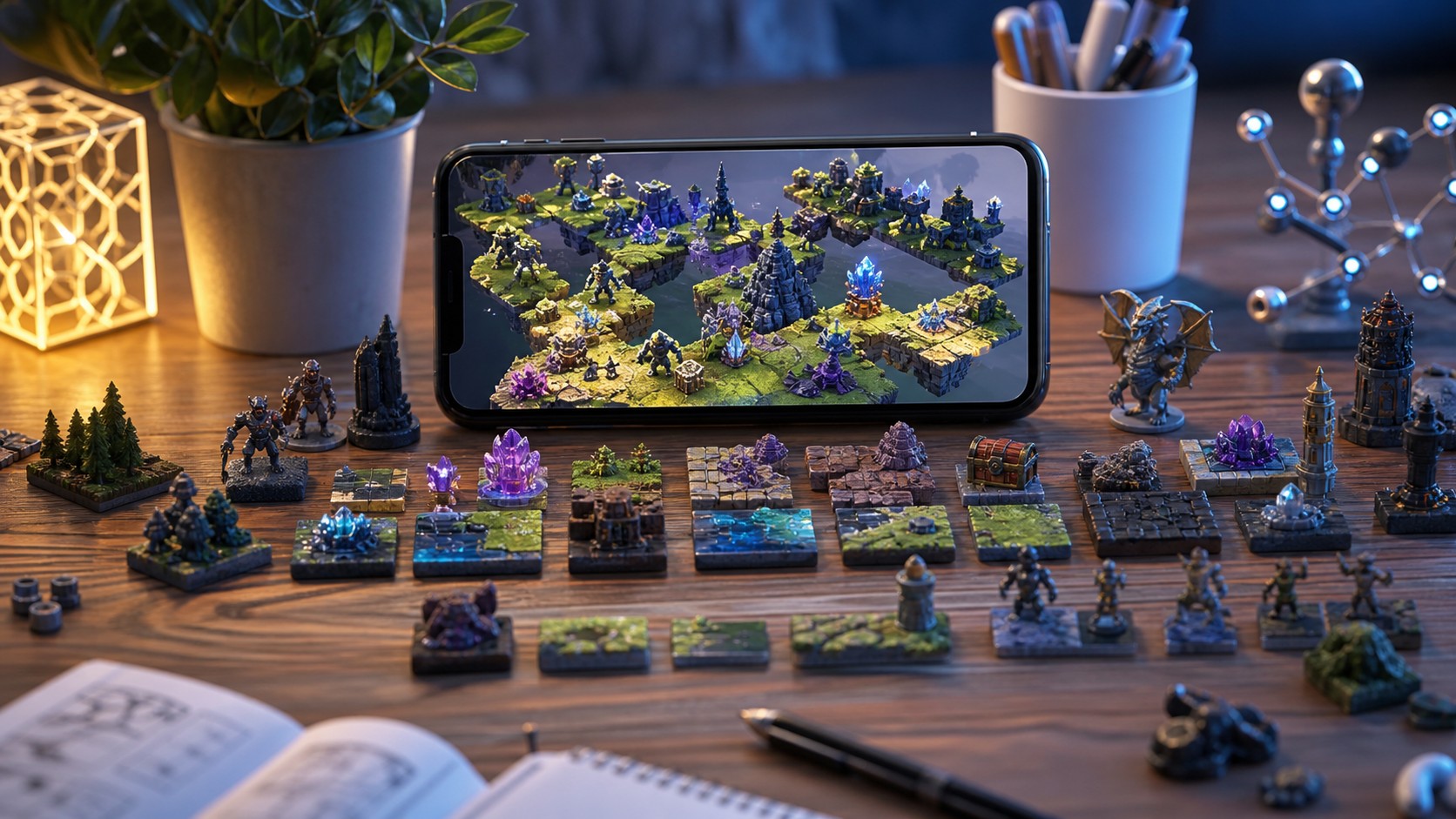
The gaming world has come a long way from the early days of pixelated characters and simple mechanics. Today, mobile gaming is one of the most dynamic and expansive forms of entertainment, with millions of people logging in every day to explore new worlds, defeat enemies, and solve intricate puzzles. But the most exciting evolution within mobile games isn’t just in the graphics, storylines, or gameplay mechanics—it’s in the artificial intelligence (AI) that learns and adapts to the player’s style. AI is now able to personalize the gaming experience, making each session feel unique to the individual. But how exactly does AI learn your playstyle, and how does it use this data to enhance your experience? Let’s take a deeper dive into the fascinating world of AI-driven playstyle recognition in mobile games.
A: AI adapts bot behavior and difficulty based on your performance in matches.
A: It learns from your conversations, evolving over time to provide personalized responses.
A: AI adjusts the difficulty level and opponent tactics based on your strategies.
A: Yes, the AI-driven storylines adapt based on your decisions and interactions with Sims.
A: AI adjusts the behavior of your citizens and city development based on your actions.
A: AI creates unpredictable challenges, adapting strategies based on your team's performance.
A: AI increases the complexity and challenge of bots, adjusting to your performance in real-time.
A: The AI changes walker appearances and wave difficulties dynamically based on your location and success.
A: AI adapts to your deck and playstyle, creating new challenges with each match.
A: Yes, the AI adapts the enemy’s strategies, making each encounter more challenging and rewarding.
The Basics of AI in Mobile Games
Artificial intelligence has become an integral part of modern mobile games. Initially, AI in games was limited to non-playable characters (NPCs) who followed predetermined paths or reacted to player actions in a scripted manner. However, today’s AI has evolved significantly. It’s no longer just about following a script—it’s about learning from player behavior in real-time and adapting accordingly. Mobile game developers are increasingly using AI to track player actions and decisions, adjusting the game’s difficulty, storyline, or in-game rewards to create a more engaging experience. The goal is to make the game feel as though it’s tailored to the player’s personal preferences, keeping them immersed and motivated to continue playing.
AI: A Personalized Game Master
Imagine playing a mobile game where the enemies seem to be getting smarter, the challenges are becoming more aligned with your skill level, and the story feels more immersive. You’re not just playing against the game’s default AI anymore—you’re playing against a system that has learned your habits, your strengths, and your weaknesses.
This is made possible through machine learning algorithms. Machine learning, a subset of AI, enables the system to analyze vast amounts of data collected from your gameplay and then use that data to make predictions about how you will likely behave in future situations. The more you play, the more the AI learns about your tendencies. For example, it might notice that you prefer a more aggressive playing style, favoring high-speed action over careful planning. The game then adapts, providing you with enemies that require quicker reflexes and rewarding you with faster-paced challenges.
Data Collection: The Heart of AI Learning
AI doesn’t have the ability to read your mind, but it can certainly keep track of your every move. In mobile games, this is done through the collection of gameplay data. Each action you take—whether it’s how fast you complete a level, which weapons you choose, how you interact with in-game characters, or the strategies you use to defeat bosses—provides valuable insights into your playstyle. This data is then processed by the AI, which uses algorithms to identify patterns. For example, if you consistently avoid certain types of combat, the AI may deduce that you’re more of a stealth player. Alternatively, if you’re always charging headfirst into battle, the AI might recognize that you prefer a more aggressive, high-risk strategy. The game’s AI can then respond accordingly, adjusting the in-game environment to better suit your preferences. One of the most powerful aspects of AI in mobile games is its ability to adapt based on real-time data. In the past, games might have had a static difficulty curve, where players gradually faced harder challenges as they progressed. But with AI, the difficulty is more dynamic, constantly evolving to meet the player’s specific needs.
Machine Learning Algorithms: Predicting Your Next Move
Machine learning algorithms are at the core of how AI learns your playstyle. These algorithms are designed to process large amounts of data and identify patterns that humans may not immediately notice. For instance, through a process known as reinforcement learning, AI systems can experiment with different approaches to see how they affect gameplay. By testing different in-game scenarios, the AI learns to predict which actions are most likely to result in success or failure for the player. Consider a racing game, for example. As you play, the AI tracks how you navigate turns, how often you use boosts, and your average lap times. Based on this data, it may start to offer challenges that force you to hone certain skills. If you tend to crash on sharp corners, the AI might introduce tighter turns or provide in-game tips to help you improve your cornering technique. The AI learns your weaknesses and adapts accordingly, making the game more challenging, yet rewarding, over time.
Adaptive Difficulty: Keeping You Engaged
One of the most impressive aspects of AI’s ability to learn your playstyle is how it manages the game’s difficulty. Traditional games often use a fixed difficulty curve—players start with easy levels and gradually progress to more difficult ones. But this can sometimes feel too predictable or, conversely, too difficult. AI can create a much more personalized experience by adjusting the difficulty based on your individual skills and performance.
For example, if you’re breezing through levels, the AI may increase the difficulty, introducing tougher opponents or more complex puzzles. Conversely, if you’re struggling, the AI may ease up on the challenge, offering more manageable tasks or providing assistance in the form of power-ups or hints. This dynamic adjustment keeps players engaged by ensuring that the game is neither too easy nor too hard, but instead just the right level of challenge for the individual. This system also helps with player retention, as it prevents the game from feeling monotonous or overwhelming. By continuously adapting to your playstyle, AI ensures that the game remains both exciting and satisfying.
Dynamic Storylines: AI That Knows Your Choices
AI doesn’t just adapt to your skills; it can also adjust the game’s storyline based on your decisions. In many modern mobile games, the narrative is shaped by the choices you make during the game. AI analyzes these decisions to determine how the story should progress, giving you a more personalized experience.
For example, if you tend to make morally good decisions, the AI may steer you towards a storyline that emphasizes heroism and self-sacrifice. On the other hand, if you tend to make more selfish or aggressive decisions, the AI might lead you down a darker path with more complex moral dilemmas. This creates a sense of agency, making players feel as though their choices have real consequences on the game world. By using AI to personalize the narrative in this way, games become more immersive, and players are more likely to return to see how their decisions affect the outcome.
Emotional AI: Understanding Player Sentiment
AI is also becoming more adept at understanding and responding to a player’s emotions. This is particularly important in mobile games that require quick reflexes or critical thinking. If the AI detects that a player is frustrated or stressed (perhaps due to repeated failure), it can adjust the gameplay experience to reduce frustration. For instance, the AI may offer easier challenges, provide more rewards, or even alter the game’s pacing to help alleviate tension. Conversely, if the AI detects that the player is enjoying themselves, it may push the difficulty higher, offering more engaging challenges. In this way, AI doesn’t just learn from your actions—it also learns from your emotional state, further refining the gaming experience.
AI and Social Play: Adapting to Team Dynamics
Many modern mobile games feature multiplayer modes, where players interact with one another in real-time. AI in these environments not only learns from individual playstyles but also adapts to team dynamics. In team-based games, AI can assess the strengths and weaknesses of different players on a team and adjust gameplay to ensure a balanced experience.
For example, in a team-based mobile shooter, the AI might identify that one player excels at long-range combat while another specializes in close-quarters battles. The AI could then adjust enemy AI behavior to target weaker players or offer more strategic opportunities that benefit the team as a whole. This type of AI-driven social play ensures that each player feels like they’re contributing to the team’s success, while also learning from their teammates to improve their own performance.
The Future of AI in Mobile Games
The future of AI in mobile games is incredibly exciting. As technology continues to advance, AI will only become more sophisticated in its ability to learn and adapt to player behavior. We can expect even more personalized experiences, with AI understanding not just how you play, but also your preferences, emotional responses, and even your social interactions within the game.
Furthermore, as mobile games become more integrated with cloud-based technologies, the ability for AI to learn from a player’s entire gaming history will create even deeper and more immersive experiences. Games will be able to recognize players across different devices, ensuring that your playstyle is consistent, regardless of where you play.
Conclusion
AI’s role in mobile gaming is rapidly evolving, creating new and exciting ways for games to adapt to the individual player. By learning from your actions, decisions, and emotional responses, AI can tailor the gaming experience to ensure it remains engaging, challenging, and rewarding. From personalized difficulty adjustments to dynamic storylines and multiplayer interactions, the future of mobile gaming is set to be more immersive than ever before. As AI continues to improve, so too will the experiences it creates, offering players the opportunity to truly connect with the games they love.