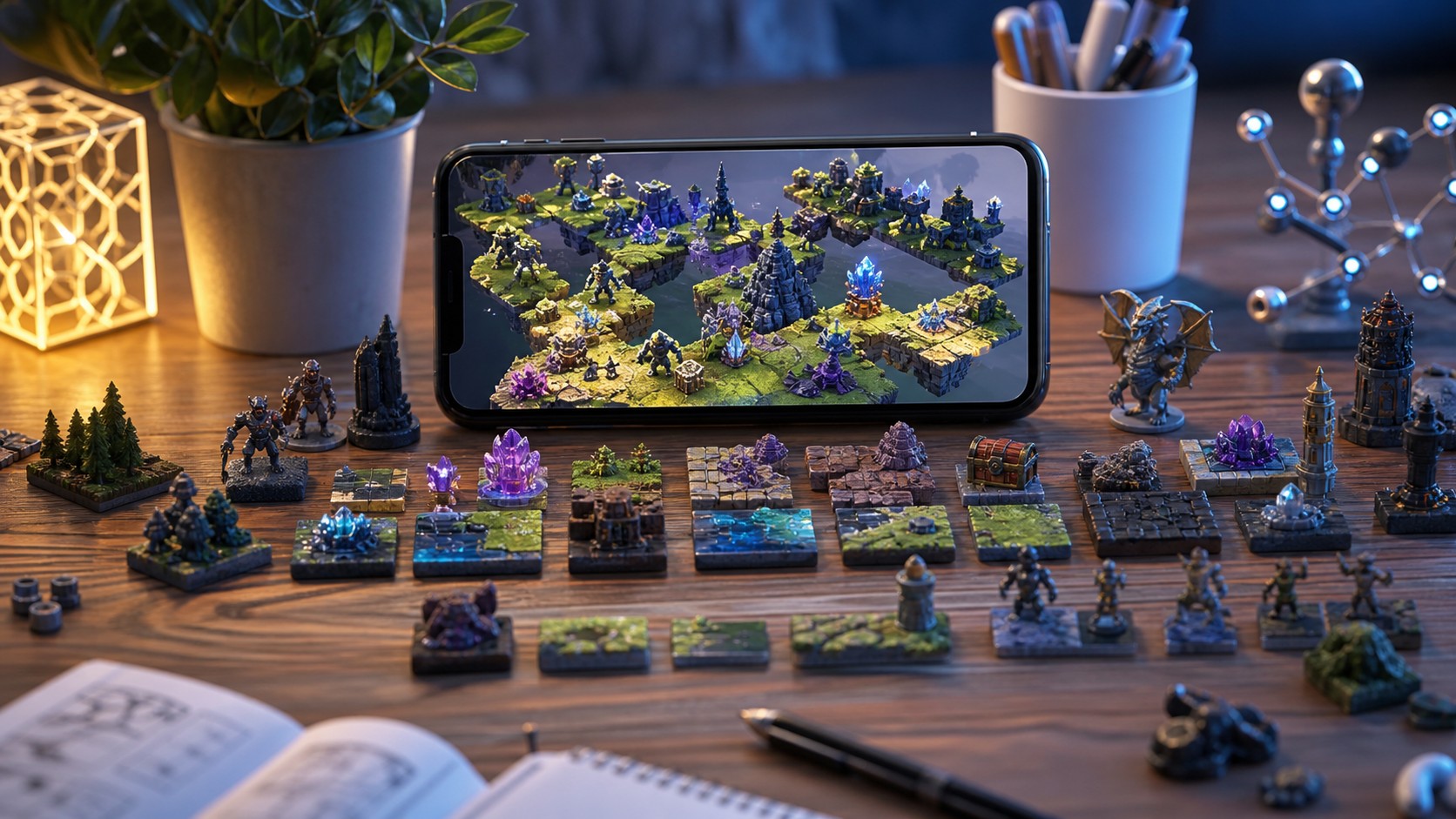
In recent years, mobile gaming has seen a monumental shift, from simple, casual apps to highly sophisticated and immersive experiences. One of the driving forces behind this transformation is Artificial Intelligence (AI), a technology that has revolutionized how games are designed, played, and experienced. AI-driven mobile games stand out from traditional games in several key ways, offering dynamic environments, personalized experiences, and smarter gameplay mechanics that respond to player actions in ways previously unimaginable. This article will delve into the fascinating world of AI in mobile gaming, exploring how it functions, what makes these games different, and why they are capturing the attention of players worldwide. We’ll examine AI’s role in everything from game design to player engagement and its implications for the future of mobile gaming.
A: AI learns from your actions and adjusts game difficulty to match your skill level.
A: Yes, AI personalizes the narrative based on your decisions throughout the game.
A: It adjusts the difficulty in real-time to ensure a balanced and engaging experience.
A: AI enables enemies to adapt their tactics based on your gameplay, keeping you on your toes.
A: Yes, AI can procedurally generate new levels, quests, and challenges for each playthrough.
A: AI tailors rewards based on your playing style, offering personalized upgrades and items.
A: AI learns from your choices, ensuring each playthrough feels fresh and unique.
A: AI dynamically adjusts visual effects, ensuring optimal performance without sacrificing quality.
A: NPCs use AI to respond to your actions in real-time, creating more lifelike interactions.
A: Yes, AI adapts game elements to match your preferences, keeping you deeply immersed in the experience.
Understanding AI in Mobile Games
AI, or Artificial Intelligence, refers to the ability of machines to mimic human-like intelligence. In the context of mobile games, AI is used to create smart, responsive characters, dynamic environments, and game mechanics that adapt to the player’s actions in real-time. It allows games to go beyond fixed scripts and scenarios, creating experiences that feel unique and personal to each player. At its core, AI-driven mobile games leverage advanced algorithms and machine learning techniques. Machine learning, a subset of AI, enables the game to “learn” from the player’s behavior, adjusting the gameplay accordingly. This could mean altering the difficulty level, changing the narrative, or creating new challenges based on how well the player is performing. This adaptive gameplay is a key feature that distinguishes AI-driven mobile games from traditional ones, where the game experience is static and predefined. Instead of merely following a set script, AI-powered games respond in real-time to the player’s actions, creating a more dynamic, interactive, and engaging experience.
How AI Transforms Game Design
AI is not only reshaping how games are played but also how they are designed. In traditional game development, designers create static characters, levels, and environments that don’t change. However, AI allows developers to craft games with a level of dynamism and complexity that was previously unimaginable. One area where AI is making a significant impact is in Non-Player Character (NPC) behavior. In traditional mobile games, NPCs often follow predefined paths or patterns. They respond in predictable ways to player actions. But with AI, NPCs can think and react like human players. They can adjust their behavior based on what the player does, leading to more lifelike interactions. For example, in AI-driven games, NPCs might use machine learning to adapt to the player’s strategies. If a player frequently defeats an NPC in combat using a specific technique, the NPC could “learn” to counteract that tactic, keeping the gameplay fresh and challenging. This adaptability makes the game feel less like a set of predetermined actions and more like an evolving, living world. Another way AI transforms game design is through procedural content generation. In traditional games, developers design levels and environments manually. With AI, entire game worlds can be generated dynamically, offering virtually infinite replayability. This is particularly evident in open-world games or games that use roguelike elements, where each playthrough is unique, offering new challenges and experiences.
AI and Personalized Gameplay
One of the most exciting aspects of AI in mobile games is its ability to personalize the gameplay experience for each individual player. Traditional games generally offer a one-size-fits-all experience, where the gameplay is the same for everyone. However, AI can tailor the game experience based on a player’s preferences, playstyle, and skill level. For instance, in an AI-driven game, the difficulty level can automatically adjust to match the player’s ability. If a player is struggling, the AI may lower the difficulty to ensure they continue to enjoy the game. Conversely, if the player is breezing through levels, the AI can increase the challenge, keeping them engaged without feeling overwhelmed.
AI can also personalize the story and quests. In some mobile games, the narrative may shift based on the decisions the player makes. For example, AI can analyze the choices the player makes throughout the game, tailoring the storyline to reflect those decisions. This creates a unique experience for each player, making every playthrough feel different. Furthermore, AI can learn from the player’s behavior and suggest in-game purchases or features that align with their interests. By tracking player data, the game can offer personalized recommendations, from skins and cosmetics to new game modes or challenges, enhancing the overall gaming experience.
Smarter Enemy AI and Enhanced Gameplay Mechanics
AI in mobile gaming isn’t just about personalization; it’s also about making gameplay more immersive and challenging. One of the ways AI achieves this is through smarter enemy AI. In traditional mobile games, enemies follow set patterns or behaviors. They might attack the player at predetermined times or in predictable ways. However, with AI, enemies can adapt and react to the player’s actions in real-time. For example, in an AI-powered combat game, enemies might adjust their tactics depending on how the player engages with them. If the player often uses long-range attacks, enemies might become more aggressive or attempt to close the distance. If the player frequently dodges or blocks attacks, enemies may employ feints or other strategies to break their defense. This makes every encounter feel different and keeps the player on their toes.
In racing games, AI can be used to make the opponent vehicles more realistic. Instead of following rigid, predictable paths, AI-controlled cars can learn from the player’s driving style, adjusting their speed and tactics accordingly. This creates a more exciting and unpredictable racing experience. Similarly, AI is used in puzzle games to create more complex, dynamic puzzles that adapt to the player’s skill level. As the player becomes better at solving puzzles, the AI can create new, more challenging obstacles to keep the player engaged and motivated.
AI-Powered Game Narratives: Creating Dynamic Storylines
While AI is often associated with gameplay mechanics, it also plays a significant role in shaping the narrative in mobile games. Traditional games have linear storylines, where the player progresses through predetermined story arcs. In contrast, AI-driven games often feature dynamic narratives that change based on the player’s actions. AI can track every decision the player makes and adjust the story accordingly. For example, in a role-playing game (RPG), the AI could create branching storylines based on the choices the player makes throughout the game. This results in multiple possible endings, offering players a reason to replay the game and experience different outcomes. In AI-driven story games, the AI can also alter the tone and direction of the narrative. If the player tends to make morally gray decisions, the game’s story might shift to reflect a darker, more complex world. Conversely, if the player consistently makes heroic choices, the AI could lead the story down a more uplifting path. This type of storytelling makes the player feel more in control of the narrative, creating a personalized and emotionally engaging experience. It also introduces an element of unpredictability, as players can’t always be sure how their choices will affect the story, which keeps them invested in the game.
The Future of AI in Mobile Gaming
AI is still in its early stages in the realm of mobile gaming, and the future holds even more exciting possibilities. As AI technology continues to evolve, we can expect even more advanced features that push the boundaries of what’s possible in gaming. One potential development is the integration of more sophisticated AI that can understand and respond to natural language. Imagine playing a mobile game where you can communicate with characters using voice commands or text, and they respond intelligently to your input. This would create a much more immersive and interactive experience, blurring the line between traditional games and interactive storytelling.
Moreover, AI could eventually be used to create entirely new genres of mobile games. For example, AI could enable fully immersive virtual reality (VR) or augmented reality (AR) experiences, where the game world dynamically responds to the real-world environment. This level of immersion would be a game-changer, allowing players to interact with virtual worlds in ways that feel completely real.
Conclusion: The AI Revolution in Mobile Gaming
AI-driven mobile games are transforming the gaming landscape by offering personalized, dynamic, and highly immersive experiences. From smarter NPCs and adaptive difficulty levels to personalized storylines and smarter enemy AI, these games provide a level of interaction and engagement that traditional games simply can’t match. As AI technology continues to improve, the potential for innovation in mobile gaming is limitless. Whether through more complex narratives, smarter gameplay mechanics, or entirely new gaming genres, AI is set to shape the future of mobile games in ways we’ve only begun to imagine. The future of mobile gaming is undeniably tied to AI, and it’s clear that as AI-driven games evolve, they will continue to captivate players around the world, offering experiences that feel more personal, more dynamic, and more exciting than ever before. The question isn’t whether AI will dominate mobile gaming—it’s how much more immersive and revolutionary it can become.